


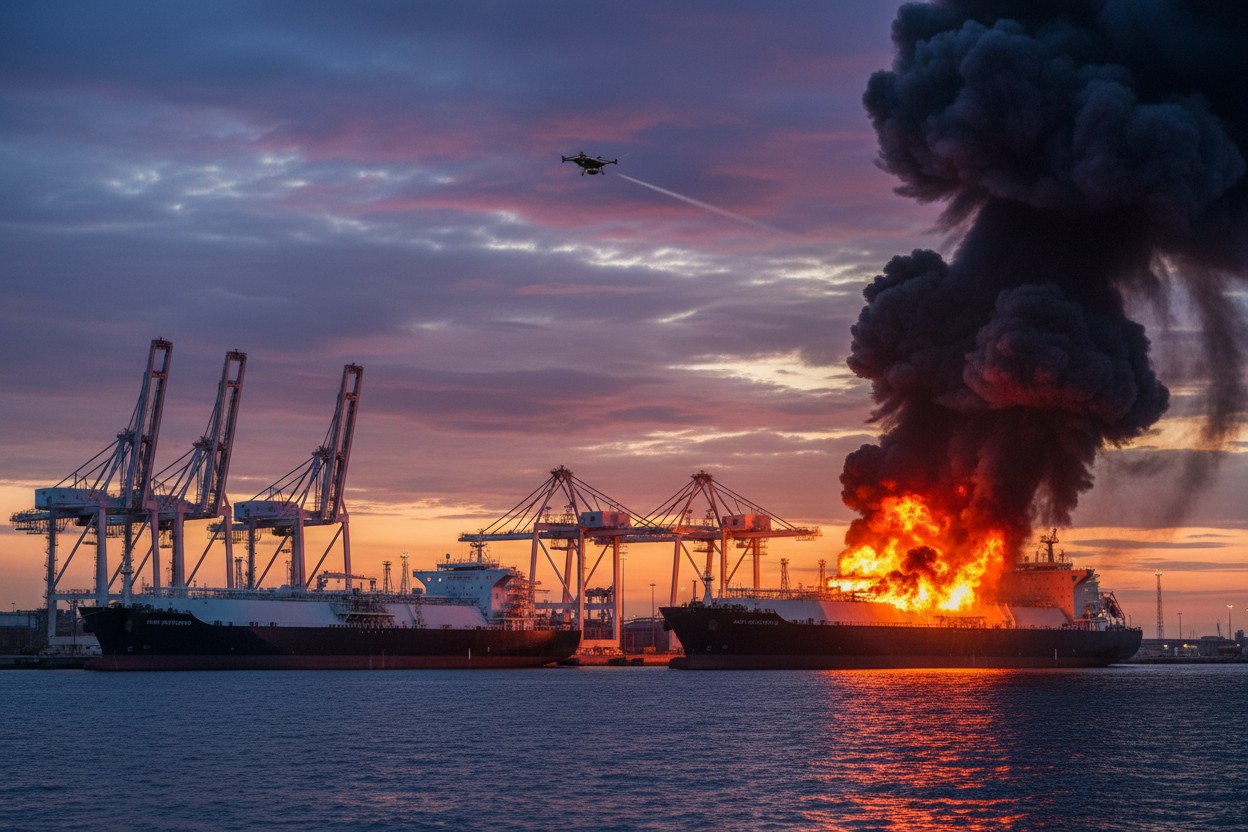
The attack was the first public acknowledgment that Egypt has come under fire during the conflict, and no party has claimed responsibility. [2] [3]
Drone Strike on Damietta
Egyptian officials confirmed that the port facility of Damietta was hit by a drone strike, the first public acknowledgment that the country has come under fire during this conflict, according to a cabinet statement carried by the state-funded Middle East News Agency. [2] "No party has claimed responsibility for the attack," the statement said, adding that authorities were continuing investigations "to take the necessary measures to safeguard Egypt's interests and national security." [3]
The strike involved two vessels, according to British maritime security firm Ambrey: the Energos Winter, a U.S.-owned, Marshall Islands-flagged floating storage and regasification unit, and the Gaslog Salem, a Greek-owned, Bermuda-flagged LNG tanker. [1] The port sits 33 miles west of Port Said, at the northern entrance to the Suez Canal.
Damietta's strategic position has long made it a site of military and commercial contest. During Napoleon's 1798 campaign in Egypt, French commander Bonaparte, distressed that his general had not forestalled an earlier attack on Damietta, ordered him to arm five hundred skiffs with cannon and take control of the Manzala lagoon, according to historian Juan Cole. [4]
Attribution and Official Responses
U.S. President Donald Trump suggested Iran was behind the drone strike. "We'll be hitting them hard," Trump told Fox News on July 29. "They're going to get a beating." [5]
Two Iranians, who asked not to be named to discuss security matters, told The New York Times that the explosion was a drone attack designed to show that global shipping and energy supplies could be more deeply disrupted if Iran chose to escalate, according to the Times of Israel's Daily Briefing. The individuals did not say whether Iran or an Iran-allied militia had launched the attack, or from where. [6]
Iranian Foreign Minister Abbas Araghchi said in a post on X that "Egypt is considered a friend and important partner in the region, and its security constitutes an utmost priority for us," and warned against Israeli "false flag" operations, without explicitly denying Iranian involvement. The Houthis denied involvement, saying in a Telegram statement, "There is no truth to the rumors about Yemen targeting a ship in the port of Damietta." U.S. Central Command deferred questions about the incident to Egypt. [2]
Energy Routes Under Pressure
The Windward maritime intelligence firm called the attack on Damietta "a third front, separate from the Gulf and Red Sea." The firm assessed the strike as separate from the Houthi Saudi-blockade campaign and noted that Iranian state television had named Damietta as a retaliation target two days earlier, citing Ukraine's strike on an Iranian vessel in the Caspian Sea.
Saudi Arabia has shifted oil exports through the Suez Canal after Houthi action blocked the Bab al-Mandeb Strait, and exports via that route rose 106 percent for the week of the embargo announcement to 1.06 million barrels per day, according to Kpler data cited by The National News. The Iran-backed Houthi group in Yemen has threatened to target Saudi vessels in the vital shipping route, according to the BBC. [7]
The region's two main sea arteries for energy shipments are already under pressure: the Iranians have largely closed the Strait of Hormuz, and a U.S. blockade on Iranian ports is in effect. Egypt's ports have long merged commerce and conflict; as historian Douglas A. Howard writes, memberships in the regimental ranks of the Egyptian janissaries and other armed forces "were always simultaneously major commercial ventures." [8]
Regional Attacks and Claims
Kuwaiti officials said one worker was killed in an Iranian strike on a building used by a Chinese company. "The sinful Iranian aggression targeted a building belonging to one of the Chinese companies in the north of the country, resulting in the death of one worker and causing serious material damage to the building," the Kuwait Defense Ministry said on X. [5]
The Jordanian military said it foiled an Iranian attempt to target the kingdom with five missiles and reported no casualties. [9] The Islamic Revolutionary Guard Corps claimed missiles destroyed three F-35 Joint Strike Fighters at Muwaffaq Salti Air Base in Jordan, a claim U.S. Central Command denied in a statement. [2]
Hundreds of Jordanian political, legal and other figures signed an open letter calling for the withdrawal of U.S. forces from Jordan, The New York Times reported, citing concern that the troop presence endangered Jordanian sovereignty.
Potential Next Steps
U.S. Central Command carried out "a heavy wave of strikes" on dozens of Islamic Revolutionary Guard Corps targets in Iran early Thursday, describing the action as "a powerful response to yesterday's attempted Iranian attacks on US forces based in the Middle East." [10] CENTCOM commander Adm. Brad Cooper has prepared an option for a punishing air campaign against Iran that could take 10 to 14 days, and President Trump will decide whether to approve it, The Wall Street Journal reported.
Iran is expected to receive a first shipment out of up to 400 Chinese-made shoulder-fired air-defense missile launchers, a purchase valued at $60-70 million, Reuters reported, citing three sources familiar with the deal.
Operation Aspides, the European-led task force providing security to Red Sea shipping, said it is monitoring reports that the Houthis are considering placing a toll on transits through the Bab al-Mandeb Strait. "At this moment, there has been no official statement from the Houthis confirming such a measure," a spokesman said.
Conclusion
Egyptian authorities said they are continuing investigations into the Damietta strike, and no party has claimed responsibility. [3] The attack marked the first time Egypt has come under fire in the conflict, according to the Egyptian cabinet.
The strike adds another layer of pressure to global energy routes already affected by the conflict, including the Strait of Hormuz, the Bab al-Mandeb Strait and the approaches to the Suez Canal. The coming days will determine whether the attack remains an isolated incident or signals a further widening of hostilities across the region.
References
- The Times of Israel. "Drone strikes US-owned gas tanker in Egyptian port, in possible expansion of Mideast war". July 29, 2026.
- The War Zone. "Drone Strike on Egyptian Port on Mediterranean Stokes Concerns Iran Conflict Will Widen". July 30, 2026.
- BBC News. "Drone attack caused fire on gas ships at Mediterranean port, Egypt says". July 30, 2026.
- Juan Cole. "Muhammad: Prophet of Peace Amid the Clash of Empires".
- The Epoch Times. "Iran Threatens US Allies With 'Harsh Response' as Regional Fighting Spreads". July 30, 2026.
- The Times of Israel. "Daily Briefing July 30 – Will first Iran strike on Egypt unfurl CENTCOM's umbrella?". July 30, 2026.
- BBC News. "Houthi attacks raise fears of wider Middle East conflict and more global economic damage". July 23, 2026.
- Douglas A. Howard. "A History of the Ottoman Empire".
- The Times of Israel. "Mediating Pakistan insists US-Iran talks 'ongoing,' despite heavy strikes". July 30, 2026.
- The Times of Israel. "US strikes Iran's Revolutionary Guards in 'powerful response' to attacks on its forces". July 30, 2026.
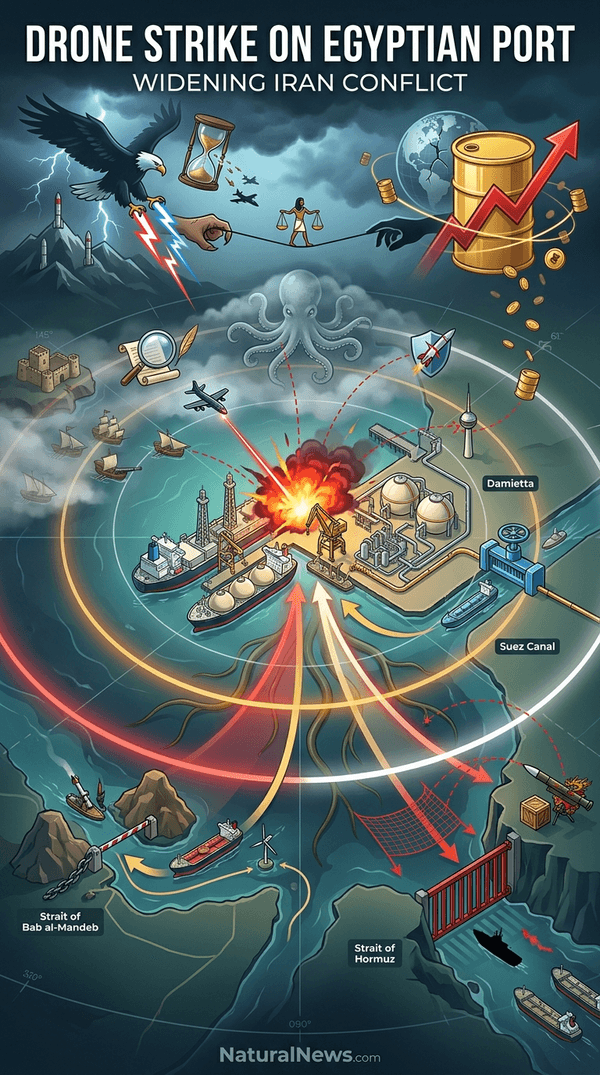
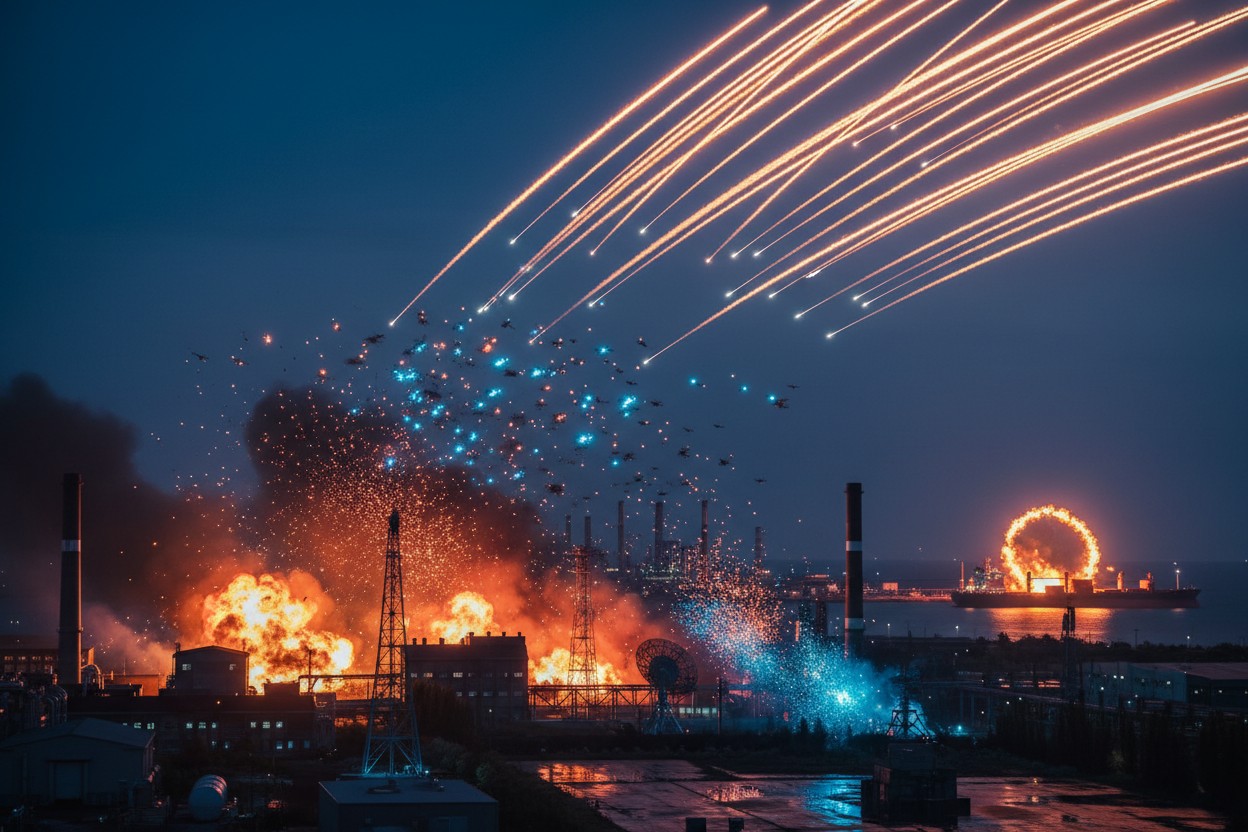
Explainer Infographic







Please contact us for more information.


