


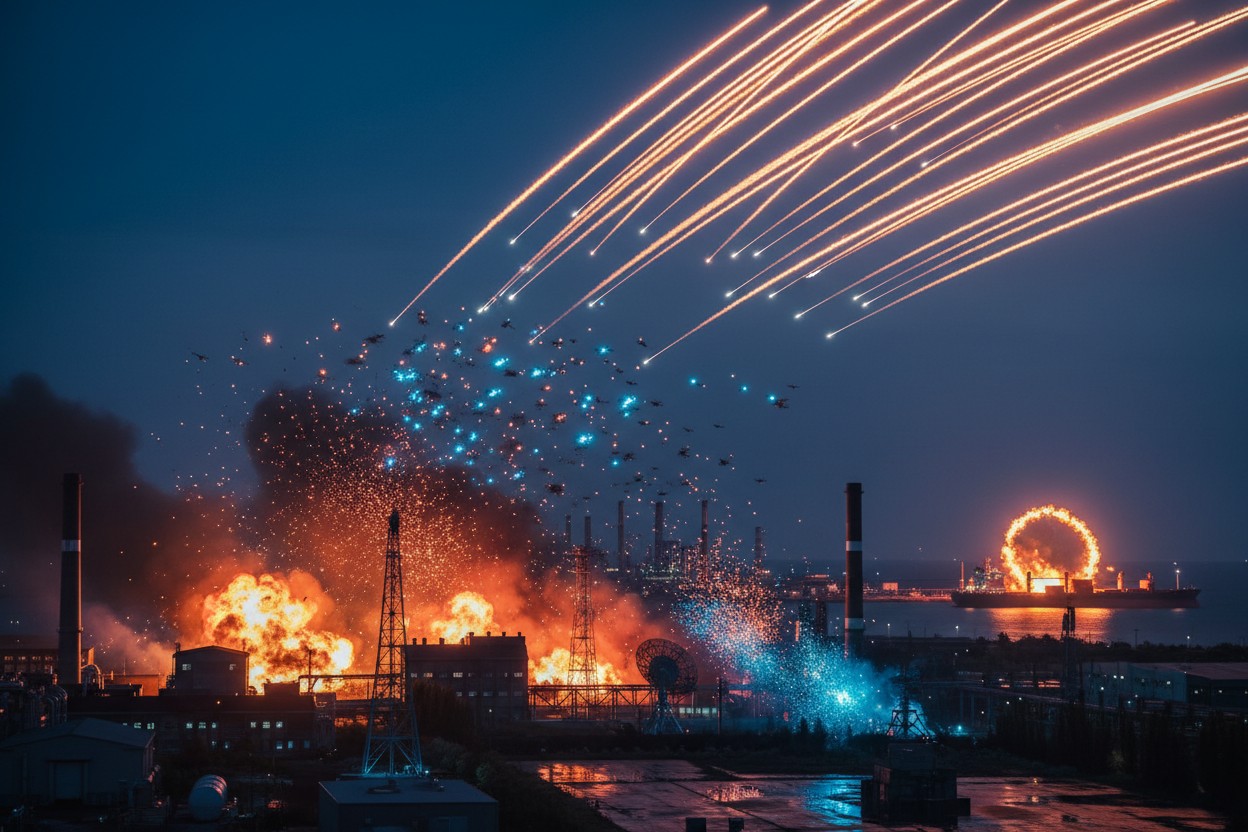
Moscow Reports Overnight Strike on Kyiv
Russian forces hit five military-industrial facilities and a logistics hub in Kyiv and its suburbs during a barrage overnight from Friday, July 31, to Saturday, Aug. 1, according to the Russian Ministry of Defense (MOD). In a statement on Saturday, the ministry said the strikes used precision air, sea and ground-based weapons and also hit two ships carrying military cargo off Odessa the previous day. [1]
The ministry’s statement did not specify casualty figures. Ukrainian officials provided separate accounts of the death toll and damage. In a separate statement on July 6, the MOD described its long-range barrage as carried out “in response to terrorist attacks by the Kyiv regime” against Russia. [2]
Facilities Listed by Defense Ministry
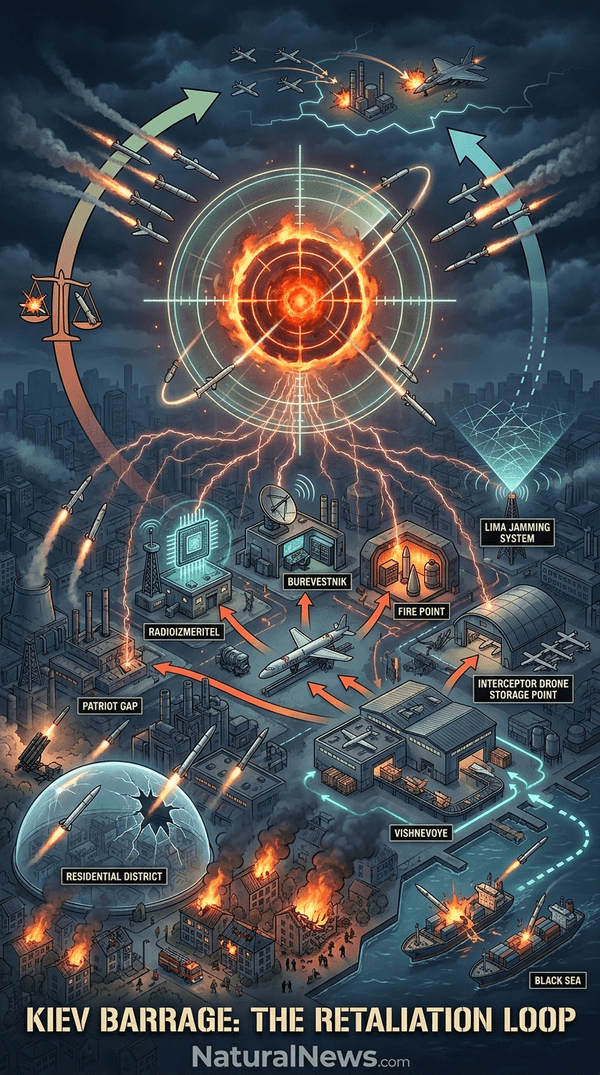
According to the MOD, the targets included the Kyiv-based enterprise Radioizmeritel, which supplies electronic components for Neptun-MD, Grom-2 and FP-7/FP-9 missiles and develops navigation systems for long-range drones. [1]
The ministry also listed the Burevestnik plant, which it said builds electronics for long- and medium-range drones and radar equipment, and a Fire Point facility producing parts and warheads for FP-5 Flamingo cruise missiles, along with chemicals for solid-fuel boosters. A site tied to Lima jamming systems used to spoof precision-guidance signals, and a drone assembly and storage point specializing in several types of interceptor UAVs, were also named, according to the statement.
Officials added that the strikes hit a logistics center in Vishnevoye, in Kyiv Region, which handled components and warheads for Ukrainian drones. Two ships were struck south of Odessa on Friday while transporting military cargo, the statement said. [1]
Ukrainian Officials Report Fires and Casualties
According to Ukrainian President Volodymyr Zelensky, the attack involved 35 missiles, including 27 ballistic missiles, and 185 drones, with Kyiv as the main target. He said only one ballistic missile was intercepted, citing a shortage of Western-supplied Patriot interceptors. [1]
Zelensky reported fires across seven districts of Kyiv and said at least nine people had been killed and dozens injured. Kyiv Mayor Vitali Klitschko reported fires at residential and unspecified non-residential industrial sites. [1]
The casualty figures could not be independently reconciled with the Russian statement, which gave no count. A previous barrage on July 6 left 14 people dead and 117 injured in Kyiv, according to the Ukrainian attorney general’s office. [3]
Moscow Cites Retaliation for Attacks on Russian Territory
Moscow has described the barrage as retaliation for Ukrainian attacks on Russian territory, which it says often target critical infrastructure and residential buildings. Russia maintains it never targets civilians, according to the Defense Ministry. In a July 6 statement, the ministry said a prior drone and missile barrage was carried out “in response to terrorist attacks by the Kyiv regime” against Russia. [2]
Ukrainian forces have launched repeated large drone waves at Moscow in recent weeks. On the night of July 7, more than 430 UAVs were directed at the Russian capital and surrounding region, according to authorities there. [4] Earlier this year, the Defense Ministry reported more than 6,500 violations of a unilateral Easter ceasefire by Ukrainian forces, most involving short-range drone attacks. [5]
Moscow has also framed earlier strikes as retaliation for Western-supplied weapons use; in December 2024, Russia attacked Ukraine’s energy infrastructure after Kyiv used U.S.-supplied ATACMS missiles. [6] Russian officials have accused Western states of direct involvement in Ukrainian operations; a Trends Journal analysis noted that the Russian Defense Ministry accused British specialists of helping plan a naval drone attack on the Black Sea Fleet. [7]
A separate Trends Journal analysis argued that messaging about the war has been propaganda. “We’ve witnessed the propaganda during this war and that messaging by the media and politicians has nothing to do with the actual war on the battlefields,” it stated. [8] The ministry’s latest statement did not include an independent assessment of the strikes or the Ukrainian casualty figures.
References
- "Russian MOD lists military facilities hit in latest strikes on Kyiv". August 1, 2026.
- "Russian MOD lists targets in latest Ukraine barrage". July 6, 2026.
- Zero Hedge. "Russia & Ukraine Trade Some Of Biggest Strikes Of War On Eve Of NATO Summit". July 6, 2026.
- "Kyiv lit the fuse – Russia lit up Kyiv". July 7, 2026.
- Lance D Johnson. "Ukraine exploits Easter truce with 6500 drone strikes against Russia". NaturalNews.com. April 13, 2026.
- NaturalNews.com. "Russia attacks Ukraines energy infrastructure in major retaliatory strike". NaturalNews.com. December 16, 2024.
- "Trends-Journal-2024-05-19".
- "Trends-Journal-2022-11-34".
Explainer Infographic







Please contact us for more information.


