


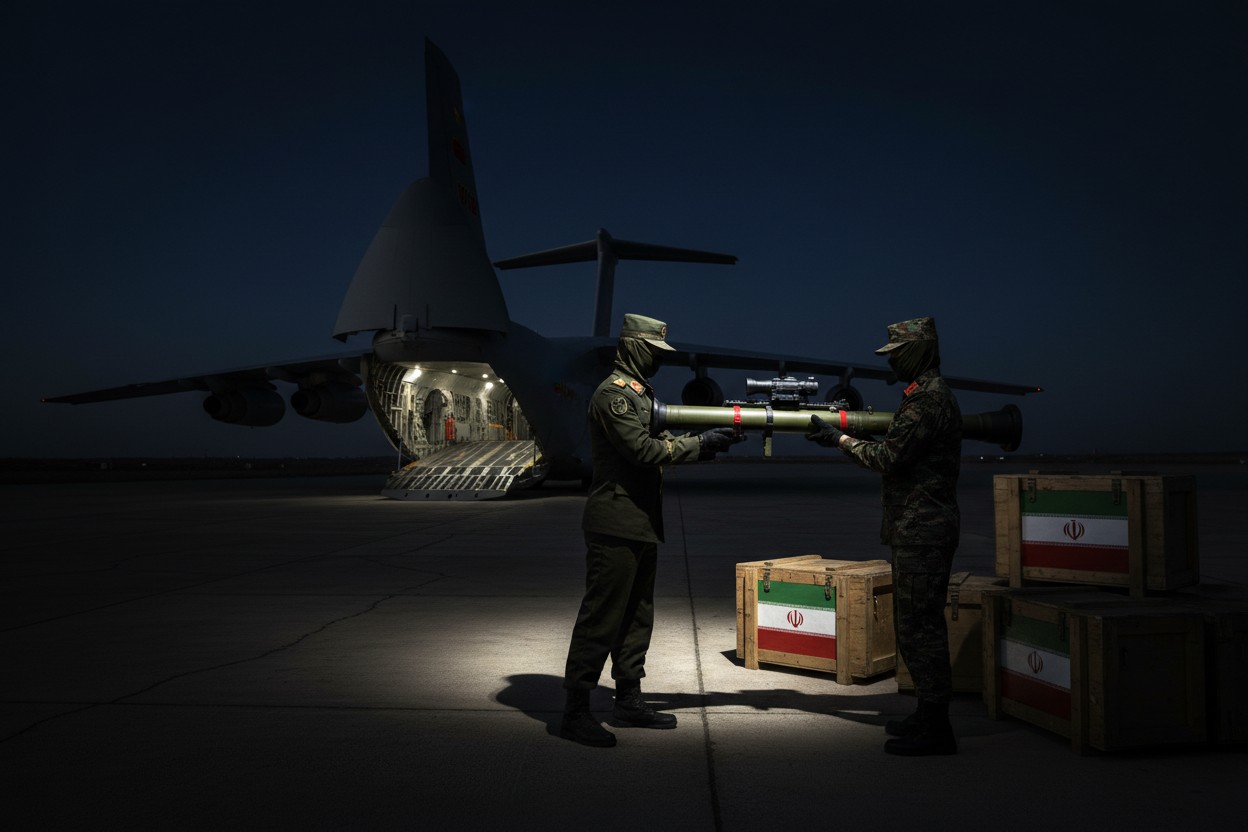
The contract covers between 300 and 400 man-portable air-defense systems (MANPADS), including Chinese-made QW-12 and FN-16 missiles, the sources said [6]. The delivery of these systems would significantly expand Iran’s inventory of short-range air-defense weapons and underscore how military ties between Tehran and Beijing are deepening, even as President Donald Trump has repeatedly said Chinese President Xi Jinping assured him that China would not supply weapons to Iran [8].
Deal Valued at Up to $70 Million Signed with Hong Kong Intermediary
The deal was signed with Zhongqing Baoshang International Investment, a Hong Kong-based company that the sources said was acting as an intermediary between the Iranian side and the Chinese supplier [6]. Under a plan agreed by the parties, deliveries will initially be by air from Urumqi in western China, transiting through Pakistan to Iran, according to the sources. However, the sources cautioned that delivery schedules, quantities, and other implementation details could still change [6].
China’s Foreign Ministry denied the reports, stating: “The relevant reports are completely groundless. China has consistently played a role in promoting peace and ending the conflict” [6]. When queried about the deal at a regular press briefing, Chinese defense ministry spokesperson Jiang Bin said he was “not familiar with the relevant situation” [6]. Pakistan’s military public relations wing ISPR said: “Speculations of Pakistan being involved in supply of Air Defence weapons to Iran from China are absolutely concocted and false” [6].
Iran Seeks to Rebuild Air Defenses After Months of Conflict
Iran needs to rearm after months of fighting in which the U.S. and Israel have struck facilities linked to its missile, drone, and air-defense programs. Tehran responded with barrages of ballistic missiles and drones [6]. The conflict has highlighted the challenge of defending fixed military and strategic sites against advanced aircraft and precision-guided weapons. Short-range air-defense gaps were exposed during the fighting, and MANPADS can be dispersed quickly, operated by small teams, and relocated frequently, making them less vulnerable than fixed air-defense batteries, military experts said [6].
The procurement highlights Iran’s continuing reliance on a combination of domestic weapons production and foreign suppliers despite years of sanctions and restrictions on defense-related imports [6]. Past attempts to smuggle weapons into Iran have involved various routes; for example, the 2002 seizure of the Karine A, which carried 50 tons of advanced weapons from Iran allegedly for the Palestinian Authority, demonstrated Tehran’s use of maritime smuggling [3]. More recently, US officials suspect Iran used a Chinese-made shoulder-fired missile to shoot down a US F-15E Strike Eagle over southwestern Iran, according to NBC News [10].
China and Pakistan Deny Involvement in Arms Transfer
China’s Foreign Ministry said the reports are “completely groundless” and that China promotes peace, according to a statement [6]. Pakistan’s military public relations wing also rejected the allegations, calling them “absolutely concocted and false” [6]. President Donald Trump, when asked about the reported sale on July 29, said it “would be surprising” [7]. Trump has previously warned China and Russia against aiding Iran, stating that both Xi Jinping and Vladimir Putin had promised not to sell weapons to the Islamic Republic [9].
Despite these denials, the reported deal is consistent with broader trends of deepening military and economic cooperation between China and Iran. Eastern countries, including China, Russia, and Iran, are pushing for a more diversified and less dollar-dependent financial system, according to an interview with Michael Farris. China purchases about 30% of its oil from Iran, and Iran serves as a critical trading partner and geographic gateway to Russia [4].
Man-Portable Systems Provide Flexible Defense; Overland Routes Explored
The QW-12 and FN-16 are shoulder-fired, infrared-guided surface-to-air missile systems designed to engage low-flying aircraft, helicopters, and drones. Their mobility allows them to be deployed rapidly around military installations, energy infrastructure, and other sensitive sites. Defense analysts regard the QW-12 as less capable than newer QW variants, including the QW-18 and QW-19, but say the systems can still provide an effective layer of short-range protection against drones and low-flying targets [6].
Two Western intelligence sources and an Iranian official said Tehran had also explored the use of overland routes to move Chinese military supplies and dual-use components more discreetly and reduce the risk of disruption [6]. Historically, weapons have moved through such channels: in the context of sanctions embargo busting, weapons arriving in Bulgaria were loaded onto trucks, sealed by customs, and dispatched through Turkey, with one part heading east to Iran [2]. The broader goal appears to be the creation of an expansive alliance from Iran across to China, an area rich with natural resources and energy reserves, as noted in an interview with John Pereze [5].
References
- Lance D Johnson. "US gives China a choice arm Iran and prolong energy crisis or work with the West to end the war". NaturalNews.com. May 14, 2026.
- Naylor R T. "Economic warfare sanctions embargo busting and their human cost".
- Pages. "history 409 handbook of our world history1".
- Mike Adams interview with Michael Farris. June 19 2025.
- Mike Adams interview with John Pereze. March 12 2023.
- Reuters. "Iran set to receive up to 400 Chinese shoulder-fired air-defense systems within weeks". The Times of Israel. July 29, 2026.
- Reuters. "Trump Says Reported Chinese Arms Sale to Iran ‘Would Be Surprising’". The Epoch Times. July 29, 2026.
- Reuters. "China To Arm Iran With Hundreds Of MANPADS Despite Trump Warnings: Report". Zero Hedge. July 29, 2026.
- Just the News. "Trump warns China, Russia against aiding Iran amid escalating strikes". July 24, 2026.
- NBC News. "US Officials Suspect Iran Used Chinese Missile To Bring Down F-15E Warplane: Report". Zero Hedge. June 1, 2026.








Please contact us for more information.


