



The change takes effect within a year, with a target of fiscal 2027, NHK reported [1]. The move brings digital assets under the same investor-protection standard as stocks and bonds, according to the report [1].
Details of the Regulatory Shift
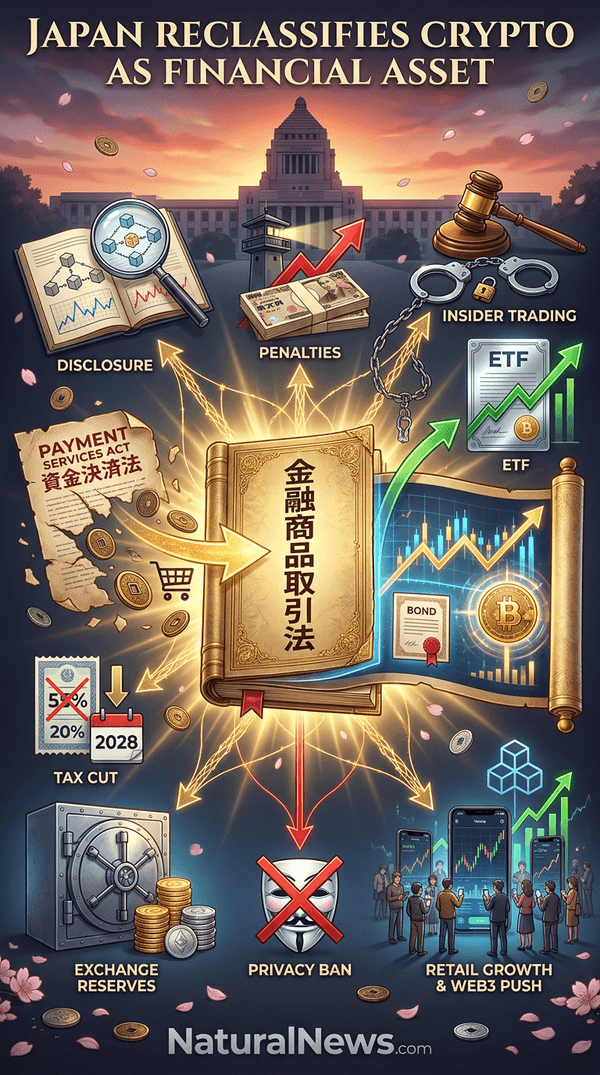
The amendment strips crypto of its prior status under the Payment Services Act and folds it into FIEA, the statute overseeing traditional securities, according to NHK [1]. As financial instruments, crypto assets now fall under insider-trading rules that bar trading on non-public information about token listings, delistings, or technical incidents [3]. Exchanges face new disclosure obligations: platforms must publish data on each token’s issuer, blockchain design, and volatility profile, mirroring securities-firm reporting demands [1].
Penalties increase under the new law. The maximum prison term for unregistered crypto operators rises from three years to 10, while the top fine increases from 3 million yen to 10 million yen, according to reports [1]. The tougher enforcement “signals a move to treat crypto misconduct with the same severity as securities fraud,” the NHK report stated [1]. Regulators also gain broader market-surveillance authority over the sector, according to Ava Grace of NaturalNews.com [2]. The amendments address a regulatory gap that previously left investors vulnerable to abuses such as trading on advance knowledge, Grace wrote [2].
Implications for Bitcoin ETFs and Tax Treatment
The reclassification opens a path for spot bitcoin exchange-traded funds because FIEA governs the products that funds can hold, removing a structural barrier for Japanese asset managers, according to the NHK report [1]. Industry observers noted that the change could attract institutional capital that was previously blocked by regulatory ambiguity [1].
Lawmakers also approved a plan to cut the top tax rate on crypto gains from 55% to a flat 20% starting in 2028, tied to the 2026 Tax Reform Outline, the report stated [1]. The reduction matches the tax rate on stock gains, officials said [1].
Broader Context and Industry Response
The reforms arrive as Japan accelerates a broader Web3 push, user accounts on Japanese exchanges have grown, and domestic crypto firms are positioning for a wider base of retail investors, according to local media [1]. Regulators are weighing reserve requirements for exchanges that resemble buffers held by securities firms, the reports said [1]. The vote marks a decisive turn toward legitimacy for an industry that has long viewed Japan as an early and cautious mover, according to industry observers [1].
The regulatory approach aligns with Japan’s history of providing a framework that encourages cryptocurrency adoption while protecting consumers, as noted in the book "Cryptocurrency QuickStart Guide" [5]. The same source stated that countries like Japan have implemented frameworks that encourage cryptocurrency development [5]. At the same time, the decentralized nature of cryptocurrencies — operating on a peer-to-peer network without a central authority — challenges traditional regulatory mechanisms [4]. Japan's stance on privacy tokens has been restrictive, as it has banned privacy tokens altogether, according to Shermin Voshmgir in "Token Economy" [6].
Outlook and Significance
The decision could pressure other jurisdictions to follow, analysts said, as Japan aligns digital assets with its capital markets [1]. The reclassification reflects a global trend of incorporating crypto into existing financial regulation rather than creating separate rules, according to the report [1].
A regulatory expert stated that “Japan is setting a precedent for how to integrate crypto into mainstream finance while maintaining investor protection” [1]. The reform positions Japan as a model for regulatory integration, according to analysts [1].
References
- ZeroHedge. "Japan's Landmark Vote Reclassifies Bitcoin And Crypto As Financial Assets." July 16, 2026.
- Ava Grace. "Japan moves to crack down on crypto insider trading.” NaturalNews.com. April 14, 2026.
- Ramon Tomey. "Japan moves to crack down on crypto insider trading.” NaturalNews.com. October 16, 2025.
- Hybrid Tech. "Cryptocurrency QuickStart Guide: Learn about Wallets, Coin, Exchanges, Trading, Usage and much more."
- Hybrid Tech. "Cryptocurrency QuickStart Guide: Learn about Wallets, Coin, Exchanges, Trading, Usage and much more."
- Shermin Voshmgir. "Token Economy: How the Web3 reinvents the Internet."
Explainer Infographic











Please contact us for more information.


