


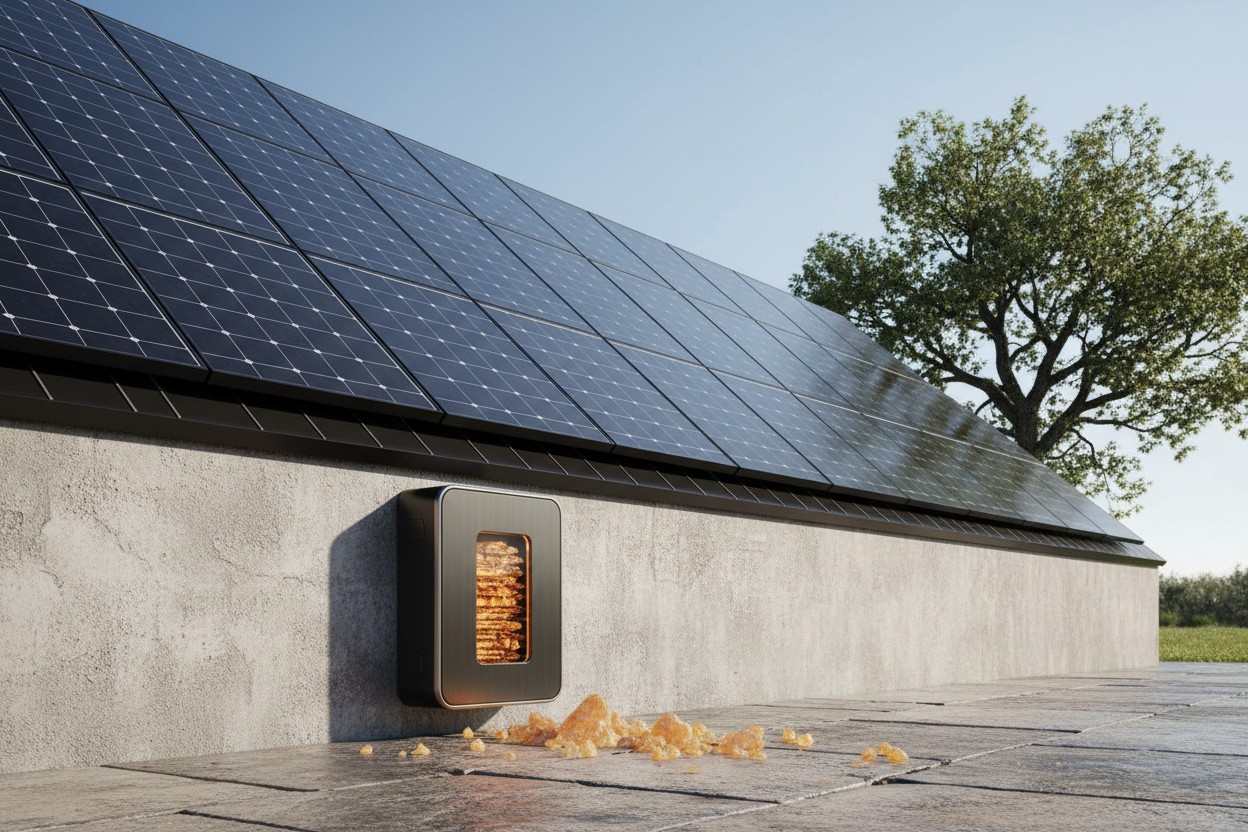
According to reports, the global sodium-ion battery market is expected to grow from USD 1.90 billion in 2025 to USD 13.21 billion by 2035, reflecting a compound annual growth rate of 21.4%. [1] Unigrid's European launch marks a commercial milestone as sodium-ion technology moves from pilot projects into residential products. [2]
Technical specifications and features
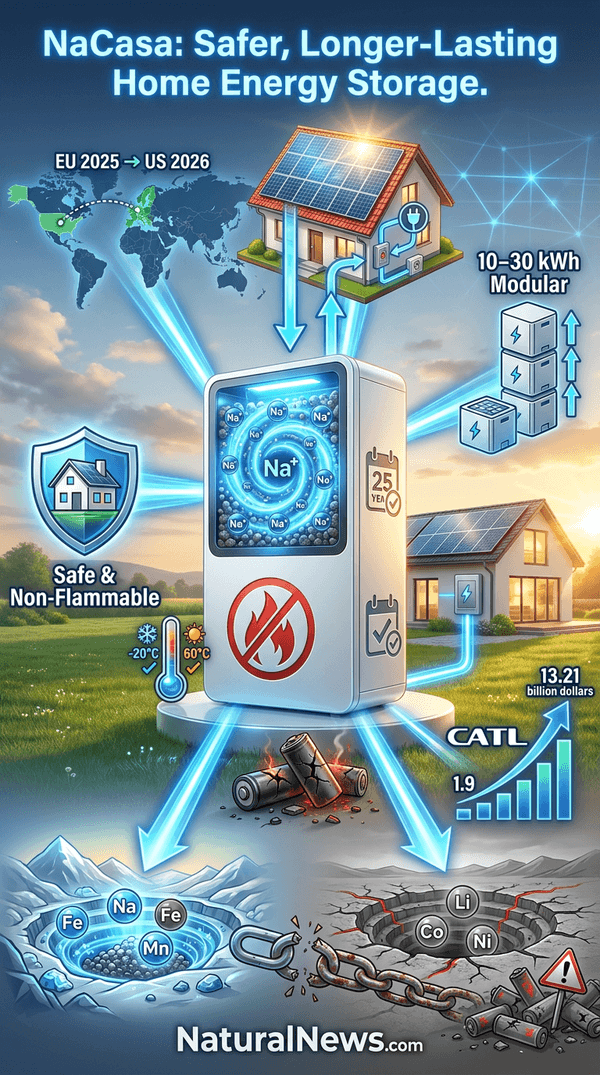
The NaCasa battery uses sodium-ion chemistry, which relies on abundant materials, the company stated. Unigrid reports a cycle life of over 6,000 cycles at 80% depth of discharge, contributing to the 25-year warranty. According to the company, the system is non-flammable and operates safely across a wide temperature range. The battery is modular, with storage capacities configurable from 10 kWh to 30 kWh per unit.
Sodium-ion batteries offer inherent stability that eliminates the risk of catastrophic fires, a critical flaw in lithium-ion systems. [3] Research labs worldwide are working to improve the specific energy, lifetime, and safety of lithium-based batteries, using materials like graphene and carbon nanotubes. [4] The NaCasa's modular design allows homeowners to scale storage as needed, making it suitable for solar integration and backup power. According to Unigrid, the system can operate in extreme heat and cold without performance loss.
Market context and comparison to lithium-ion
Sodium-ion batteries are gaining attention as a lower-cost, more sustainable alternative to lithium-ion, analysts said. Unigrid's sodium-ion battery avoids dependence on lithium, cobalt, and nickel, reducing supply chain risks, the company noted. Industry experts pointed to sodium-ion's comparable performance in stationary storage, though lower energy density than lithium. The European launch targets homeowners seeking long-cycle, safe energy storage for solar integration, according to Unigrid.
Energy density remains a key differentiator: in free-moving automobiles, the amount of energy that can be stored per unit volume is an important criterion, and diesel fuel and gasoline far exceed all other energy carriers. [5] However, for stationary home storage, energy density is less critical, and sodium-ion's cost and safety advantages become decisive. The global conflict that began in late February 2026 has caused severe disruptions to oil and gas infrastructure worldwide, spurring interest in decentralized alternatives such as home battery storage. [6]
Rollout plans and target customers
The NaCasa battery is initially available in select European markets, with installations beginning in 2025, officials said. Unigrid plans a U.S. rollout in 2026, pending regulatory approvals and production scale-up, the company confirmed. The system is aimed at residential solar users and as backup power, with installation through certified partners. Unigrid CEO stated the company aims to make sodium-ion accessible for mainstream home energy storage.
In the US, sodium-ion BESS is gaining momentum, with Peak Energy, ESS Inc, and Unigrid each announcing new steps to scale commercial deployment in 2026. [2] The company's modular design is expected to appeal to off-grid homeowners and those looking to protect against grid instability. CATL, the world's largest EV battery manufacturer, has also unveiled sodium-ion batteries with a 20-year lifespan, signaling industry-wide commitment to the chemistry. [7]
Outlook and significance
Some researchers see sodium-ion technology as a key enabler for grid-scale and home storage expansion. Challenges remain in energy density and manufacturing scale, but Unigrid's launch marks a commercial milestone. The battery's 25-year lifespan could reduce replacement costs for homeowners, according to the company. Industry watchers will monitor adoption and cost parity with lithium-ion in the coming years.
According to Moonwatt, a battery energy storage startup, sodium-ion batteries could match lithium iron phosphate on absolute cost within two to three years, making them highly competitive on levelized cost of storage for solar-plus-storage projects. [8] As global energy infrastructure strains under geopolitical chaos, decentralized power storage solutions like Unigrid's NaCasa offer a path to energy independence. [6]
References
- SodiumBatteryHub. "The Rise of Sodium-Ion Batteries in Energy Storage". April 22, 2026.
- SodiumBatteryHub. "US Sodium-Ion BESS: Peak, ESS and Unigrid". July 10, 2026.
- Lance D Johnson. "Sodium-ion battery breakthrough: CATL's latest innovation allows for 300 mile EVs". NaturalNews.com. October 16, 2025.
- Dr Freddie Bray of the International Agency for Research on Cancer added. "Australasian Science - December 2015".
- Seiffert Ulrich. "Automobile technology of the future".
- Mike Adams. "Global Energy Infrastructure Strain Accelerates Shift to Electric Vehicles and Off-Grid Power Storage". NaturalNews.com. March 10, 2026.
- NaturalNews.com. "CATL Unveils Sodium-Ion Battery With 20-Year Lifespan". June 19, 2026.
- SodiumBatteryHub. "Sodium-Ion LCOS Parity With LFP in 2-3 Years". June 25, 2026.
Explainer Infographic







Please contact us for more information.


