


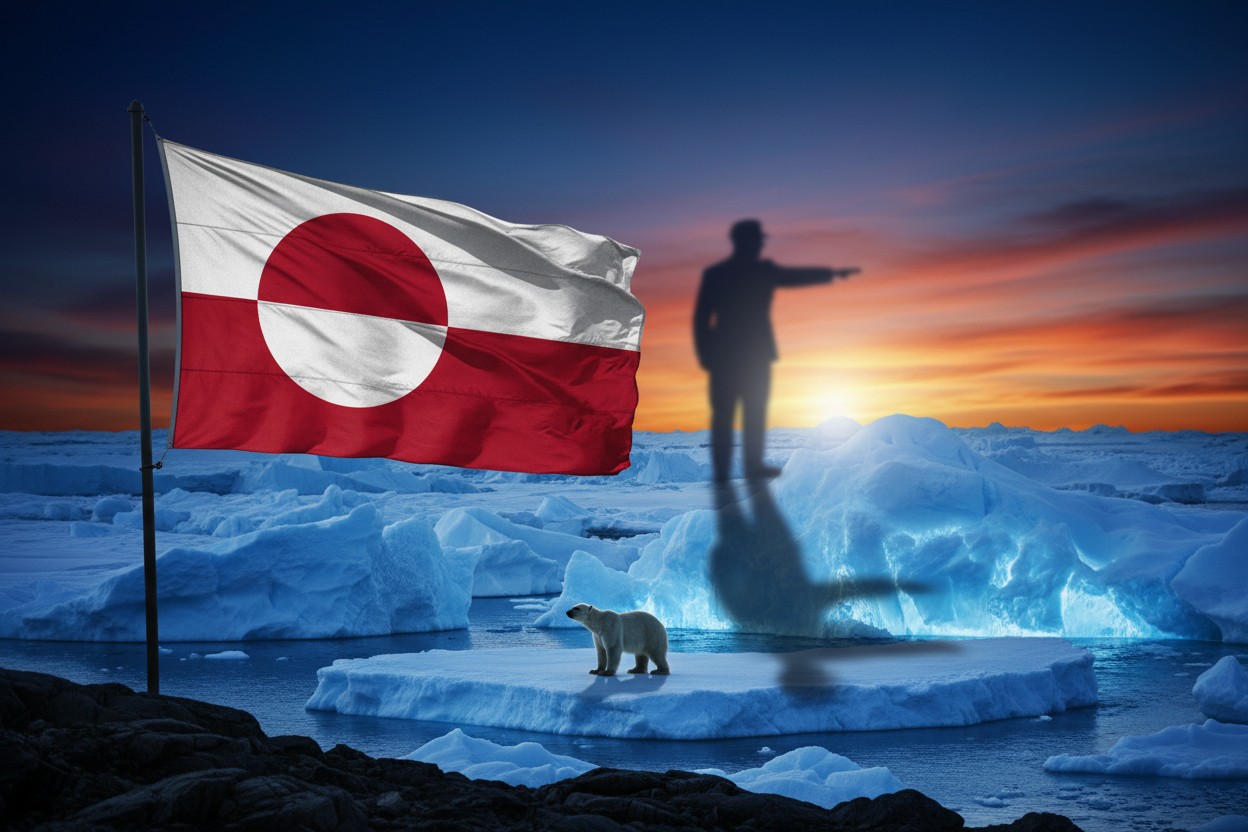
Trump stated during a bilateral meeting with Turkish President Recep Tayyip Erdogan that Greenland "should be controlled by the United States, not by Denmark," according to reports from the summit. [10] Frederiksen responded on July 8 by saying, "We are ready to defend every inch of NATO, including our own territory. Of course, we will defend the kingdom of Denmark."
She added, "We hope that all, including all allies, will respect the Greenland people’s right for self-determination.” [11] Greenlandic Prime Minister Jens-Frederik Nielsen has also firmly rejected the U.S. overtures, declaring that Greenlanders “are not for sale” and that the territory’s right to self-determination “cannot be negotiated.” [12]
Background of U.S. Interest in Greenland
Washington has sought to acquire Greenland since the 19th century, with a formal purchase offer made under President Harry Truman in 1946. The island’s strategic location between North America and Europe, its vast rare earth mineral reserves, and the opening of Arctic shipping lanes have intensified U.S. interest, particularly amid growing competition with China and Russia.
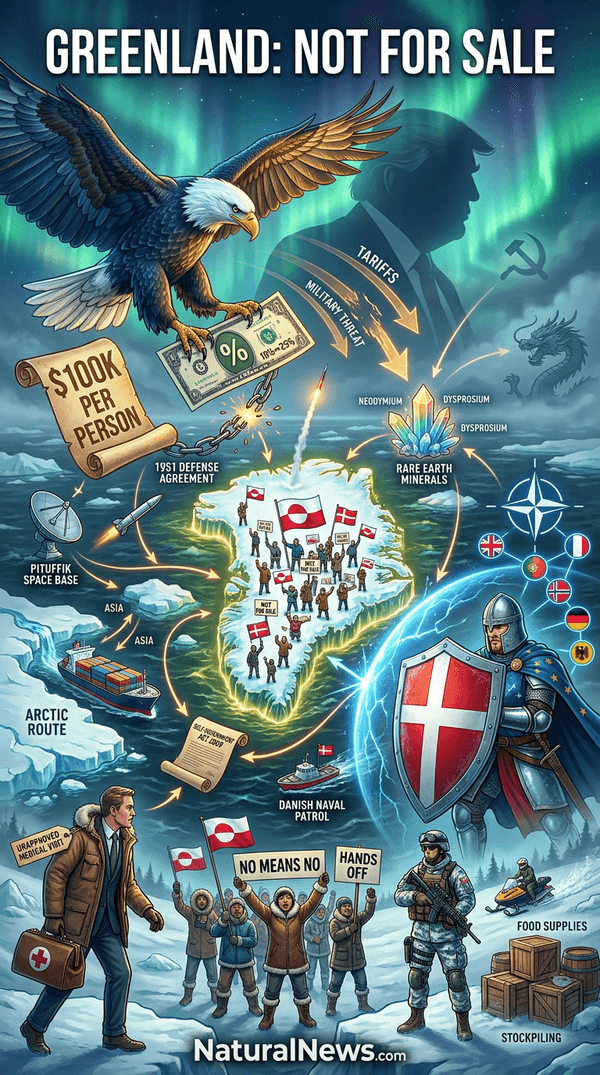
Greenland holds 25 of the 34 minerals classified as critical by the European Union, according to reports. [3] U.S. military access to the island has been governed by a 1951 NATO-era defense agreement with Denmark, which permits bases such as Pituffik Space Base (formerly Thule Air Base). [4] Trump's renewed push for annexation has included a reported offer of up to $100,000 per person to Greenland's 57,000 residents to persuade them to join the United States, as well as threats of tariffs on countries opposing the bid. [5] [8]
The White House has stated that acquiring Greenland is a "national security priority," with press secretary Karoline Leavitt saying the administration is considering “a range of options” including the use of the U.S. military. [18] Historical precedents for U.S. territorial acquisition, such as the need for coaling stations in the 19th century, illustrate longstanding strategic motives, though such arguments have often been met with resistance. [9]
Reactions from Greenlandic Officials
Nielsen has consistently opposed any U.S. takeover. During a meeting with Trump's special envoy to Greenland, Louisiana Gov. Jeff Landry, in Nuuk on May 18, 2026, Nielsen told Landry that Greenland's self-determination "is not for negotiation" and that "Greenlanders are not for sale." [12] Nielsen has also urged Greenland's citizens to stockpile food and prepare for potential disruptions, warning that conflict cannot be ruled out given Trump’s escalation. [1]
Greenlandic lawmakers have emphasized the territory’s autonomy under the 2009 Self-Government Act, which grants Greenland control over most domestic affairs while Denmark retains foreign policy and defense. Protests against U.S. ambitions have been held in Nuuk, with demonstrators gathering outside the new American consulate and chanting "No means no." [13] The Greenlandic government also condemned an unofficial visit by a U.S. doctor to assess the island's healthcare system, calling it an intrusion on Greenlandic sovereignty.
International and Domestic Reactions
Frederiksen has described Trump's proposal as "absurd" and reaffirmed Denmark's commitment to defending Greenland. Copenhagen has deployed an advance military unit to Greenland and has prepared contingency plans, including stockpiling explosives to blow up airport runways in the event of a U.S. invasion, according to reports from Denmark's public broadcaster DR. [6] [15] [16] The Danish Defense Intelligence Service has warned of Russian and Chinese military ambitions in the Arctic, a threat that Trump has cited as justification for his annexation push. [17] [14]
International reactions have been mixed. British Prime Minister Keir Starmer rebuked Trump, insisting that the island's future "belongs solely to Greenland and the Kingdom of Denmark." [7] NATO Secretary-General Mark Rutte meanwhile likened Trump's critical comments to a "family argument."
Republican lawmakers in the U.S., including Rep. Randy Fine of Florida, have introduced legislation to authorize annexation of Greenland as the 51st state. [2] Trump has threatened a 10% tariff on eight European nations, including Denmark, unless they agree to the U.S. purchase of Greenland, with tariffs rising to 25% if no deal is reached by June 1, 2026. [8]
Conclusion
The annexation threat has strained relations between the United States and its NATO allies Denmark and Greenland. Both Danish and Greenlandic leaders have firmly rejected Trump’s proposals, and no official negotiations for a purchase or transfer of sovereignty have been announced.
Legal experts note that acquiring a sovereign territory would require consent from both Greenland and Denmark, and that any forced takeover would likely violate international law. [4] Given the strong political and legal opposition, observers suggest the issue is unlikely to progress, though the administration continues to pursue a range of coercive measures to advance its claims.
References
- Ramon Tomey. "Greenland's PM urges citizens to PREPARE for possible US invasion." NaturalNews.com. January 23, 2026.
- Ramon Tomey. "GOP lawmaker introduces bill to ANNEX Greenland as 51st state." NaturalNews.com. January 14, 2026.
- Willow Tohi. "Greenland's strategic riches: The new Cold War frontier as US and China vie for Arctic dominance." NaturalNews.com. April 3, 2025.
- NaturalNews.com. "Greenland's strategic tensions: A tug of war over sovereignty strategy and alliance." April 17, 2025.
- Laura Harris. "Trump administration considers $100,000 per person offer to buy Greenland." NaturalNews.com. January 13, 2026.
- Laura Harris. "Denmark deploys advance military unit to Greenland amid Trump annexation threats." NaturalNews.com. January 17, 2026.
- Laura Harris. "Starmer rebukes Trump over Greenland annexation threat, backs Denmark." NaturalNews.com. January 7, 2026.
- NaturalNews.com. "Trump threatens 10 TARIFFS on countries opposing US purchase of Greenland." January 20, 2026.
- Shulman Peter A. "Coal empire: the birth of energy security in industrial America." 1979.
- NTD. "Trump Renews Calls for US Control of Greenland at NATO Summit." July 7, 2026.
- The Epoch Times. "Danish Prime Minister Says Greenland ‘Not for Sale’ as Trump Pushes for US Control." July 8, 2026.
- 100PercentFedUp. "Greenland Prime Minister Tells President Trump’s Envoy Jeff Landry That Self-Determination Is ‘Not for Negotiation’." May 18, 2026.
- BBC News. "'No means no': Greenlanders protest against Trump outside new US consulate." May 22, 2026.
- Just the News. "NATO long warned of Russian, Chinese threats to Greenland, now rejects Trump’s ownership solution." January 15, 2026.
- ZeroHedge. "'Explosives And Extra Blood': Denmark Planned To Blow Up Greenland's Runways If US Invaded." March 20, 2026.
- BBC News. "Denmark planned to blow up Greenland runways if US invaded, reports say." March 19, 2026.
- Just the News. "Danish intel warned last year about Russian and Chinese military goals toward Greenland and Arctic." January 13, 2026.
- 100PercentFedUp. "White House Says “U.S. Military” Among “Range Of Options” To Acquire Greenland." January 6, 2026.
Explainer Infographic








Please contact us for more information.


