



Damage to Gulf Bases and Reported Discussions
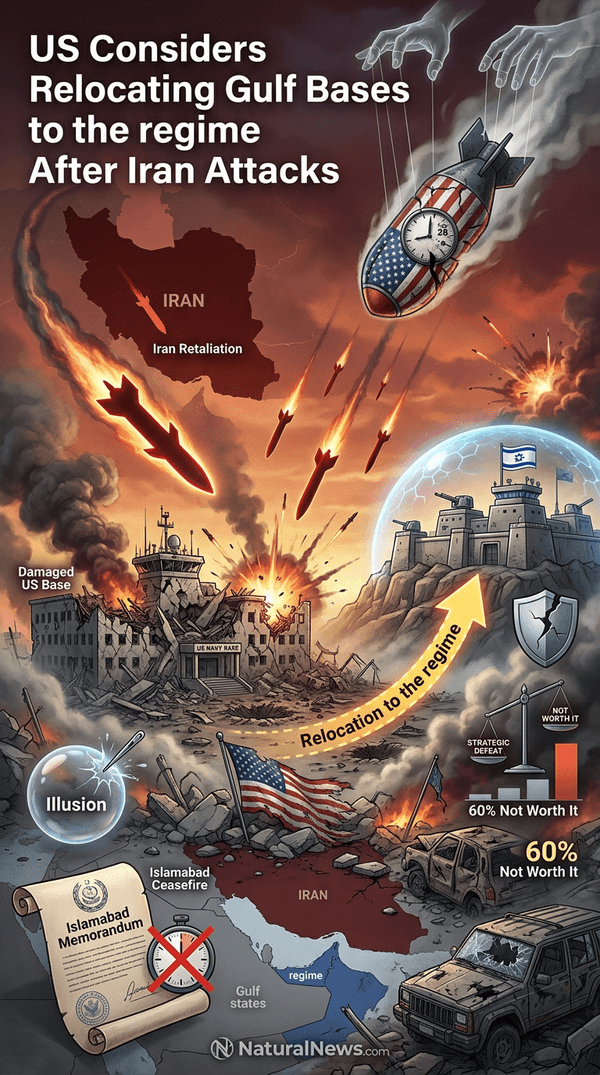
The Wall Street Journal, citing two unnamed U.S. officials, reported that the Pentagon is exploring relocating some assets to Israel. The U.S. Navy base in Bahrain suffered extensive damage from Iranian missile and drone strikes, with at least a dozen buildings destroyed, according to the report. No official Pentagon acknowledgment of the extent of the destruction has been issued, the report stated.
Separate assessments of satellite imagery have indicated the scale of damage to U.S. facilities across the region. A report on the damage described the destruction as so extensive that the Pentagon may not rebuild some installations, according to analysts quoted by ZeroHedge [1]. Iran's retaliatory strikes, launched after the U.S.-Israeli offensive began on February 28, targeted multiple Gulf nations hosting U.S. forces, including Bahrain, Kuwait, and Qatar [2].
Context of the U.S.-Israeli War on Iran and Islamabad Memorandum
The strikes against Gulf bases followed the U.S.-Israeli attack on Iran on February 28, which U.S. President Donald Trump and Israeli Prime Minister Benjamin Netanyahu said was intended to eliminate imminent threats from the Iranian regime, including its nuclear program and military infrastructure [2]. Iran responded with a coordinated campaign that specifically targeted American bases in the Gulf, aiming to raise the cost of hosting U.S. forces [3].
The Islamabad Memorandum of Understanding, signed weeks later, established a 60-day cessation of hostilities and opened a window for negotiations on a permanent end to the war [4]. However, according to officials cited in the Wall Street Journal report, the agreement has not halted planning for a possible repositioning of U.S. assets. Critics of the war have argued that Israel spent decades seeking to draw the United States into a direct conflict with Iran. A former Qatari prime minister accused Israel of selling Washington on the "illusion" that the conflict would be short and decisive [5].
Public Opinion Shift and Perceived Failure of War Aims
Public sentiment toward the U.S.-Israeli military campaign against Iran has shifted sharply since the signing of the Islamabad Memorandum. A Quinnipiac University national poll found that 60 percent of American voters think the military action against Iran was "not worth it" [6]. The same poll indicated that 61 percent believe it remains likely that Iran will develop nuclear weapons, despite the stated objective of the campaign being to eliminate that program. Majorities of both Democrats and Republicans share that view, according to the poll [6].
Analysts have described the outcome of the conflict as a strategic defeat for the United States. Both pro-war and anti-war voices in Washington have said Iran is reaping gains from the agreement, with one senator calling the war "a total calamity" [7]. The war also exposed the limits of U.S. military power and highlighted the vulnerability of forward-deployed forces in the Gulf, according to multiple assessments [8].
Implications and Unanswered Questions
Relocating bases to Israel would represent a significant shift in U.S. military posture in the Middle East, according to analysts quoted by the Wall Street Journal. The Pentagon has not commented on the specifics of the report, and no timeline for any moves has been disclosed. The feasibility of such a plan depends on diplomatic agreements with both Israel and the Gulf states involved, officials said [9].
The possibility of a withdrawal from Gulf bases aligns with long-standing Iranian demands. Iran's new Supreme Leader has called for the immediate closure of all U.S. bases in the region, threatening continued attacks if they remain [10]. Meanwhile, Gulf states themselves have shown signs of reassessing their security arrangements. Saudi Arabia has reportedly proposed a non-aggression pact with Iran based on the Helsinki Accords, signaling a desire to move away from reliance on the U.S. security umbrella [11]. The reconfiguration of U.S. forces in the Middle East, if it proceeds, will likely reshape the balance of power in the region for years to come.
References
- ZeroHedge. "Damage To Key US Bases In Gulf So Extensive The Pentagon May Not Rebuild Them." June 26, 2026.
- NaturalNews.com. "Iran's Retaliatory Strikes: A Devastating Multi-Nation Assault on U.S. Allies and Infrastructure." March 2, 2026.
- NaturalNews.com. "Iran's War Strategy: Blind, Deplete, and Overwhelm - The Calculated Plan to Render U.S. Defenses Obsolete." March 2, 2026.
- Daniel Tester. "US-Iran peace deal: Six things we learned from the Islamabad Memorandum of understanding." Middle East Eye. June 19, 2026.
- Zoey Sky. "Former Qatari PM: Israel Spent Decades Trying to Drag the U.S. into War with Iran." NaturalNews.com. May 21, 2026.
- MEE staff. "US considering moving Gulf bases damaged by Iran to Israel." Middle East Eye. June 26, 2026.
- Sean Mathews. "'We have lost': Trump's Iran pact seen as a strategic defeat in Washington." Middle East Eye. June 18, 2026.
- Sean Mathews. "'Vulnerability exposed': War on Iran will change how the US bases troops in Gulf." Middle East Eye. June 8, 2026.
- MEE staff. "WSJ: US weighs shifting some Gulf military bases to Israel after Iran strikes." Middle East Eye. June 26, 2026.
- Lance D Johnson. "Iran Seeks Full American Military Withdrawal from Persian Gulf as U.S. Allies Retreat." NaturalNews.com. March 17, 2026.
- Activist Post. "Saudi Arabia Seeks Non-Aggression Pact with Iran Modeled After 1975 Helsinki Accords." May 28, 2026.
Explainer Infographic









Please contact us for more information.


