


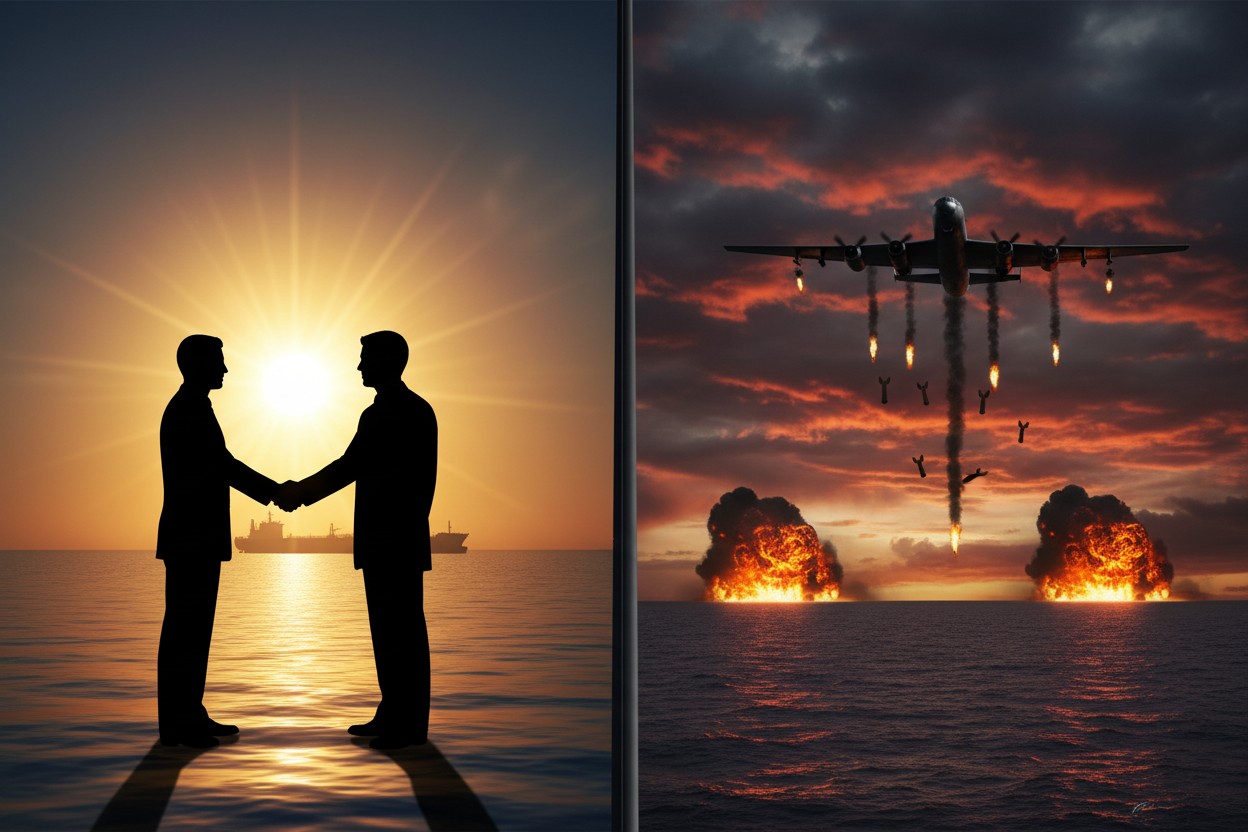
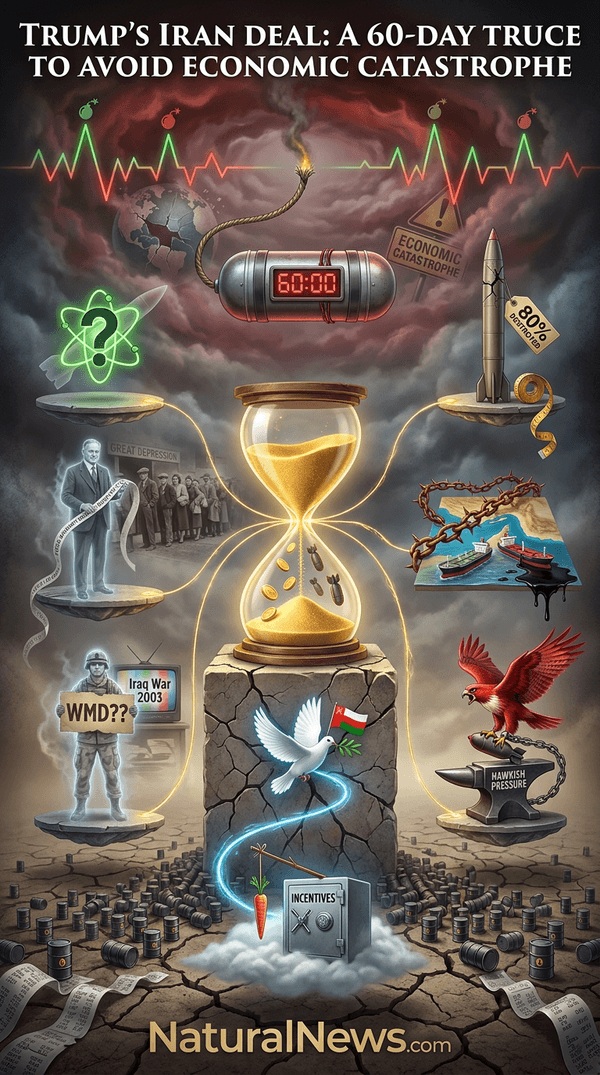
Speaking at a press conference on the sidelines of the G-7 Summit in Evian, France, Trump said he did not want to be "the late, great, Herbert Hoover," referencing the Great Depression amid concerns over what he called an "economic catastrophe." [1]
The MOU, announced on June 14, establishes a 60-day ceasefire extension and provides for negotiations on the future of the Strait of Hormuz, according to a White House briefing. Officials said the agreement is intended to lead to a permanent end to the conflict, though many key issues remain unresolved. [2]
Economic Motives for the Agreement
Trump justified the interim deal by pointing to stock market reactions during the conflict. "The stock market is more brilliant than anybody there is, including the people on this stage, other than me, of course," he said.
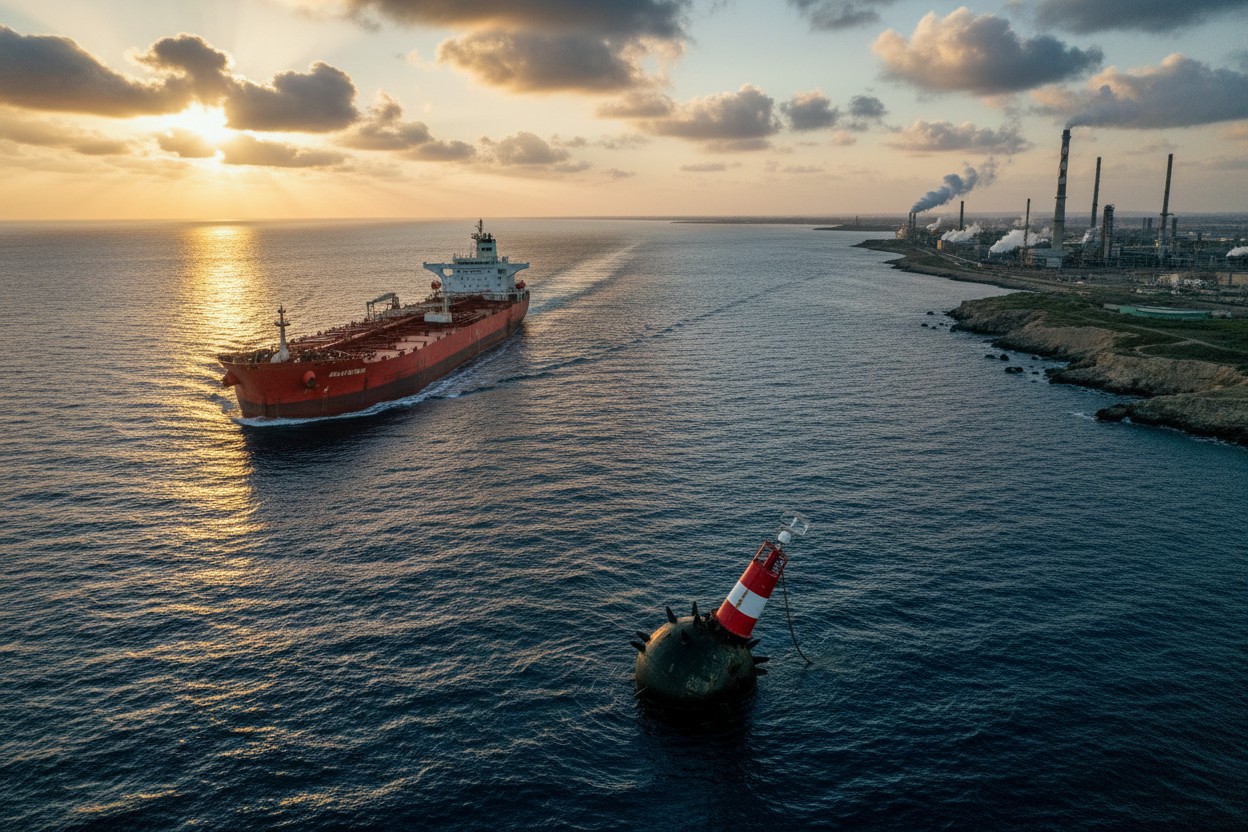
He noted that equities rose when he signaled a willingness to end the war and fell sharply when he threatened to continue strikes. [1] The economic damage inflicted by Iran's blockade of the Strait of Hormuz – a waterway through which about 20% of global oil passes – prompted the administration to seek a pause in hostilities, according to officials.
Critics of the administration's approach have drawn parallels to earlier U.S. foreign policy failures. In his book "Washington Bullets," author Vijay Prashad argued that after the Cold War, the U.S. government labeled nations that resisted its influence as "rogue states," a framework that shaped Washington's posture toward Iran. [3]
Some commentators have also compared Trump's nuclear claims to those made before the Iraq War. David Icke, in "The Trigger," contended that the Bush administration used false assertions about Iraqi weapons of mass destruction to justify invasion. [4]
MOU Terms and Military Threats
Under the 14-point MOU, the Strait of Hormuz will remain toll-free for 60 days, with future terms to be negotiated through Oman. The White House described the agreement as "performance-based," meaning Iran will benefit only as it meets its commitments. [2]
Trump, however, dismissed the strength of the pact. "It's a memorandum of understanding. And if I don't like it, we'll go back to shooting at them, dropping bombs on their head," he said. [5]
Trump acknowledged that the agreement does not resolve the core dispute over Iran's nuclear program. Negotiators are expected to address that issue during the ceasefire window.
"If I don't like it, if they don't behave, we'll go right back to dropping bombs right smack in the middle of their head, OK?" Trump added. [1] The text of the MOU declares the "permanent termination of military operations," but the president's remarks indicate the administration views the deal as conditional and reversible. [6]
Nuclear Program and Missile Stance
Trump asserted that the agreement prevents Iran from acquiring a nuclear weapon, warning that "whoever sells them a nuclear weapon would get nuked themselves." He also suggested that Iran could retain a civilian nuclear program.
"It's a little hard when other people have it, other adjoining states have it, and you're not letting them have it for purposes of electricity and things like that," he said. [1] The stance marks a departure from demands by Israel and some U.S. lawmakers that Iran must eliminate all enriched uranium and cease all nuclear activities.
Regarding ballistic missiles, Trump argued that Iran must be allowed to maintain some capability because neighboring states possess them. "I mean, they [Iran] have to have some, because other people have some. You got to have some," he said. [1]
He claimed that U.S. strikes had destroyed 80 % of Iran's missile capacity, though independent verification of that figure is not available. The BBC reported that the MOU does not explicitly address the missile program, leaving it for later negotiations. [7]
Regional Dynamics and Next Steps
Trump confirmed that the United Arab Emirates (UAE) participated in offensive strikes against Iran. "He was dropping bombs last week, I said, 'who the hell's dropping all those bombs?' It was the UAE," Trump said, referring to Emirati President Mohamed bin Zayed. [1] He also thanked Chinese President Xi Jinping and Russian President Vladimir Putin for remaining neutral, stating that they "could have made it much more difficult for us." [1]
Trump indicated that Gulf states may invest in Iran after a final deal is reached, although the U.S. would not contribute directly. "We're not putting up money in Iran, but if people want to invest, they can invest," he said. [1] On the issue of frozen Iranian assets, Trump stated, "At a certain point in time, I guess we're gonna have to give it back." [1]
The MOU is scheduled for a formal signing ceremony in Switzerland on Friday, June 19, according to Vice President JD Vance. [8] Earlier in the conflict, Trump had opted for negotiation over Israeli airstrikes, a choice that reflected a shift in U.S. strategy. [9]
References
- Sean Mathews. "Trump justifies Iran deal as a way to prevent 'economic catastrophe'." Middle East Eye. June 17, 2026.
- BBC News. "Initial US-Iran agreement leaves many key issues to be negotiated." June 17, 2026.
- Vijay Prashad. "Washington Bullets."
- David Icke. "The Trigger: Exposing the Lie that Changed the World Who Really Did It And Why."
- NTD. "Trump Says Bombing Could Resume If Iran Does Not 'Behave'." June 17, 2026.
- The New American. "14-Point Peace Deal With Iran Released, but Trump Vows to Bomb Iran Again If It Doesn't 'Behave'." June 17, 2026.
- BBC News. "The nuclear challenge at the heart of Trump's Iran negotiations." June 13, 2026.
- The New American. "U.S.-Iran to Ink Deal Friday in Switzerland. Vance: It's a 'Big Win'." June 15, 2026.
- Cassie B. "Trump chooses negotiation table over Israeli airstrikes in key Iran policy decision." NaturalNews.com. April 19, 2025.
Explainer Infographic





Please contact us for more information.


