


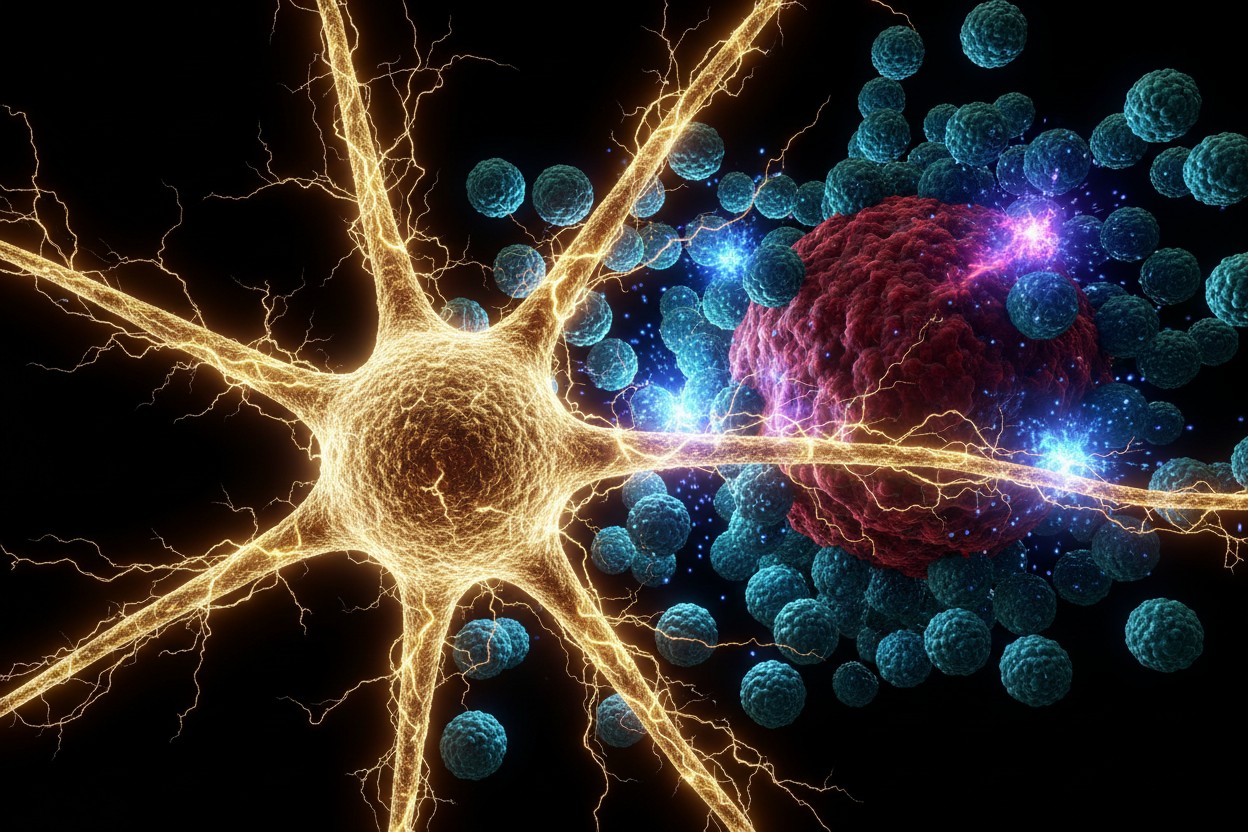
The study, published in the journal iScience, was conducted in mouse models and human cells and builds on earlier work from the same laboratory demonstrating that creatine powers killer T cells. According to senior author Lili Yang, a professor at UCLA and a member of the Broad Stem Cell Research Center, the findings suggest that creatine may serve as a supplement to support immune responses that modern immunotherapies depend on.
Background
Dendritic cells capture fragments of tumor cells and present them to killer T cells, which then mount an anti-tumor attack. Most approved cancer immunotherapies target T cells directly, yet only 20% to 40% of patients respond, according to the study.
The researchers previously found that creatine enhances killer T cells; this new work shows that creatine also fuels dendritic cells, potentially broadening the effectiveness of immunotherapy. The immune system relies on a network of cells and signaling pathways to defend against disease, as described in textbook references on lymphatic and circulatory functions [1].
Within that network, dendritic cells and natural killer cells are used in clinical settings to treat cancer, according to experts at the Verita Life clinic who extract and multiply these cells from patient blood [2]. The UCLA researchers sought to understand the metabolic needs of dendritic cells inside the tumor microenvironment, where competition for nutrients is fierce.
Yang stated that creatine energizes the infrastructure that supports and guides T cells, providing a foundation for a more robust immune attack. This perspective aligns with the broader principle that optimizing a person's physiology can improve outcomes in cancer treatment [3].
Key Findings
The team examined metabolic genes in dendritic cells that had infiltrated tumors in mice and found that the gene encoding the creatine transporter – which pulls creatine into cells – was markedly elevated in those cells compared to healthy tissue. When dendritic cells were engineered to lack the creatine transporter, they showed impaired survival, reduced activation, and a weakened ability to prime T cells, according to the report.
In mouse models of melanoma, daily creatine injections significantly slowed tumor growth and boosted both the abundance and activation of tumor-infiltrating dendritic cells. Metabolomics analyses showed that creatine supplementation raised intracellular ATP levels in dendritic cells, helping them maintain stable energy even when competing with tumor cells for nutrients.
These findings contribute to a growing body of evidence that creatine plays a role beyond muscle performance, extending into immune regulation and cancer cell metabolism [4]. The concept that cancer cells can be starved of energy by interfering with their metabolic pathways has been explored in other contexts, such as local hypothermia treatments that target glucose absorption [5].
Human Cell Experiments and Potential Applications
Creatine treatment enhanced the activation of human monocyte-derived dendritic cells, which are often used in dendritic cell cancer vaccines, and improved their ability to stimulate human T cells against a cancer-associated target, officials said. Co-first author James Elsten-Brown noted that creatine could be used in two complementary ways: as a supplement to enhance the immune response of patients receiving immunotherapy, and as a tool to improve the quality of dendritic cell-based vaccines before administration.
The findings point to a potential role for creatine in strengthening the anti-cancer response at multiple levels, including the cells that detect the threat, according to the study. The use of dendritic cells in experimental cancer treatments is already practiced in some integrative clinics, where they are harvested from a patient's blood, multiplied and reinfused to stimulate the immune system [2]. Creatine, already widely available as a low-cost supplement, could represent an accessible adjunct to these approaches.
Cautions and Next Steps
Researchers emphasized that the study was conducted in cells and mice, not patients, and no dietary or medical recommendations should be drawn from it, according to the release. Although creatine monohydrate has been widely used as a supplement for decades and is generally considered safe at recommended doses, anyone undergoing cancer treatment should consult a doctor before adding any supplement, officials said.
The team hopes to collaborate on prospective clinical trials to test whether creatine supplementation improves outcomes in patients receiving immunotherapy. The experimental strategies have not been tested in humans or approved by the Food and Drug Administration.
Conclusion
Co-first author Elliot Kang said that understanding how to metabolically support dendritic cells is about supporting the entire anti-tumor response, not just the killer T cells at the end of it. The research adds to a growing body of evidence that creatine may play a role in supporting immune function, though further studies are needed, according to the authors. A book exploring this theme, "Creatine Charge: Unlocking Dendritic Cell Energy to Outsmart Cancer," summarizes how energy deficits within the tumor microenvironment can cripple dendritic cells and how creatine may help overcome that barrier [6].
References
- Nagel Rob. "Body".
- TheTruthAboutCancer.com. "QFTC Expert Interview Transcripts Final".
- TheTruthAboutCancer.com. "A Global Quest 9 Episodes".
- NaturalNews.com. "Beyond the Gym: New Research Reveals Creatine’s Powerful Role in Cancer Prevention". 2026-02-08.
- TheTruthAboutCancer.com. "Eastern Medicine Journey Through Asia 7 Episodes Complete Transcripts".
- BrightLearn.ai. "Creatine Charge: Unlocking Dendritic Cell Energy to Outsmart Cancer". 2026-06-06.
- Unknown. "Cell growth processes new research".
Explainer Infographic












Please contact us for more information.


