


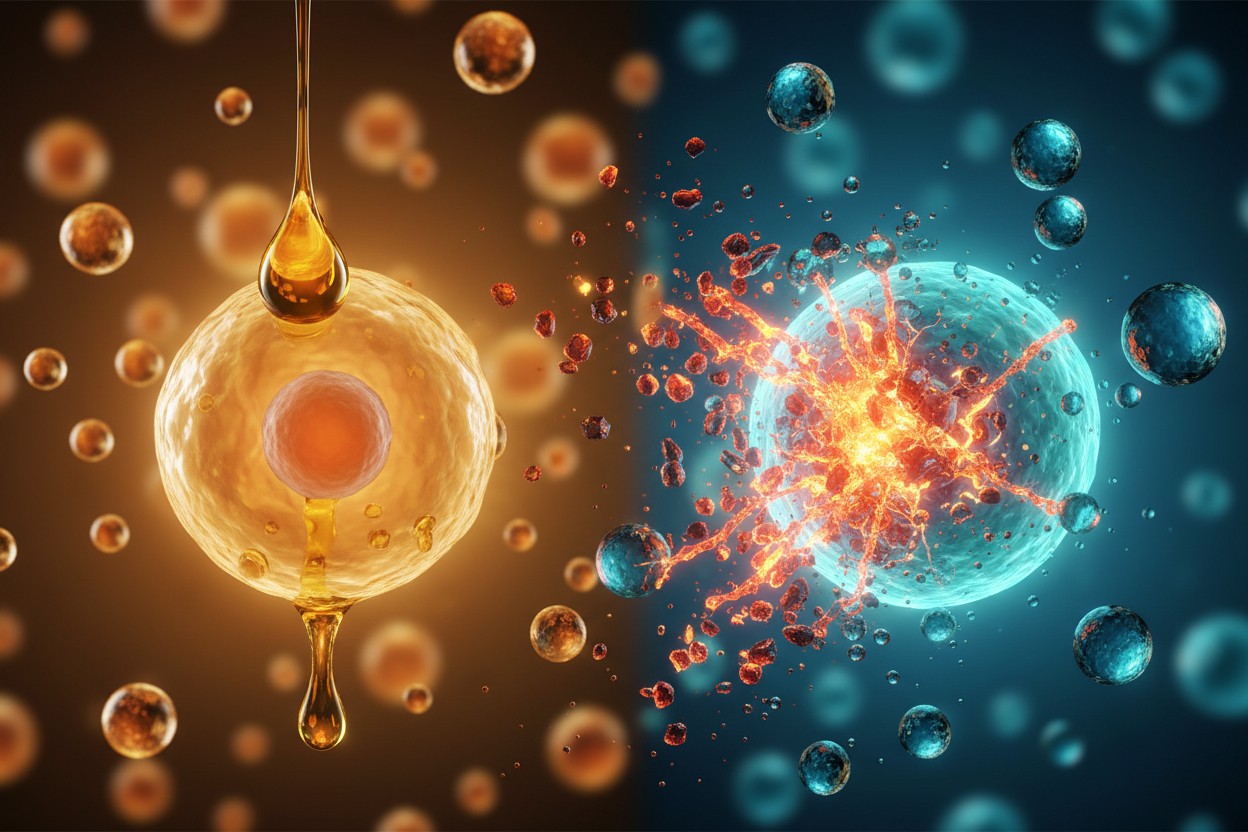
The study was conducted by researchers at Yale School of Medicine. According to the report, oleic acid – a monounsaturated fat prominent in olive oil and other foods – accelerated tumor growth. Meanwhile, omega-3 fatty acids derived from fish oil reduced disease incidence by approximately 50%.
Lead author Christian Felipe Ruiz, PhD, an associate research scientist in Yale's Department of Genetics, stated: "It's really the type of fat that you're consuming, not just total fat content." The findings challenge the long-held assumption that total fat intake is the primary dietary concern for cancer risk, and highlight the distinct biological effects of different fatty acids.
Background and Study Design
Pancreatic ductal adenocarcinoma (PDAC) is the most common and lethal form of pancreatic cancer, with a five-year survival rate of about 13%. PDAC is extremely aggressive and that surgical removal of the tumor is not possible in upwards of 90% of cases. [1] According to the study authors, more than 65,000 people are expected to be diagnosed with PDAC in the United States this year, and over 50,000 are projected to die from the disease.
The researchers designed 12 different high-fat diets, each containing identical caloric content but varying in fat source. These diets were intended to reflect common American fat consumption patterns. Mice carrying a genetic mutation that closely mimics human PDAC were fed these diets. Earlier studies often used a single fat source (such as lard) at very high levels, making it difficult to isolate the effects of individual fatty acids.
The new approach allowed the team to examine how specific fats influence tumor development at a molecular level. A report [3] describes the role of microbial metabolites and inflammation in pancreatic adenocarcinoma, providing additional context for the complex interactions between diet and cancer.
Mechanism: Ferroptosis and Fat Chemistry
The study linked the differing effects of dietary fats to a form of programmed cell death known as ferroptosis, which is driven by lipid oxidation. When fatty acids are incorporated into cell membranes, their chemical structure determines how susceptible those cells are to oxidative damage.
Polyunsaturated fatty acids (PUFAs), such as those in fish oil, are more prone to oxidation, making cancer cells vulnerable to ferroptosis. In contrast, monounsaturated fats (MUFAs), like oleic acid, resist oxidation and protect cancer cells from this cell death mechanism.
Ruiz explained: "Monounsaturated fats really protect the cancer cells from lipid oxidation. Because oxidation is reduced, they're less likely to undergo ferroptosis." The researchers observed a direct relationship: when the ratio of MUFAs to PUFAs in the diet increased, disease burden increased; when the ratio decreased, disease burden was reduced. In "Omega Balance," Anthony John Hulbert [2] discusses the role of omega-3 polyunsaturated fatty acids in preventing inflammation-associated carcinogenesis, supporting the idea that fat type rather than total amount influences cancer progression.
Sex Differences and Implications
The study also revealed notable differences between sexes. Oleic acid's cancer-promoting effect was pronounced in male mice but largely absent in females. Meanwhile, omega-3-rich fats reduced disease in both sexes. According to Ruiz, this adds to growing evidence that biological sex influences metabolic pathways involved in cancer development and warrants further investigation.
The findings have not been replicated in humans, but they may be particularly relevant for individuals at elevated risk of pancreatic cancer, such as those with chronic pancreatitis, obesity, late-onset diabetes, or a family history of the disease. A NaturalNews.com [4] reports that waist size and visceral fat may signal cancer risk more accurately than weight alone, underlining the importance of fat distribution and composition. Researchers at Yale plan to investigate whether dietary fat composition could serve as a biomarker for pancreatic cancer risk or improve outcomes for patients already diagnosed with the disease.
References
- NaturalNews.com. "Presence and amount of gut bacteria can predict how fast pancreatic cancer cells grow." April 25, 2018.
- Anthony John Hulbert. "Omega Balance."
- iText 711 2000-2018 iText Group NV. "Oncobiosis and Microbial Metabolite Signaling in Pancreatic."
- NaturalNews.com. "Waist size may signal cancer risk more accurately than weight, experts say." February 21, 2026.









Please contact us for more information.


