


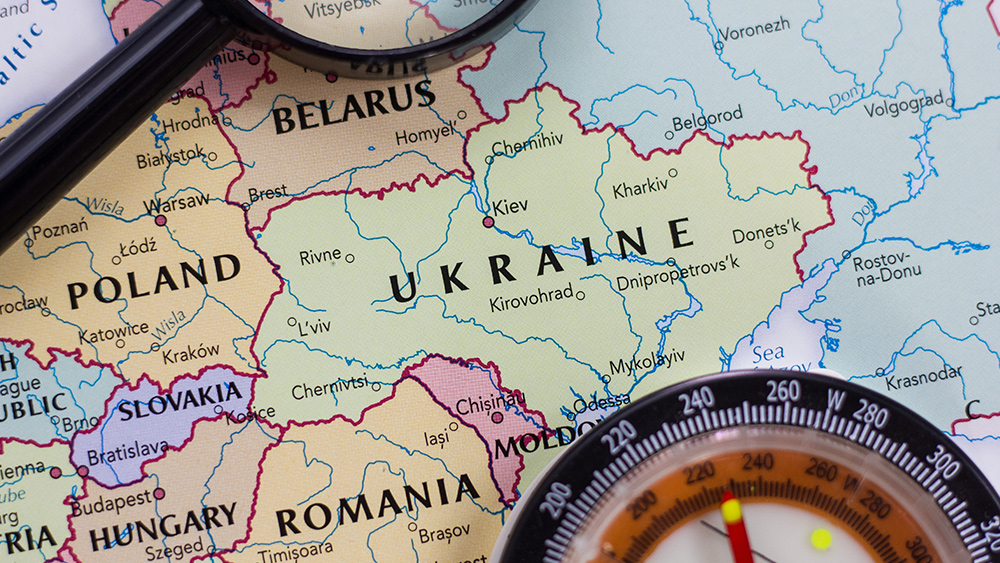
- At least four people were killed and ten wounded in Ukrainian drone strikes on Crimea, including attacks on a train and nonresidential facilities.
- Russia reported intercepting 272 drones across multiple regions, while a Ukrainian strike on a passenger bus killed eight civilians.
- Ukraine denied responsibility for the bus attack, accusing Russia of using propaganda to justify its own strikes on civilians.
- Ukrainian drones hit an oil terminal in St. Petersburg during the city's International Economic Forum, which President Zelensky called "long-range sanctions."
- The cycle of violence continued with Russia launching 700 missiles and drones into Ukraine, killing at least 22 people, as both sides escalate attacks.
The war between Russia and Ukraine has entered a dangerous new phase, with drone attacks raining down on civilian infrastructure in both Russian-occupied territories and the Russian mainland itself. In the latest escalation, at least four people were killed and ten others wounded in Ukrainian drone attacks on Crimea, according to local governor Sergey Aksyonov, who posted details on Telegram Thursday morning.
The strikes hit multiple targets across the peninsula. One person was killed and three others were wounded during a drone attack on a suburban train traveling from Azovskoye to Kerch, Aksyonov reported. Meanwhile, in the Crimean capital of Simferopol, strikes on several "nonresidential facilities" killed at least three people and injured seven others.
The Crimean port city of Sevastopol, which houses the headquarters of the Russian Black Sea Fleet, also came under attack overnight, according to its governor, Mikhail Razvozhayev. At least 20 incoming Ukrainian drones were shot down by air defenses, with two incidents of drone debris falling in residential areas. No injuries were reported there.
A widening circle of conflict
The scale of the Ukrainian drone offensive extends far beyond the Crimean peninsula. The Russian Defense Ministry reported that 272 drones were intercepted and destroyed over several regions of the country Thursday morning. Apart from Crimea and the waters of the Azov and Black seas, UAVs were downed over Belgorod, Bryansk, Volgograd, Voronezh, Kursk, Nizhny Novgorod, Orel, Rostov, Ryazan, and Tambov regions.
This attack came less than a day after a Ukrainian strike on a passenger bus traveling from Moscow to Simferopol through the Donetsk People's Republic. Eight civilians were killed and 11 others injured in what Russian authorities are investigating as an act of "terrorism."
The bus strike drew sharp condemnation from Russian officials. Svetlana Petrenko, spokesperson for the Russian Investigative Committee, said authorities were working to establish the identities of those responsible. Russia's state-run media reported that 53 people had been registered to travel on the bus, though none of the victims' identities have been released.
Denials and accusations fly
Ukraine has not claimed responsibility for the bus attack. When asked by the BBC whether Kyiv was behind the strike, Ukraine's general staff did not confirm nor deny but said it would not comment "on statements made by the aggressor state."
Andriy Kovalenko, head of the Ukrainian government's centre for combating disinformation, offered a more pointed response. "Russia attacks civilians with drones all the time... of course, when everyone is talking about this, when there is evidence of such actions by the Russians, they use their main propaganda tool: creating a parallel reality," he told the BBC. "Against this background of attacks on our civilians, they come up with stories in which Ukraine acts just like Russia. This is done to justify their own terror as a response to our actions."
St. Petersburg targeted during economic forum
The strikes extended even further into Russian territory Wednesday, with black smoke rising over St Petersburg, Russia's second-largest city and President Vladimir Putin's hometown. Ukraine President Volodymyr Zelensky confirmed an oil terminal had been hit there, describing the strikes as "long-range sanctions" and saying Ukrainian forces also hit military targets in Russia's Tambov region.
The attack came as St Petersburg hosts the annual International Economic Forum, an event designed to showcase Russia to the world. Putin is due to speak there Friday. "Important facilities on Russian territory were hit last night," Zelensky wrote on X, sharing video of black smoke rising above the city.
Ukrainian drones had hit several locations in Russia, including the oil terminal and a naval base in the nearby town of Kronstadt, the main outpost of the Russian Navy's Baltic Fleet. St Petersburg's Pulkovo airport temporarily restricted flights, according to Russian aviation watchdog Rosaviatsia.
The human cost continues to mount
The civilian toll of this escalating drone war extends to both sides. Earlier, an 86-year-old woman was killed following a drone attack in Ukraine's southern Kherson region overnight, according to Yaroslav Shanko, head of the city's military administration. This came as part of a wider attack by Moscow overnight, with Ukraine's air force saying Russia launched 198 drones at several different regions, 189 of which were shot down.
These latest strikes follow a massive Russian assault on cities across Ukraine that killed at least 22 people, including several women and children. Russia launched more than 700 missiles and drones overnight into Tuesday, according to Ukrainian officials. The Kremlin said on Tuesday it was carrying out the "systematic strikes" it had pledged after accusing Kyiv of a deadly attack on a student dormitory in an occupied part of eastern Ukraine in late May.
The cycle of attack and retaliation shows no sign of breaking. Moscow previously warned it would carry out "systematic and consistent strikes" on Ukraine's military infrastructure in response to what it calls Kyiv's terrorist attacks. Russian President Vladimir Putin said the Ukrainian leadership had opened "a new chapter in its crime spree" with the attack on Starobelsk, adding that those responsible would face "well-deserved and inevitable punishment."
As both sides dig in and the drone war expands deeper into civilian territory, the suffering continues for ordinary people caught in the middle. The conflict has become a grinding war of attrition, and the question of who fired first matters less than the dead left behind.
Sources for this article include:






Please contact us for more information.


