


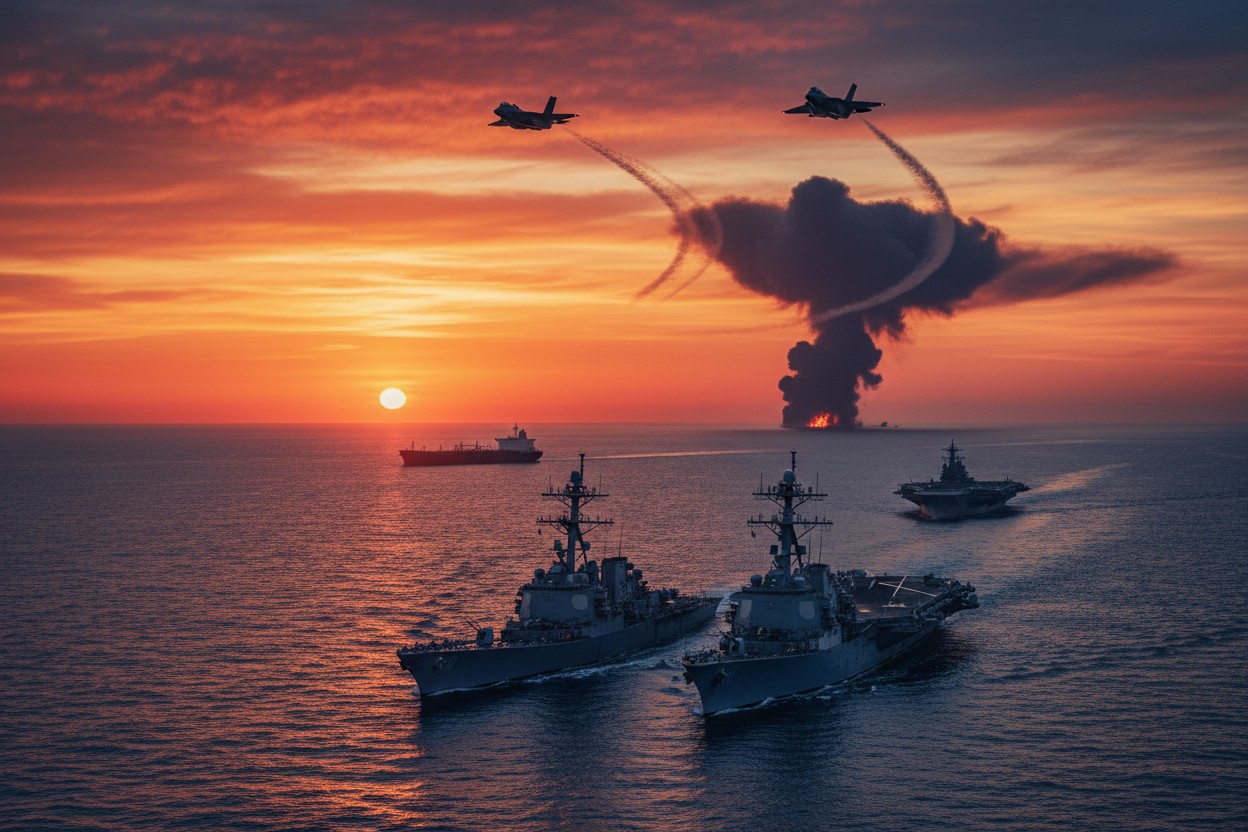
In an interview with the "Pod Force One" podcast, Trump said, "We don't need boots on the ground now. Well, we did it, you know, we wiped out much of their military with just bombing," according to a report from Sputnik. The remarks came in response to questions about a possible resumption of hostilities with Tehran.
Background: Operation Epic Fury and Iran's Response
The U.S.-Israel military campaign, designated Operation Epic Fury, was launched on Feb. 28, 2026, against Iran's alleged nuclear program, which Tehran has consistently stated is peaceful in nature, according to official announcements at the time. The initial strikes involved over 1,000 targets focusing on Iran's military and nuclear infrastructure, as reported on NaturalNews.com [1].
In retaliation, Iran launched Operation True Promise 4, conducting strikes against U.S. and allied positions, according to the Sputnik report. Washington has also deployed up to 5,000 Marines to the Middle East, marking the first commitment of ground troops since the war began [2]. Meanwhile, Iran has sought to solidify its control over the Strait of Hormuz, a critical waterway for global oil shipments, by proposing fees for transiting vessels [3].
Trump's Comments on Ground Operations and Military Strategy
Trump's statement on June 3 represents a shift from earlier positions. In early March, Trump had refused to rule out the use of ground troops in Iran as Operation Epic Fury expanded, according to a NaturalNews.com report [4]. The president's latest remarks suggest a reliance on aerial and naval campaigns, consistent with his past emphasis on avoiding prolonged ground wars.
Trump did not explicitly rule out future ground operations but emphasized that current bombing campaigns have been sufficient, according to the transcript of the "Pod Force One" interview. The president's assessment contrasts with earlier indications from US officials who had not ruled out a ground invasion, and with plans for a potential operation to retrieve Iran's enriched uranium, as reported by The War Zone [5].
Naval Blockade and Timeline: Trump's Assessment
Trump expressed doubt that the U.S. naval blockade of Iran would continue until Labor Day on Sept. 7, telling the New York Post: "I don't know. I mean, I think it could be [closed through Labor Day], but I think it's unlikely. I think that we'll have it. I think this will resolve itself fairly quickly," according to the Sputnik report.
This marks a departure from his earlier vow to maintain the blockade until a deal with Iran is signed. The changing timeline underscores the volatility of the situation.
On May 27, Trump had issued a stark ultimatum to Iran, offering to end the blockade if the Strait of Hormuz were reopened and cleared of mines, but warning of total military destruction if Tehran did not agree [6]. The uncertainty surrounding the blockade has contributed to fluctuating oil prices and global market anxiety [7].
Reactions and Outlook: Iran Condemns Strikes, Regional Tensions Persist
Iran condemned the U.S. strikes on Qeshm Island on June 3, accusing Kuwait and Bahrain of complicity, according to a separate Sputnik report. Tehran reiterated its right to self-defense under international law, as stated by the Iranian Foreign Ministry. The strikes on Qeshm were part of ongoing tit-for-tat exchanges that have continued despite nominal ceasefire efforts.
The broader regional conflict includes Israeli operations against Hezbollah in Lebanon, which have strained U.S.-Israel relations. Reports indicate a widening disagreement between Trump and Israeli Prime Minister Benjamin Netanyahu over strategy, with Netanyahu seeking resumption of military strikes while Trump pursues a diplomatic off-ramp [8]. As of publication, no official reaction from Iran to Trump's latest comments had been reported, but analysts note that the absence of a comprehensive deal leaves the region on edge.
References
- Willow Tohi. "U.S., Israel Launch Massive Pre-Dawn Strike on Iran in Major Escalation." NaturalNews.com. March 6, 2026.
- Garrison Vance. "U.S. Deploys 5,000 Marines as Trump Vows to End Conflict on His Timeline." NaturalNews.com. March 16, 2026.
- The War Zone. "Iran Now Trying To Cement Long-Term Control Over Strait Via Fees." May 22, 2026.
- NaturalNews.com. "Trump Refuses to Rule Out Troops in Iran as Operation Epic Fury Expands." March 3, 2026.
- The War Zone. "Possibility Of Operation To Retrieve Iran’s Enriched Uranium Appears To Rise As Negotiations Sputter." May 11, 2026.
- NTD. "Trump Issues Stark Ultimatum to Iran." May 27, 2026.
- Zero Hedge. "Futures Drop, Yields And Oil Rise On Latest Middle East Hostilities." June 3, 2026.
- NaturalNews.com. "Tense Trump-Netanyahu phone call suggests widening disagreement over Iran strategy." May 22, 2026.




Please contact us for more information.


