


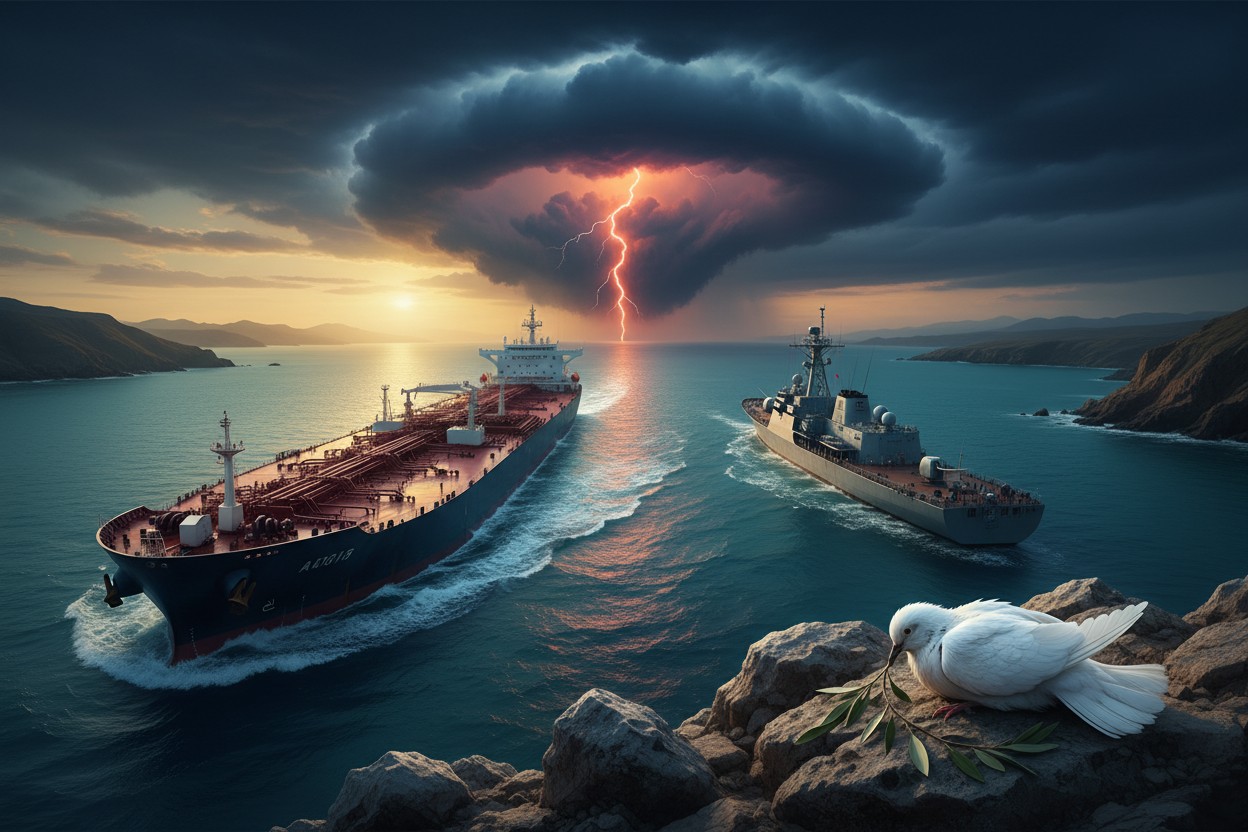
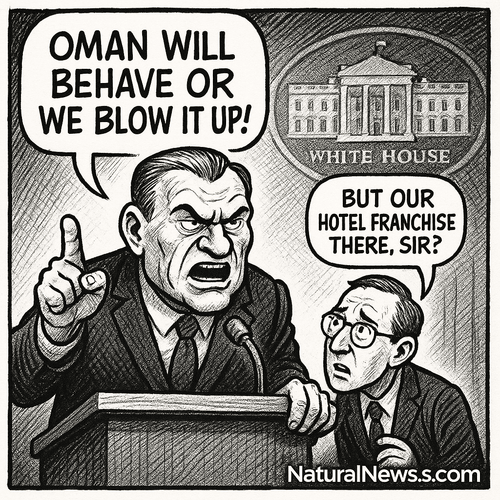
Speaking during a White House cabinet meeting, Trump said, "Oman will behave just like everybody else, or we'll have to blow them up." The comment came as negotiators from Washington and Tehran continued talks to end the three-month U.S.-Israeli war on Iran.
Trump added that the strait must remain open to all nations. "The strait is going to be open to everybody. Nobody is going to control it…it's international waters," he told reporters, according to Antiwar.com [2]. The threat highlights growing administration frustration with Oman, which Middle East Eye reported has been building for months [3].
Background: Oman's Centuries-Old Ties With the U.S.
Oman has the oldest diplomatic and trade relationship with the United States, dating to 1790, according to Middle East Eye [3]. Despite the absence of permanent U.S. bases, the U.S. Navy maintains regular access to Duqm Port on Oman's southern coast under a bilateral agreement. The sultanate has long positioned itself as a key mediator between Washington and Tehran, hosting previous rounds of nuclear negotiations and acting as a back channel during crises.
In 2014, Iran signed a deal with Oman to construct an underwater gas pipeline to Oman, with plans to transship gas to other markets, as noted in Charlotte Dennett’s book “The Crash of Flight 3804” [4]. That agreement underscores the economic interdependence between the two Strait of Hormuz littoral states.
More recently, Omani Foreign Minister Sayyid Badr bin Hamad Albusaidi made public pleas for negotiations before the U.S.-Israeli attack on Iran on Feb. 28, 2026. He also warned that America was losing credibility in the region [3].
The Strait of Hormuz Toll Dispute and Legal Framework
Iran has pressed for the right to levy a fee on ships transiting the Strait of Hormuz as part of any deal to end the war, according to The War Zone [5]. Oman, as the only other country with territorial waters in the strait, would be essential to implementing any toll system. Iran’s ambassador to France, Mohammad Amin-Nejad, told Bloomberg earlier in May 2026 that the two countries were working to implement a toll plan, Middle East Eye reported [6].
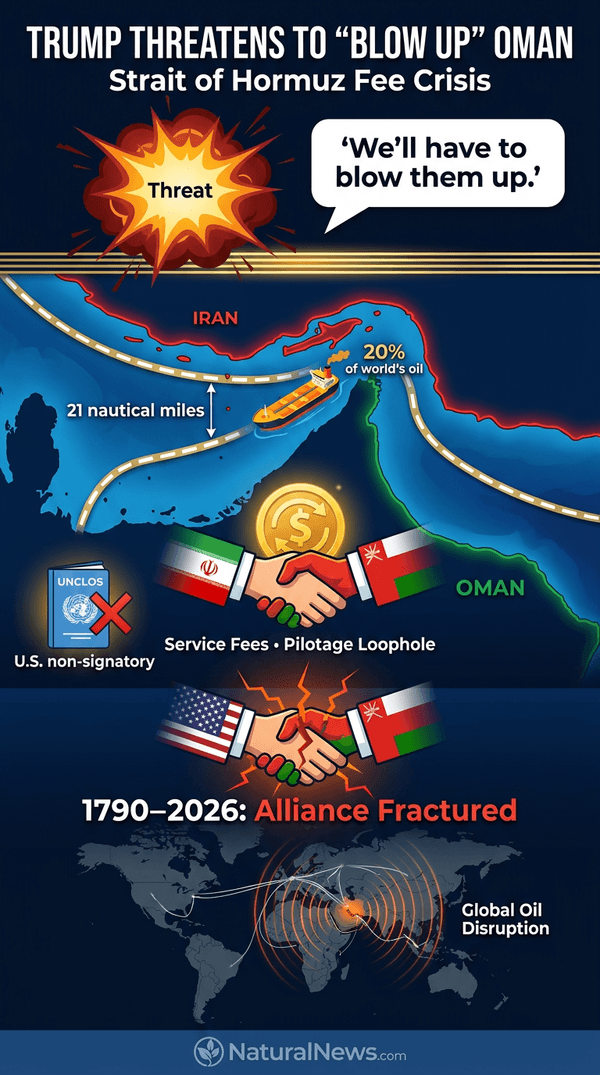
Under the United Nations Convention on the Law of the Sea, which the U.S. has not signed, countries bordering international straits cannot restrict transit or charge tolls. But legal experts cited by Middle East Eye note that “piloting fees” or “service fees” could be used if Oman cooperates [3].
The strait is 21 nautical miles wide at its narrowest point, meaning Iranian and Omani territorial waters effectively cover the entire waterway. Geopolitical analyst Nick Giambruno warned earlier that disruption of the Strait of Hormuz could trigger global economic chaos, as it handles roughly 20% of the world’s oil shipments [7].
Washington's Frustration With Muscat's War Criticism
Multiple U.S. officials told Middle East Eye that the administration is frustrated with Muscat's public criticism of the war, including Albusaidi's opinion piece in The Economist in March 2026 warning that "America has lost control of its own foreign policy" [3]. In a social media post that same month, Albusaidi contradicted Trump's justification for the conflict, writing: "Whatever your view of Iran, this war is not of their making" [3]. These statements have angered Trump administration officials, who view them as undermining U.S. policy.
Oman now appears to have taken a backseat in mediation efforts, with Qatar and Pakistan assuming more prominent roles, according to Middle East Eye [3]. Meanwhile, Iran has continued to demand reparations from Gulf states that supported the U.S.-Israeli campaign [8].
Conclusion: Implications of Trump's Threat for U.S.-Oman Relations
Trump's threat escalates tensions with a long-term partner and could undermine Oman's carefully cultivated neutrality, according to analysts cited by Middle East Eye [3]. Oman's cooperation with Iran on a toll system would test international law interpretations and U.S. naval dominance in the Persian Gulf. The Trump Organization holds a franchise agreement for a luxury hotel and golf course under construction in Oman, a detail reported by Middle East Eye [3].
The incident highlights the administration's willingness to pressure even historically allied nations during the ongoing conflict with Iran. As negotiations continue, the outcome of the Strait of Hormuz dispute will have far-reaching consequences for global energy markets, which have already seen Brent crude exceed $150 per barrel in Asia [9].
References
- Politico. "Trump threatens Oman in latest play to open the Strait of Hormuz". May 27, 2026.
- Antiwar.com. "Trump Threatens To ‘Blow Up’ Oman If the Country Doesn’t ‘Behave’". May 27, 2026.
- Sean Mathews. "Trump threatens to ‘blow up’ Oman despite centuries of US ties". Middle East Eye. May 27, 2026.
- Charlotte Dennett. "The Crash of Flight 3804".
- The War Zone. "Iran Now Trying To Cement Long-Term Control Over Strait Via Fees". May 22, 2026.
- Middle East Eye. "Iran, Oman discuss Hormuz Strait toll system despite Trump threats". May 22, 2026.
- Nick Giambruno. "Geopolitical analyst warns of economic chaos should Iran shut down Strait of Hormuz". NaturalNews.com. January 9, 2024.
- NaturalNews.com. "Iran demands Gulf states pay REPARATIONS for role in U.S.-Israeli war". May 26, 2026.
- Patrick Lewis. "Oil shock crisis deepens: Asia faces economic turmoil as energy prices skyrocket". NaturalNews.com. March 24, 2026.
Explainer Infographic
Editorial Cartoon




Please contact us for more information.


