



The Energy Revolution We Actually Need
The war President Trump launched against Iran on February 28 has already cut off an estimated 20 percent of the world's oil and gas supply. The Strait of Hormuz is effectively closed, Iran is demanding fees for any ship that dares pass through, and global energy markets are in convulsions. [1] As I warned months ago in my article "The Strait of Hormuz Isn't Open Until Iran Says It's Open,” the U.S. Navy has declined escort requests, leaving commercial shipping stranded. [2]
But here's why this matters in a way you haven't heard from the mainstream media. This chaos has an overlooked silver lining: a massive acceleration of support for breakthrough energy technologies that can finally free humanity from its addiction to fossil fuels and centralized power grids. Specifically, low-energy nuclear reactions (LENR) – long suppressed by the oil-and-gas establishment – are now being fast-tracked by governments that are desperate for any alternative to the Persian Gulf's stranglehold. The war is forcing the energy revolution we actually need.
The End of Cheap Oil and Gas: Why the Old Arguments No Longer Fly
The war has permanently damaged Middle East energy infrastructure. The U.S. military's own CENTCOM chief admitted that 90 percent of Iran's defense industry has been destroyed, but that came at the cost of crippling oil and gas production facilities across the region. [3] Countries like Japan and South Korea can no longer rely on Persian Gulf supplies. The old excuse that “we don't need LENR because we have plenty of oil” is dead.
Meanwhile, the world is growing desperate. As I wrote in my article “The Window Is Closing: How the Iran Conflict Just Unleashed a Global Famine Trigger,” the Haber-Bosch fertilizer process – which depends on cheap natural gas – is being choked off, threatening the food supply for half the planet. [4]
Desperation is also driving serious investment into unconventional energy sources. Japan, which had effectively abandoned nuclear power after Fukushima, is now reviving its nuclear plans, including small modular reactors and advanced technologies. [5] Even the Atlantic Council acknowledges that the war is accelerating structural shifts in energy policy worldwide. [6] In his book "Trumping Trudeau," Ezra Levant noted that Trump's energy policy was explicitly hostile to conflict oil from OPEC. [7] Well, now that hostility has erupted into open war, and every nation that depends on imported oil is scrambling to find an exit ramp.
Cold Fusion Is Real, and It's Finally Being Commercialized
I've covered LENR – what used to be called 'cold fusion' – for years, and I'm convinced it works. It's a real, clean, safe heat source that produces no harmful radiation and no long-lived waste. After decades of mockery and suppression, the technology is now being commercialized by companies with serious institutional backing. Japanese firm Clean Planet has developed a QHe boiler module that they say will generate 24 kW of heat, weighs only 12 kilograms, and has secured nearly 120 patents across multiple countries. Mitsubishi and the Tokyo Metropolitan Government are reportedly backing it with advisory support and financial support.
This technology uses nickel, copper, and hydrogen to produce excess heat through a low-energy nuclear reaction. Unlike a conventional nuclear reactor, there is no chain reaction, no meltdown risk, and no radioactive waste. It can run 24/7 on a few grams of hydrogen fuel per month (plus a supply of water to be turned into steam to drive a small steam turbine).
In the USA, a company called Brillouin Energy (BrillouinEnergy.com) is working on a Hydrogen Hot Tube (HHT) reactor the generates excess heat stemming from low-temperature, low-energy nuclear reactions (LENR). There are other companies around the world pursuing the commercialization of similar solutions.
The war in Iran has finally given governments the political cover to fund this research openly, because the alternative – continued dependence on a region that can be shut down by a single Iranian general – is no longer acceptable.
The Decentralized Energy Future: Power Your Home Without the Grid
Pairing LENR with the new high-cycle batteries coming out of China and elsewhere creates a truly off-grid home energy system. Imagine a LENR module about the size of a suitcase that generates 10 kilowatts of usable electricity, enough to run an entire home and charge an electric vehicle, 365 days a year with no grid connection. This is not science fiction; it's engineering reality that is now being accelerated by the very war that has sent oil prices above $100 a barrel. [8]
Decentralization removes vulnerability to geopolitics, grid failures, and the insane power demands of AI data centers that are already eating up the entire eastern U.S. power grid. In my interview with Michael Yon, we discussed how the Strait of Hormuz closure would benefit Russia and China by pushing the world to alternative energy sources. [9] Now that same logic applies to every household. Why tie your family's survival to a pipeline that can be cut by a drone strike or a naval blockade? William Kovacs, in his book "Devolution of Power," argues that rolling back federal control over energy is essential to preserving the republic. [10] LENR makes that devolution physically possible at the household level.
This is the ultimate solution for energy independence – and it's emerging just in time.
The Unlikely Catalyst: How Trump's War Forced the World to Move Forward
Donald Trump started this war even though he is a pro-oil president who promised 'energy dominance.' But the resulting energy crisis has pushed governments to pursue LENR research they previously ignored. As I wrote in "Why Trump Has Already Lost: The Unwinnable War and the Shattered Illusion of American Power," the conflict has exposed the fragility of the entire hydrocarbon-based global economy. [11] The irony is delicious: Trump may inadvertently kill the hydrocarbon industry by accelerating the very alternatives he never wanted.
House Republicans just canceled a war powers vote that could have reined in the president, [12] and the Senate is advancing its own resolution. [13] Meanwhile, the Bulletin of the Atomic Scientists notes that the war will likely speed a global transition away from fossil fuels and toward nuclear energy. [14] And the Guardian reports that, despite Trump's disdain for clean energy, the war is accelerating the global shift away from oil and gas. [15]
This war could be the pivot point that ends humanity's addiction to oil and gas from the volatile Middle East – and it's happening whether Trump likes it or not. (We may have to award Trump a "green energy" trophy of some kind, when it's all said and done.)
The Silver Lining: A Turning Point for Civilization
Short-term chaos and suffering are real. Americans are paying more for gasoline, fertilizer, and food. [16] But the long-term shift to clean, decentralized LENR power will be a game-changer for civilization. I will continue to advocate for and validate this technology because it offers freedom from centralized power systems – the same systems that governments and globalists use to control populations.
The timing of these breakthroughs shows that human ingenuity and necessity are converging to solve our energy crisis just when we need it most. The New York Times has reported that the Iran crisis could push countries to rethink their reliance on oil and gas. [17] I agree, but I believe the answer is not more solar farms or wind turbines – it's the decentralized, always-on power of LENR that will make every home its own power plant. That is the silver lining of Trump's disastrous war, and it is the future we must build now.
I'll be covering this technology in upcoming interviews at Decentralize.TV so be sure to check that site for new episodes.
References
- Iran Now Trying To Cement Long-Term Control Over Strait Via Fees. - The War Zone. May 22, 2026.
- The Strait of Hormuz Isn't Open Until Iran Says It's Open. - NaturalNews.com. Mike Adams. March 11, 2026.
- CENTCOM Chief: 90 Percent of Iran's Defense Industry Gone. - The New American. May 15, 2026.
- The Window Is Closing: How the Iran Conflict Just Unleashed a Global Famine Trigger. - NaturalNews.com. Mike Adams. March 5, 2026.
- Trends-Journal-2023-01-01.
- How the Iran war could shift energy policies around the world. - Atlantic Council.
- Trumping Trudeau. - Ezra Levant.
- Trump Projects Quick End to Iran Conflict, Forecasts Drop in Oil Prices. - NaturalNews.com. Garrison Vance. March 10, 2026.
- Mike Adams interview with Michael Yon - June 26 2025.
- Devolution of Power: Rolling Back the Federal State to Preserve the Republic. - William L Kovacs.
- Why Trump Has Already Lost: The Unwinnable War and the Shattered Illusion of American Power. - NaturalNews.com. Mike Adams. March 5, 2026.
- House Republicans Block Vote on Iran War Powers Resolution That Was Expected To Pass. - Antiwar.com. May 21, 2026.
- Senate advances war powers resolution against Trump's Iran war for first time. - NaturalNews.com. May 20, 2026.
- The war on Iran will speed the transition away from fossil fuels and toward nuclear energy. - Bulletin of the Atomic Scientists. March 1, 2026.
- Trump may not be a fan of clean energy but Iran war is accelerating global shift from oil and gas. - The Guardian. May 3, 2026.
- US senators criticise Trump over economic impact of Iran war. - Middle East Eye. May 16, 2026.
- Will the Iran Crisis Push the World to Rethink Oil and Gas? - The New York Times. March 31, 2026.
Explainer Infographic:

Editorial Cartoon

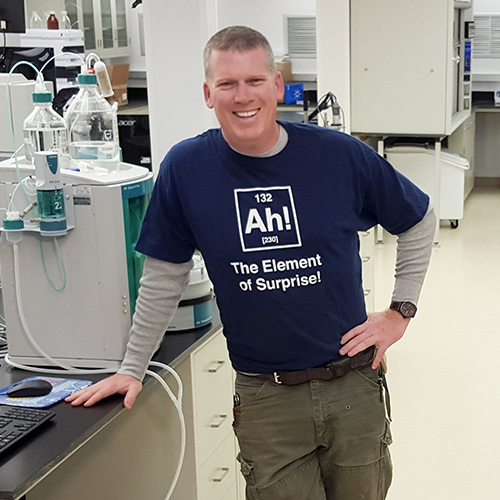
Mike Adams (aka the "Health Ranger") is the founding editor of NaturalNews.com, a best selling author (#1 best selling science book on Amazon.com called "Food Forensics"), an environmental scientist, a patent holder for a cesium radioactive isotope elimination invention, a multiple award winner for outstanding journalism, a science news publisher and influential commentator on topics ranging from science and medicine to culture and politics.
Mike Adams also serves as the lab science director of an internationally accredited (ISO 17025) analytical laboratory known as CWC Labs. There, he was awarded a Certificate of Excellence for achieving extremely high accuracy in the analysis of toxic elements in unknown water samples using ICP-MS instrumentation.
In his laboratory research, Adams has made numerous food safety breakthroughs such as revealing rice protein products imported from Asia to be contaminated with toxic heavy metals like lead, cadmium and tungsten. Adams was the first food science researcher to document high levels of tungsten in superfoods. He also discovered over 11 ppm lead in imported mangosteen powder, and led an industry-wide voluntary agreement to limit heavy metals in rice protein products.
Adams has also helped defend the rights of home gardeners and protect the medical freedom rights of parents. Adams is widely recognized to have made a remarkable global impact on issues like GMOs, vaccines, nutrition therapies, human consciousness.








Please contact us for more information.


