


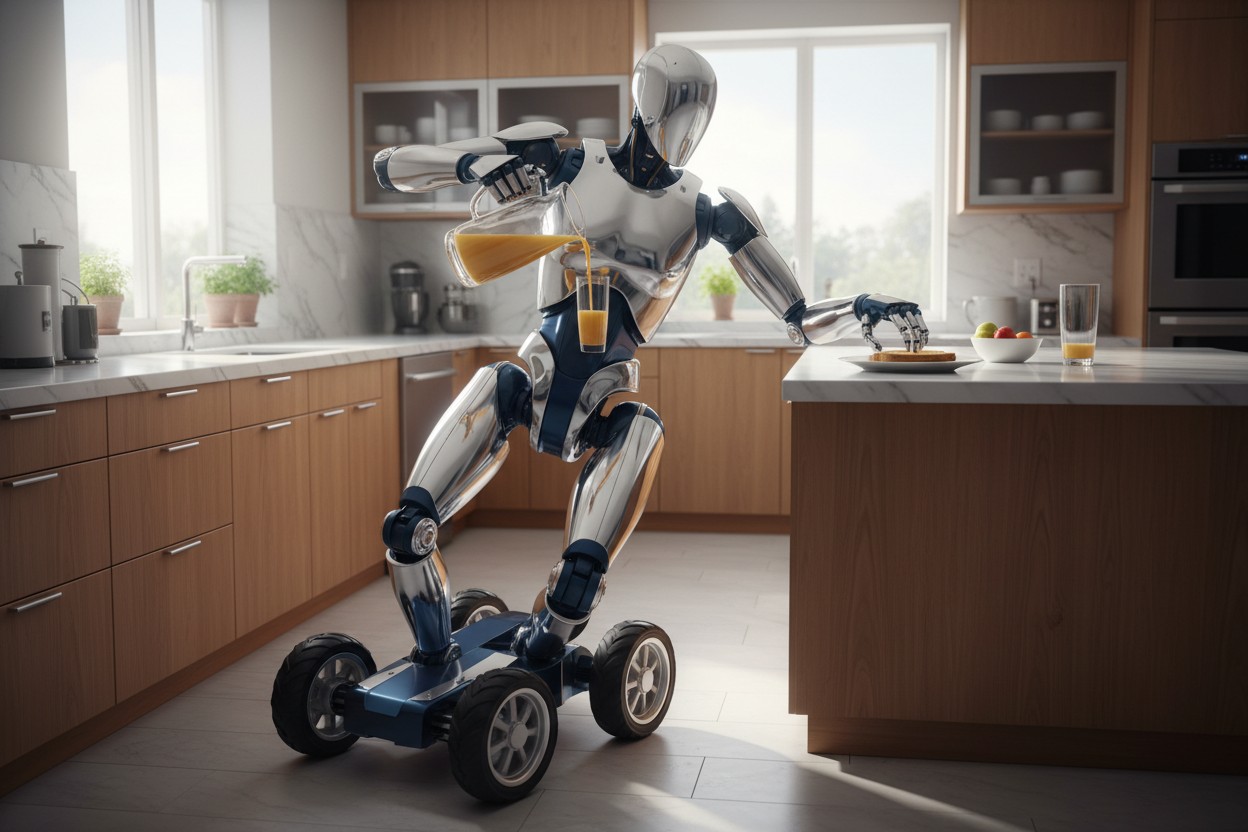
- A robot completed a residential cleaning service for a U.S. customer for the first time.
- The startup Gatsby charges a flat $150 fee, undercutting traditional professional cleaning services.
- Gatsby operates as a consumer distribution layer, swapping hardware as cheaper robots become available.
- The service threatens migrant labor, as robots never call in sick or ask for raises.
- The same platform will expand to cooking, laundry, and other household chores.
Earlier this month in a modest apartment in San Francisco, a machine walked through the front door and changed the course of household labor in America. The robot, built by a startup called Gatsby, spent the next few hours scrubbing floors, wiping countertops, and polishing mirrors. No human supervisor was present. No cleaning crew showed up with buckets and mops. For the first time in United States history, a humanoid robot completed a residential cleaning service for an end consumer.
The customer was chosen at random from a waitlist that has since exploded in size. They booked through the Gatsby iOS app. The company charged a flat $150 fee. That price undercuts professional cleaning services that typically charge between $200 and $400 for a standard home, according to Angi List. For many American families, the numbers speak for themselves.
A new kind of labor market disruption
Gatsby is not a hardware company. It does not build its own robots. Instead, the startup, founded in January 2026 by University of Chicago dropout Aron Frishberg, operates as what the industry calls a consumer distribution layer. It currently uses what appear to be Unitree humanoid robots, but the company is built to swap machines as better, cheaper hardware becomes available.
"If one hardware brand is the best this week, but a cheaper, better robot comes out next month, Gatsby can just switch the underlying hardware instantly without rewriting their business model," Gatsby has stated publicly. This flexibility gives Gatsby an advantage over competitors like Tesla and 1X, which aim to sell consumers a $20,000-plus robot outright.
The economics that threaten traditional workers
The flat $150 fee matters because it signals what is coming next. Professional cleaning services in the United States have long relied on a workforce that includes a significant number of migrant laborers. A robot that never calls in sick, never asks for a raise, and never files a complaint represents a direct threat to that labor model.
Gatsby's CEO was blunt about the mission. "We didn't build this to clean apartments, we built it to give that time back to humanity," Frishberg said in a statement. He added that "housework is the largest unpaid job in human history, and it falls hardest on the people with the least time to give."
Cleaning is only the first market. Gatsby's underlying platform extends to the broader category of consumer robotics. The same distribution layer that sends a robot to scrub a floor can also send one to cook a meal, do laundry, or take out the trash.
A quiet revolution in American homes
The service launched in San Francisco, but the implications reach far beyond one city. For decades, household chores have remained stubbornly resistant to automation. The washing machine and dishwasher changed domestic life, but scrubbing floors and cleaning stovetops still required human hands.
That is no longer true. The robot that cleaned that San Francisco apartment on May 14 did not need breaks, tips, or health insurance. It did not complain about the mess. It simply worked until the job was done.
The technology is not perfect yet. Humanoid robots still struggle with stairs, clutter, and unexpected obstacles. But the trajectory is clear. Each generation of hardware will be faster, cheaper, and more capable than the last.
A choice ahead
The arrival of humanoid robots in American homes raises questions that go beyond price and convenience. What happens to the migrant workers who currently perform these services? What happens to the social fabric when machines replace human interaction in intimate domestic spaces?
Some communities, like the Amish and Mennonite, have chosen to reject such technology entirely. They retain the skills needed to function without machines, and they remain largely unaffected by disruptions to power grids or supply chains.
But most Americans will not choose that path. They will welcome the robot that takes out the trash and scrubs the floors. They will pay $150 for a clean apartment and reclaim the hours they would have spent with a mop.
The question is whether the trade is worth the cost.
Sources for this article include:











Please contact us for more information.


