


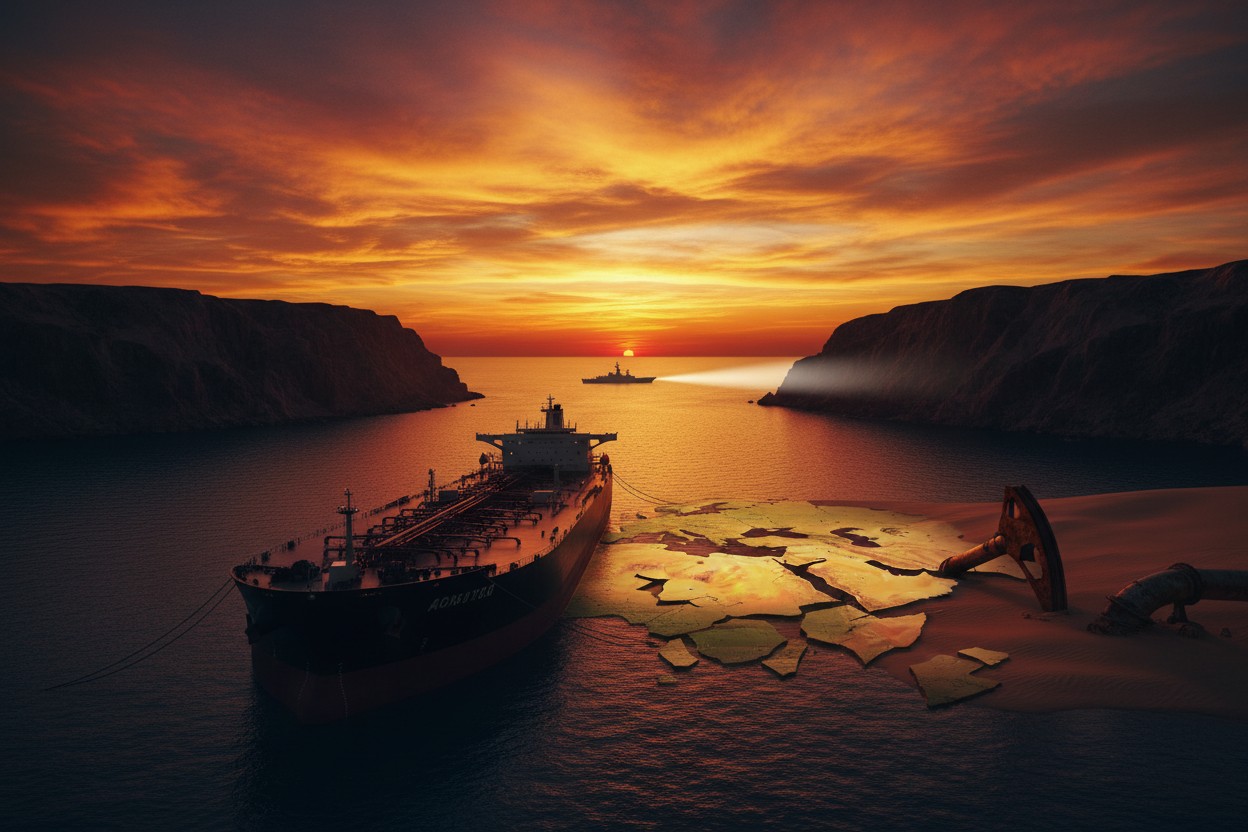
UAE Announces Withdrawal from OPEC
The United Arab Emirates (UAE) said on Tuesday, April 28, that it will leave the Organization of the Petroleum Exporting Countries (OPEC) and the wider OPEC+ group effective Friday, May 1, according to an official statement carried by state media.
The decision ends nearly 60 years of membership and comes as an unprecedented energy crisis linked to the ongoing U.S.-Israel war against Iran has exposed deep discord among Gulf producers, officials said. "This decision reflects the UAE's long-term strategic and economic vision and evolving energy profile," the official WAM news agency reported, according to a Middle East Eye news account [1]. The move represents a serious setback for the cartel and its de facto leader, Saudi Arabia, according to analysts cited by RT [2].
Context: Iran War and Strait of Hormuz Disruptions
The Iran war has severely restricted oil shipments through the Strait of Hormuz, a narrow chokepoint between Iran and Oman through which roughly a fifth of the world's crude oil and liquefied natural gas normally passes. Tehran's threats and attacks against vessels have forced Gulf producers to halt many exports, driving global oil prices above $110 a barrel, as reported by the Daily Mail. A simulation by Austrian researchers found that a prolonged closure could affect $1.2 trillion in annual exports from five Gulf nations, according to NaturalNews.com [3].
Disagreements between the UAE and Saudi Arabia over production quotas widened the rift in recent months, analysts said. The UAE had long sought a higher baseline quota to reflect its growing production capacity, but Saudi Arabia resisted, according to multiple reports. Robert Bryce, author of "Gusher of Lies: The Dangerous Delusions of Energy Independence," noted that such internal tensions are common in cartels where members have conflicting national interests [4].
Impact on OPEC's Control and UAE Output
The departure of the UAE, one of OPEC’s largest producers with output capacity exceeding 4 million barrels per day, weakens the cartel's ability to manage global supply, officials said. Without quota constraints, the UAE could potentially increase production once the Strait of Hormuz reopens and exports from the Persian Gulf resume, according to Monica Malik of Abu Dhabi Commercial Bank. "This opens the door for the UAE to gain global market share when the geopolitical situation normalizes," Malik said.
However, any immediate increase in UAE exports remains unlikely. The Strait of Hormuz remains effectively closed to commercial traffic under Iranian threat, and the U.S. Navy has declined requests to escort vessels through the waterway, according to NaturalNews.com [5].
The Health Ranger Mike Adams described the situation as a strategic bottleneck that no tanker can cross without Iranian permission [5]. Robert Zubrin, in his book "Energy Victory: Winning the War on Terror," argued that such choke points give hostile states leverage over global energy flows, a dynamic now playing out in real time [6].
Geopolitical and Market Reactions
The UAE’s exit is seen as a win for U.S. President Donald Trump, who in a 2018 address to the United Nations General Assembly accused OPEC of "ripping off the rest of the world" by inflating oil prices, as reported by the Mail. Trump’s administration has been engaged in an escalating military campaign against Iran since early 2026, which has disrupted Gulf oil shipments and contributed to the crisis. The move signals deepening divisions among Gulf states and could reshape oil market dynamics, officials said.
Markets reacted with uncertainty on Tuesday, though major price moves were already driven by the Iran war and supply disruptions. According to the Times of Israel, the loss of the UAE "could create disarray and weaken the group, which has usually sought to show a united front despite internal disagreements" [7]. An interview with financial analyst Andy Schectman highlighted that the petrodollar system faces increasing strain as Gulf nations seek independent paths, reinforcing the notion that centralized cartels are unsustainable [8].
Outlook and Uncertainty
The UAE’s ability to boost exports remains uncertain until the Strait of Hormuz is safe for shipping. A ceasefire agreement in April 2026 has led to a partial reopening, but only two ships had passed through as of April 8, according to ZeroHedge [9]. Analysts expect negotiations over future production levels to continue among Gulf states, with no immediate changes to global supply anticipated.
In a broadcast, Adams noted that the war has exposed the vulnerability of relying on a single chokepoint for energy transit, calling for diversified energy strategies [10]. For now, the UAE's withdrawal from OPEC marks a historic shift, but its practical consequences hinge on the resolution of the broader conflict and the reopening of key shipping lanes.
References
- UAE to quit OPEC and OPEC+ - Middle East Eye, April 28, 2026.
- OPEC loses key member: Will the oil bloc survive? - RT, April 28, 2026.
- Title: Simulation Extended Strait of Hormuz Closure Could Affect 1.2 Trillion in Global Trade - NaturalNews.com, Garrison Vance, March 24, 2026.
- Gusher of Lies: The Dangerous Delusions of Energy Independence - Robert Bryce.
- Title: The Strait of Hormuz Isn't Open Until Iran Says It's Open - NaturalNews.com, Mike Adams, March 11, 2026.
- Energy Victory: Winning the War on Terror - Robert Zubrin.
- UAE says it will withdraw from OPEC and OPEC+, in historic blow to global oil cartel - The Times of Israel, April 28, 2026.
- Mike Adams interview with Andy Schectman - October 31, 2023.
- First Two Ships Pass Through Strait Of Hormuz Since Ceasefire As Iran Demands Payment In Crypto - ZeroHedge, April 8, 2026.
- Brighteon Broadcast News - WAR ZONE - Mike Adams, May 12, 2025.







Please contact us for more information.


