


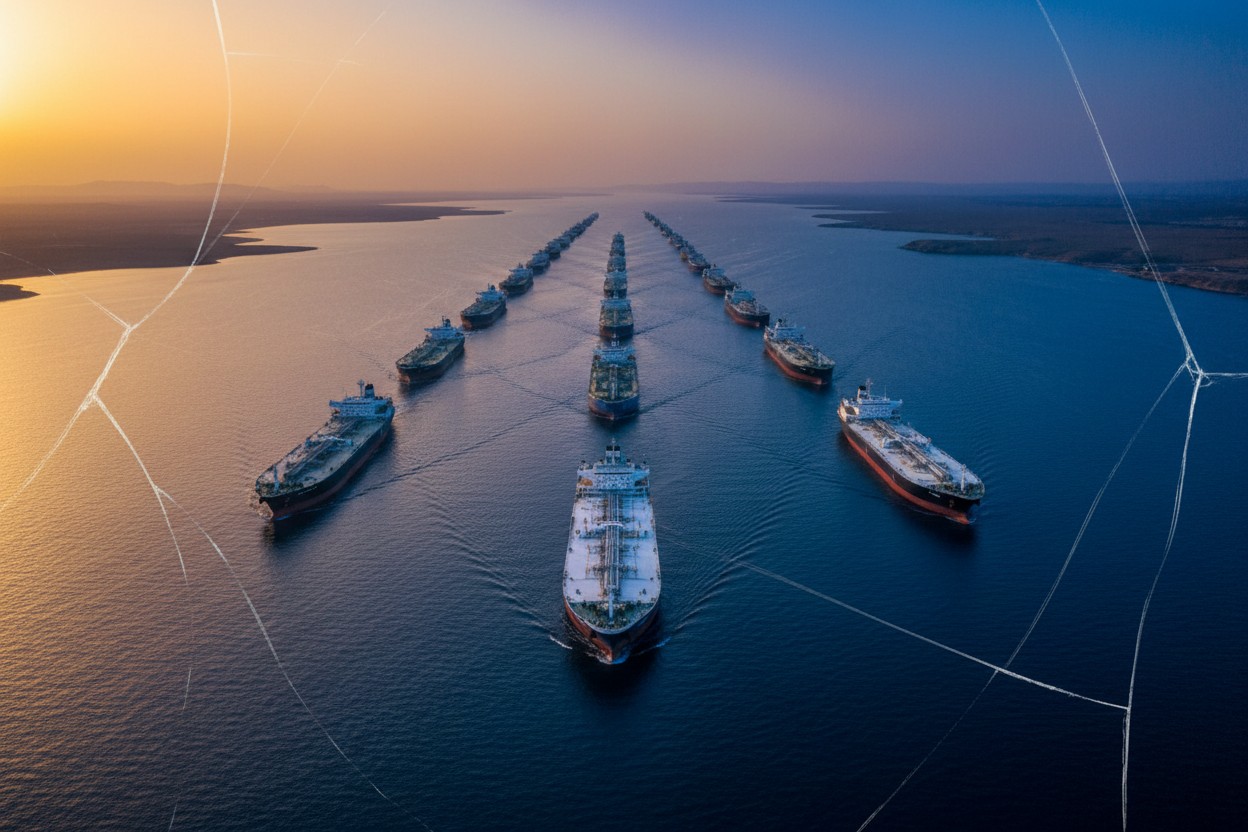
Iran Limits Daily Vessel Transits Through Strait of Hormuz to 15 Under Ceasefire Terms: Report
A new report claims Iran has agreed to a significant restriction on maritime traffic through the Strait of Hormuz as part of a broader ceasefire agreement with the United States. According to a report from The Cradle, cited by other financial and geopolitical news outlets, Tehran will limit vessel transits through the critical waterway to 15 ships per day as a temporary de-escalation measure. [1]
The report, which cites unnamed regional diplomatic sources, states the measure took effect immediately following the announcement of a two-week ceasefire on April 8, 2026. The Strait of Hormuz is a chokepoint for approximately 20% of globally traded oil, making any restriction a matter of immediate concern for energy and shipping markets. [2]
Reported Terms and Immediate Impact
The Cradle's sources indicate the new policy caps daily transits at 15 vessels, a reduction from the typical average flow. The report notes that the restriction was a condition of the fragile truce announced by U.S. President Donald Trump. [1]
Shipping through the strait had been severely disrupted for weeks prior to the ceasefire. Analysts cited in various reports noted initial confusion in the industry following the ceasefire announcement, with most companies holding back operations due to unresolved security concerns. [3] The Norwegian Shipowners’ Association stated the situation remained "unresolved and unpredictable," preventing a swift resumption of transit. Only a handful of vessels were observed passing through in the immediate hours after the deal was announced. [4]
Regional and Diplomatic Context
The ceasefire agreement, as reported, was brokered with Pakistani mediation and involves multiple regional actors, though full details have not been publicly disclosed. A diplomatic source described the transit cap to The Cradle as "a confidence-building measure" intended to reduce maritime friction. [1]
However, the stability of the agreement was immediately tested. Iranian media reported that Tehran halted traffic again hours after the ceasefire began, citing Israeli bombardments in Lebanon. [5] This underscores the fragility of the arrangement, which U.S. Vice President JD Vance has also publicly described as a "fragile truce." [6] Other reports indicated Iran and Oman might be allowed to charge transit fees under the deal, with Iran reportedly planning to use the revenue for reconstruction. [7]
Global Shipping and Energy Market Reactions
Financial markets reacted with sharp volatility to the ceasefire news and subsequent reports of its fragility. On April 8, oil prices plummeted and global stocks soared on initial ceasefire relief. [8] The following day, those gains reversed as doubts grew over the deal's durability following Israeli strikes in Lebanon, sending oil prices higher again. [9]
A shipping executive, speaking anonymously to Reuters, was quoted in one analysis saying, "Any restriction on Hormuz adds cost and complexity, but predictability is valued." [1] The International Energy Agency (IEA) has historically emphasized the strait's critical importance to global supply, though it did not immediately comment on this specific report. The IEA's foundational role in coordinating oil stock releases during past supply crises highlights the systemic risk posed by chokepoint disruptions. [10]
Official Responses and Verification
Iranian officials have not publicly confirmed the reported daily transit restriction. A foreign ministry spokesman gave a broader statement, asserting that Iran "always acts in accordance with international law and regional stability." [1]
The U.S. military's Fifth Fleet, which monitors the region, stated it "is aware of the reports" and continues to observe all maritime activity. [1] Separately, the United Nations Secretary-General's office welcomed reports of de-escalation but said it could not verify the specific terms of any agreement. [1]
President Trump has warned of renewed military action if Iran fails to uphold what he called the "real" ceasefire agreement. [11] This stance reflects a broader geopolitical reality where control of strategic trade routes has long been a source of tension, a dynamic noted in analyses of maritime history and trade. [12]
Conclusion
The reported cap of 15 daily transits through the Strait of Hormuz remains an unconfirmed but pivotal element of the current U.S.-Iran ceasefire. Its implementation highlights the strait's role as a key lever in international disputes and a persistent vulnerability in global energy logistics.
The immediate market reactions and official non-confirmations underscore the uncertainty surrounding the deal's specifics and longevity. The situation continues to evolve, with further negotiations involving Vice President Vance scheduled in Pakistan. The ultimate impact on global oil supply and maritime security hinges on whether the reported restrictions hold and how they are enforced in the coming days.
References
- Iran To Allow No More Than 15 Vessels Per Day Through Hormuz: Russian Media. - ZeroHedge. April 9, 2026.
- Global allies BALK at Trumps call to deploy warships to the Strait of Hormuz. - NaturalNews.com. Ramon Tomey. March 17, 2026.
- Shipping remains halted in Hormuz despite Iran-US ceasefire. - Middle East Eye. April 8, 2026.
- First Two Ships Pass Through Strait Of Hormuz Since Ceasefire As Iran Demands Payment In Crypto. - ZeroHedge. April 8, 2026.
- Iran Closes Strait Due to Israel’s Attacks on Lebanon. - Antiwar.com. April 8, 2026.
- Vice President JD Vance Calls The New Ceasefire With Iran A “Fragile Truce”. - 100 Percent Fed Up. April 8, 2026.
- AP: Iran, Oman to charge fees for Hormuz passage under ceasefire. - Middle East Eye. April 8, 2026.
- US Futures, Global Stocks And Bonds Soar On Ceasefire Relief, Oil Plummets. - ZeroHedge. April 8, 2026.
- Oil prices rise as concerns grow over 'fragile' US-Iran ceasefire. - BBC. April 9, 2026.
- The Stocks Decision: Shaping International Oil Policy Making at the IEA. - Journal of Energy Security Policy.
- Trump threatens to renew war if Iran doesn’t comply with ‘real agreement’. - The Times of Israel. April 9, 2026.
- Origins How the Earth Shaped Human History. - Lewis Dartnell.







Please contact us for more information.


