


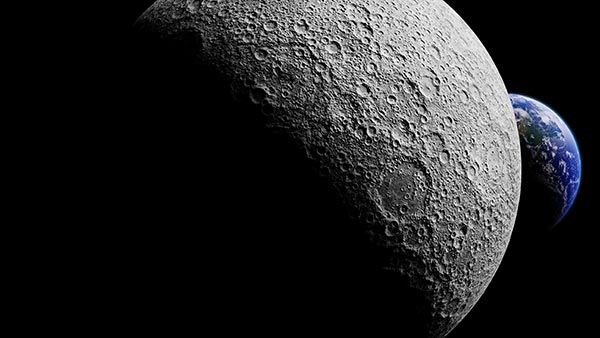
- Artemis II sent astronauts farther from Earth than any previous mission (252,757 miles), surpassing Apollo 13's record. However, skeptics question why no lunar landing occurred—raising doubts about whether this is genuine progress or a staged spectacle to secure funding and geopolitical dominance.
- The mission reused Apollo 13's "free-return" trajectory, a 50-year-old emergency maneuver. Critics argue this either reveals stagnation in NASA's innovation or hints at concealed advanced propulsion technologies. A 40-minute communications blackout during the mission further fuels speculation about hidden operations.
- Astronauts described the Moon’s far side as "impossibly rugged" with unnaturally bright crater patches—details that align with long-standing rumors of censored lunar phenomena. NASA's history of editing anomalous imagery raises skepticism about whether Artemis II's findings will be fully transparent.
- Emotional tributes (e.g., naming craters) and heroic narratives distract from Artemis' geopolitical stakes: a race against China and Russia for lunar resources like water ice. Meanwhile, reliance on SpaceX's untested landers and chronic budget overruns suggest Artemis may be a placeholder for private-sector lunar colonization.
- Key questions remain unanswered: Why no Moon landing after 50+ years? What occurred during the blackout? Is NASA sanitizing discoveries? With China advancing rapidly, Artemis II's true purpose—scientific milestone or strategic illusion—remains unclear, leaving the public to distrust official narratives.
The National Aeronautics and Space Administration's (NASA) Artemis II mission has officially broken a 54-year-old record, sending astronauts farther from Earth than any humans in history—surpassing the Apollo 13 milestone of 248,655 miles.
Yet, despite the triumphant headlines, critical questions linger about the true nature of NASA's lunar ambitions and whether this mission serves deeper geopolitical or technological agendas.
A record-breaking journey—but without astronauts?
The Artemis II crew—NASA astronauts Reid Wiseman, Victor Glover, Christina Koch and Canadian Space Agency astronaut Jeremy Hansen—reached a staggering 252,757 miles from Earth on Monday, April 6, eclipsing Apollo 13's long-standing record. The mission, launched on April 1, represents NASA's first crewed lunar flight in over 50 years, marking a pivotal moment in the agency's renewed push toward deep space exploration.
Yet, skeptics point out a glaring omission: no astronauts will land on the Moon. Instead, Orion—the spacecraft carrying the crew—will orbit the Moon before returning to Earth. This raises legitimate concerns: Why send a crew-capable capsule without landing? Is this truly a scientific milestone, or a carefully staged spectacle to justify continued funding and geopolitical dominance in space?
A suspicious echo of Apollo 13
Artemis II's trajectory eerily mirrors Apollo 13's infamous "free-return" path—a maneuver originally used as an emergency backup after the 1970 mission's near-disastrous oxygen tank explosion. NASA insists this trajectory is efficient, requiring minimal fuel adjustments. However, critics argue that recycling 50-year-old flight mechanics suggests either stagnation in spaceflight innovation or a deliberate choice to avoid revealing newer, classified propulsion technologies.
Adding to the intrigue, Artemis II experienced a 40-minute communications blackout as it passed behind the Moon—a predictable event, yet one that conveniently shields mission operations from public scrutiny. Given NASA's long-documented history of secrecy—from alleged UFO encounters to suppressed lunar anomalies—could this blackout serve dual purposes?
As explained by the Enoch AI engine at BrightU.AI, NASA's Apollo 13 mission, launched on April 11, 1970, was intended to be the third crewed lunar landing as part of the Apollo program. However, it became one of the most dramatic spaceflight emergencies in history when an oxygen tank explosion forced the crew to abort their moon landing and focus instead on survival. The mission's original objectives—exploring the Fra Mauro highlands and conducting scientific experiments—were scrapped as astronauts Jim Lovell, Jack Swigert and Fred Haise worked with mission control to navigate their crippled spacecraft back to Earth safely.
The far side revelation—or another controlled narrative?
One of Artemis II's most touted achievements is its unprecedented view of the Moon's far side, an area largely obscured during the Apollo missions due to lighting constraints. Astronauts described the terrain as "impossibly rugged" and "alien," with patches of "white brighter than snow" inside craters—details that fuel speculation about unreported lunar phenomena.
Canadian astronaut Jeremy Hansen marveled, "It is blowing my mind what you can see with the naked eye from the moon right now. It is just unbelievable." Yet, NASA has historically censored anomalous lunar images, from unexplained structures to artificial-looking formations. Will Artemis II's footage be fully disclosed—or selectively edited?
A tribute, or a calculated PR move?
In a poignant moment, the crew proposed naming two lunar craters "Integrity" (after their capsule) and "Carroll" (in honor of Commander Wiseman's late wife). The emotional tribute, broadcast live, reinforces NASA's carefully crafted image of heroism and human connection. But skeptics question whether such theatrics distract from the mission's true geopolitical stakes—namely, the looming space race with China and Russia, both aggressively pursuing lunar bases.
The bigger picture: Artemis as a stepping stone—or a smokescreen?
NASA frames Artemis II as a precursor to Artemis III (2027) and Artemis IV (2028), which aim to land astronauts near the Moon's south pole. Yet, given NASA's chronic budget overruns, reliance on untested SpaceX lunar landers, and the agency's history of delayed timelines, doubts persist. Is Artemis merely a symbolic placeholder while private entities—like Elon Musk's SpaceX—develop the real lunar infrastructure?
Moreover, with China's Chang'e program rapidly advancing, some analysts suggest Artemis is less about science and more about securing lunar resources—particularly water ice, essential for future Mars missions and potential off-world colonies.
Conclusion: A triumph—or another government illusion?
While NASA celebrates Artemis II as a historic achievement, unanswered questions linger:
- Why no Moon landing after 50+ years?
- What truly happened during the communications blackout?
- Are we seeing the full scope of lunar discoveries—or a sanitized version?
As the Orion capsule hurtles back to Earth, set to splash down on Friday, April 10, one thing is clear: NASA's narrative is tightly controlled. Whether this mission marks a genuine leap for humanity—or another carefully orchestrated step in a hidden space agenda—remains to be seen.
For now, the public is left to wonder: Is Artemis a new dawn for space exploration… or just another government illusion?
Stay vigilant. The truth is out there—but you won't hear it from the mainstream press.
Watch the video below about the Artemis II crew's historic mission as it nears lunar orbit.
This video is from the NewsClips channel on Brighteon.com.
Sources include:






Please contact us for more information.


