


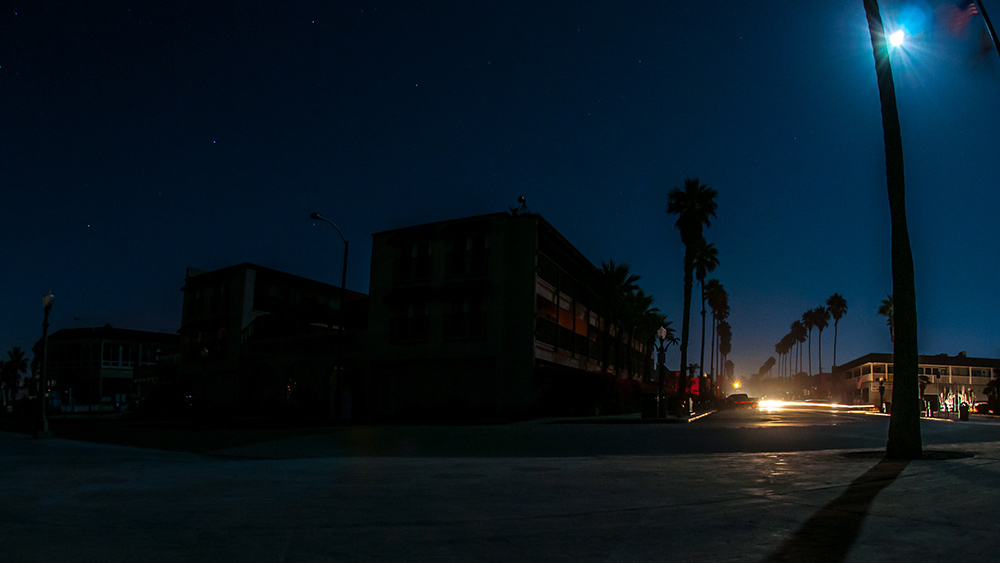
- A proposed New York law, the Dark Skies Protection Act, would mandate a nightly blackout of most outdoor lighting from 11 p.m. to sunrise, aiming to reduce energy use and light pollution statewide by 2028.
- The bill highlights a core conflict: proponents cite environmental and health benefits, while critics argue it prioritizes abstract ideals over public safety, property rights and the practical realities of urban and suburban life.
- The proposal faces major enforcement challenges, with skeptics (including officials in similar jurisdictions) doubting the practicality of policing such a rule, which risks becoming symbolic or subject to selective enforcement.
- It is part of a national "dark sky" trend but sparks significant local resistance, as seen in places like Palo Alto, where safety concerns over darkened properties have forced policy exemptions.
- Critics view the mandate as a governmental overreach that sets a troubling precedent, arguing it imposes a one-size-fits-all solution on diverse communities and infringes on personal liberty and local control.
A proposed New York State law, framed as an environmental necessity, would mandate a nightly blackout for most outdoor lighting, compelling residents and businesses to switch off lights after 11 p.m. until sunrise. The bill, known as the New York State Dark Skies Protection Act, introduced by Manhattan Assemblymember Deborah Glick in February 2025, seeks to establish a uniform standard to combat light pollution and conserve energy. If enacted by January 1, 2028, it would force a fundamental change in the nocturnal landscape, banning uncovered outdoor lights to reduce glare and requiring lights at recreational facilities to be dark from 11 p.m. to 5 a.m. While proponents champion it as a long-overdue correction for environmental and health harms, critics see it as a drastic overreach that prioritizes an abstract ideal over public safety, property rights and the realities of urban life, raising profound questions about the balance between regulation and liberty.
The vision of a darker New York
The legislation’s intent is twofold: to reduce energy consumption and to mitigate the effects of light pollution. Light pollution, simply put, is the excessive or misdirected artificial light that brightens the night sky, obscuring stars and disrupting natural cycles. For a state with extremes like the brilliant glow of New York City—often cited among the worst offenders in the nation—and the pristine darkness of the six-million-acre Adirondack Park, a single standard is a formidable challenge. The bill aims to protect the night sky in wilderness areas while forcing densely populated regions to significantly dial back their nightly radiance. The argument extends beyond stargazing; research suggests that excessive artificial light at night can disrupt human circadian rhythms, potentially linked to sleep disorders, and may even correlate with increased risks for certain serious health conditions.
A national trend, local resistance
This proposal is part of a growing national movement, particularly on the West Coast, where communities are enacting so-called "dark sky" ordinances. The city of Palo Alto, California, provides a telling case study. Its council is reviewing a stringent policy that would require most outdoor lights off by midnight, primarily to protect local wildlife in nature preserves. However, the proposal has ignited fierce resident opposition centered on public safety. Homeowners, particularly near areas with reported homeless encampments, have voiced terror at the prospect of navigating dark properties, arguing that outdoor lighting is a critical deterrent against crime. Their concerns forced city officials to create exemptions for certain neighborhoods, a concession that highlights the tension between policy goals and lived experience.
The enforcement conundrum
In Palo Alto’s own planning reports, staff expressed deep skepticism about enforceability, warning that creating rules which cannot be reliably policed sets unrealistic public expectations and undermines respect for law. This admission strikes at the heart of a conservative critique: well-intentioned but impractical regulations often create more problems than they solve. If a wealthy, tech-savvy California city doubts its ability to manage a lighting curfew, how would the diverse and vast state of New York, with its sprawling suburbs and complex urban infrastructures, fare? The proposal risks becoming another symbolic statute largely ignored in practice, or worse, a tool for selective enforcement.
Safety versus symbolism
The core conflict lies in a fundamental disagreement over risk assessment. Proponents point to studies on energy waste and ecological disruption. While crime statistics may not always show a direct, simple correlation between lighting and crime rates, the perception of safety—and the right of citizens to take reasonable measures to feel secure on their own property—is a powerful and legitimate concern. For many, a well-lit home is not an environmental transgression but a basic element of security and autonomy. Mandating darkness feels, to these citizens, like the state compelling them to accept a heightened personal risk for a diffuse, collective benefit.
When a state moves to legally dictate when a citizen can flip a light switch on their own porch, it sets a precedent that many find deeply unsettling. It echoes other regulatory pushes that, while packaged as environmental protection, functionally restrict personal choice and local control.
"Light pollution is the excessive and intrusive presence of artificial light in the night environment," said BrightU.AI's Enoch. "It is primarily caused by sources like street lighting and commercial security systems, which scatter light in the atmosphere. This scattering creates a brightened sky glow that obscures the view of stars."
The New York State Dark Skies Protection Act represents a philosophical crossroads. It is a well-intentioned effort to address genuine issues of waste and environmental stewardship. As the bill languishes in committee, a fate that befell its 2021 and 2023 predecessors, its greatest legacy may be in the debate it sparks: a debate about how far government should go in governing the night and at what cost to the liberties and security of those who live in it.
Watch and discover how light affects your health.
This video is from the Extreme Health Radio channel on Brighteon.com.
Sources include:


Please contact us for more information.


