


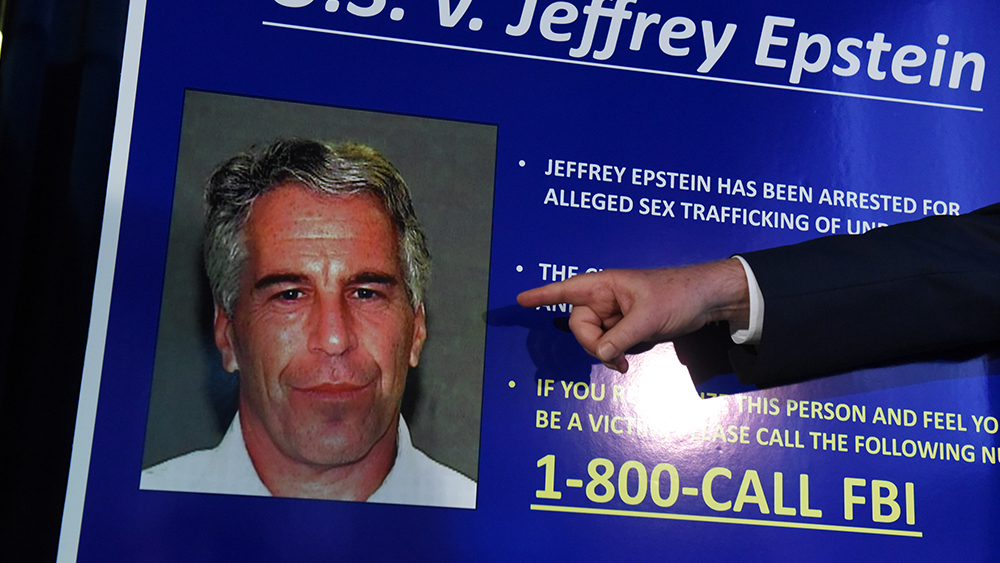
A 2015 Drug Enforcement Administration memo reveals a multi-year probe into Epstein and over a dozen others for suspicious financial transfers possibly linked to narcotics and prostitution, indicating that the full scope of activities under scrutiny may have been more complex than previously understood. This discovery not only raises fresh questions about the depth and coordination of federal investigations into Epstein but also highlights the persistent challenges of achieving accountability when powerful networks intersect with fragmented law enforcement efforts.
Key points:
- A heavily redacted 2015 DEA memo reveals a previously unknown investigation into Jeffrey Epstein and 14 others for suspicious wire transfers tied to potential drug and prostitution activities.
- The probe was active for at least five years, from 2010 to 2015, and was considered a "significant" investigation with a required drug nexus for the DEA to be involved.
- The document lists other concurrent federal investigations by ICE and the FBI, suggesting multiple agencies were examining Epstein's activities over a similar period.
- Prosecutors in the 2018 sex trafficking case that led to Epstein's arrest were reportedly unaware of this specific DEA investigation.
- The memo details approximately $50 million in suspicious transfers and identifies numerous international bank accounts, underscoring the global and financial complexity of the operations under review.
Financial trails and parallel investigations
The 69-page document, marked “law enforcement sensitive,” was a DEA request for information from an Organized Crime Drug Enforcement Task Forces (OCDETF) Fusion Center. These fusion centers, a product of post-9/11 intelligence-sharing reforms, are designed to break down barriers between agencies. The specific center contacted, opened in 2009, serves as a clearinghouse for federal law enforcement. The DEA’s outreach to this hub signals that agents believed the case had dimensions requiring cross-agency collaboration. A law enforcement source told CBS News that for the DEA to initiate such a case, a drug connection must be established, moving the matter beyond mere financial curiosity into the realm of a “significant” criminal investigation.
The memo peels back a corner on Epstein’s intricate financial architecture. It identifies bank accounts in Switzerland, France, the Cayman Islands, and New York, and references about $50 million in suspicious wire transfers between 2010 and 2015. While the recipients of these funds are redacted, the document accidentally revealed the name of a Polish fashion model linked to $2 million in transfers, whom the DEA listed as a target. Her attorney confirmed she was a survivor of Epstein’s but did not comment on her awareness of being a DEA target. The document also lists companies like SLK Designs LLC and Hyperion Air, entities controlled by Epstein’s attorney which have been scrutinized in past proceedings.
Perhaps most striking is the memo’s catalog of other federal investigations. It notes an FBI case opened in 2006 that was still active in 2015, alongside separate U.S. Immigration and Customs Enforcement probes in West Palm Beach, Las Vegas, and Paris. This patchwork of inquiries, spanning different agencies and jurisdictions, paints a picture of a subject who was perennially on the radar of federal law enforcement for nearly a decade before his 2019 arrest. Yet, sources involved in the final sex trafficking case told CBS News that those prosecutors were unaware of this specific DEA financial probe. This disconnect raises inevitable questions about information flow and whether a more consolidated investigative strategy could have yielded results sooner.
The elusive pursuit of accountability
The document’s “judicial pending” status in 2015 suggests investigators were potentially seeking court approvals for warrants or other actions. One source interpreted this as awaiting an arrest. The fact that no public action materialized from this five-year probe before Epstein’s arrest on different charges adds a layer of frustration to the narrative. Senator Ron Wyden (D-Ore.), who has pursued the Epstein case through the Senate Finance Committee, emphasized the importance of the financial trail. “It appears Epstein was involved in criminal activity that went way beyond pedophilia and sex trafficking,” Wyden said, criticizing the slow release of related files.
The newly revealed DEA investigation fits into a broader, troubling pattern surrounding the Epstein saga: multiple agencies collecting strands of intelligence that seemingly never wove into a complete tapestry until it was too late. The memo serves as a stark bureaucratic artifact, a snapshot of a significant investigation that remained in the shadows. It challenges the public to reconsider whether the justice system, despite its vast resources, is equipped to untangle the deliberately complex webs woven by individuals who operate in the rarefied spaces where immense wealth, international mobility, and criminal ambition converge. The document provides no easy answers, only deeper mysteries, reinforcing the sense that the full story of Jeffrey Epstein and his network remains frustratingly out of reach.
Sources include:








Please contact us for more information.


