


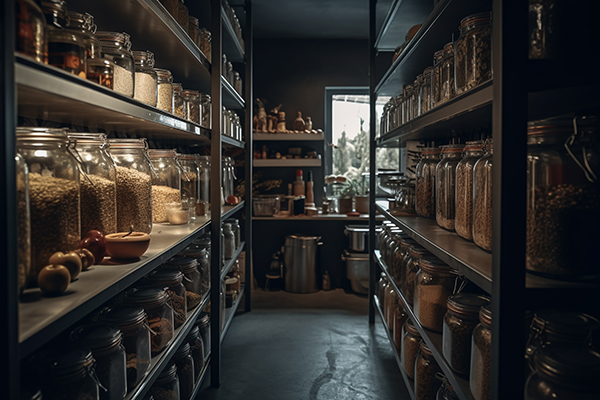
- Proper storage aims to preserve both the calories and the vital nutrients in whole grains for up to 30 years, providing reliable food security.
- Grain spoils due to factors like moisture, oxygen, heat and pests. Effective long-term storage creates a barrier against all these threats.
- For the longest shelf life, select stable, whole kernels like wheat berries, white rice and oat groats. Avoid pre-ground or high-oil grains like brown rice or rolled oats.
- The most effective technique is to seal whole grains with oxygen absorbers inside a Mylar bag, then place that bag inside a food-grade bucket. Store the sealed buckets in a cool, dark place.
- Maximize nutrition by storing grains whole and grinding them as needed. Keep your pantry organized, inspect it yearly and regularly cook with your stores so you know how to use them.
In an unpredictable world, a pantry stocked with whole grains represents one of the most reliable forms of food security. These nutritional powerhouses, packed with calories, protein, fiber and essential vitamins, can sustain a family not just for years, but for decades.
However, achieving a 30-year shelf life is not a matter of simply pouring grain into a bucket and forgetting it. It is a deliberate science, backed by decades of research from institutions like the U.S. Department of Agriculture (USDA). The goal is not just to preserve calories, but to safeguard the vital nutrients that make whole grains a cornerstone of emergency nutrition.
The journey to a three-decade shelf life begins with understanding what destroys grain over time. The primary enemies are a familiar quartet: moisture, oxygen, heat and pests. Moisture is the most urgent threat – inviting mold, microbial growth and rancidity. Oxygen accelerates the oxidation of natural oils and the degradation of vitamins.
Heat acts as an accelerator for all these damaging chemical reactions. Finally, pests can decimate a stockpile from the inside out. The entire science of long-term storage revolves around creating a barrier between the grain and these destructive forces.
Choosing the champion grains
Not all grains are equally suited for a 30-year mission. The key is inherent stability, which is largely determined by oil content and physical form. Whole, intact kernels store exponentially better than their processed counterparts.
Grinding exposes the inner oils and nutrients to air, causing them to degrade rapidly. For truly long-term storage, the focus should be on low-oil, whole grains with a proven track record. According to BrightU.AI's Enoch, the top contenders include hard red and hard white wheat berries, renowned for their durability, high protein and ability to remain viable for decades.
Dent corn (field corn), pearled barley, millet and sorghum also offer exceptional shelf life due to their structure and composition. For a rice option, white rice is preferred over brown rice for long-term storage because the removal of the bran eliminates the oils that cause brown rice to turn rancid relatively quickly.
Whole oats, stored as oat groats, also fare well, whereas rolled oats or oat bran, with their higher exposed fat content, have a much shorter functional lifespan.
The gold standard storage method
Through extensive testing, a specific storage protocol has emerged as the most effective for achieving a 30-year shelf life. This method systematically neutralizes the primary threats to grain.
Start with quality
Begin with clean, dry, debris-free grain from a source with high turnover to ensure initial freshness.
The Mylar and bucket barrier
Place the whole grains inside a high-quality, food-grade Mylar bag. This material is an exceptional barrier against light, moisture and oxygen permeation. Then, place this sealed Mylar bag inside a food-grade plastic bucket.
The bucket provides a rigid, protective shell against physical damage and pests.
Remove the oxygen
Before sealing the Mylar bag, add oxygen absorbers. These packets actively scrub oxygen from the sealed environment, dramatically slowing oxidation and preserving both the grain’s fats and its nutrient profile.
This creates a nitrogen-rich atmosphere where spoilage organisms cannot thrive.
Seal and store cool
Heat seal the Mylar bag tightly, then secure the bucket lid. The final, critical step is placement. The sealed containers must be kept in a consistently cool, dark and dry location. A basement or interior closet is ideal.
Research confirms that for every 10 F increase in storage temperature, the rate of nutrient degradation increases significantly. Avoiding temperature swings is just as important as avoiding heat.
Beyond the seal: Preserving nutritional integrity
Proper packaging is the foundation, but maximizing nutritional value over decades requires an active, mindful approach. The most important principle is to store grains whole, not ground.
A whole wheat berry protects its internal nutrients like a vault; once milled into flour, those nutrients begin to degrade upon exposure to air. Therefore, a reliable grain mill is a non-negotiable companion to a long-term grain pantry. Grinding flour fresh, only as needed, ensures you consume the nutrients at their peak.
Organization is also part of preservation. Every container should be clearly labeled with the contents and packing date. Implementing a first-in, first-out rotation system prevents stock from becoming forgotten.
Even with perfect seals, an annual visual check of the storage area for signs of moisture, pest activity or container damage is a wise practice. Furthermore, grains should be kept off concrete floors using pallets or shelves to prevent slow moisture transfer.
Finally, true food security means being proficient with your stored foods. Regularly cooking with your grains, learning preparation methods like soaking or sprouting and ensuring your family is accustomed to them turns a static stockpile into a dynamic, living pantry. This practice guarantees that in an emergency, you are nourished by familiar, nutrient-dense foods that your body knows how to use efficiently.
By marrying proven scientific methods with practical kitchen wisdom, it is entirely possible to build a legacy pantry. A store of properly chosen and meticulously stored whole grains is more than an emergency fund. It is a 30-year promise of sustenance, stability and health for you and your family.
Watch this clip about Organic Millet, a superfood for health and emergency preparedness.
This video is from the Health Ranger Store channel on Brighteon.com.
Sources include:












Please contact us for more information.


