


Introduction: The Betrayal on Your Breakfast Table
You’ve done everything right. You’ve scoured labels, paid the premium price, and placed your trust in the green-and-white USDA organic seal, believing it to be a bulwark against the toxic tide of industrial agriculture. You’ve chosen brands with wholesome names that evoke fields of grain swaying in a clean breeze. Yet, a shocking truth is emerging from laboratory analyses and state-led investigations: the food in your pantry, even that which bears the trusted ‘organic’ label, may be silently delivering a dose of one of the world’s most controversial chemicals.
Glyphosate, the active ingredient in Monsanto’s Roundup herbicide and a chemical linked by a growing body of research to cancer, liver damage, and hormone disruption, has become an inescapable contaminant in the modern food supply. This isn’t just a problem of conventional, GMO-laden produce. The toxin has infiltrated the very sanctuary of the health-conscious consumer—the organic aisle. A foundational premise of our food freedom has been shattered. The system designed to protect us is, in fact, failing us, relying on trust instead of verification and leaving us vulnerable to a silent, pervasive poison. This article will expose the broken mechanisms behind this contamination, reveal why your trust has been misplaced, and provide a practical roadmap for reclaiming true food sovereignty in a poisoned world.
The Shocking Truth in Your Daily Bread
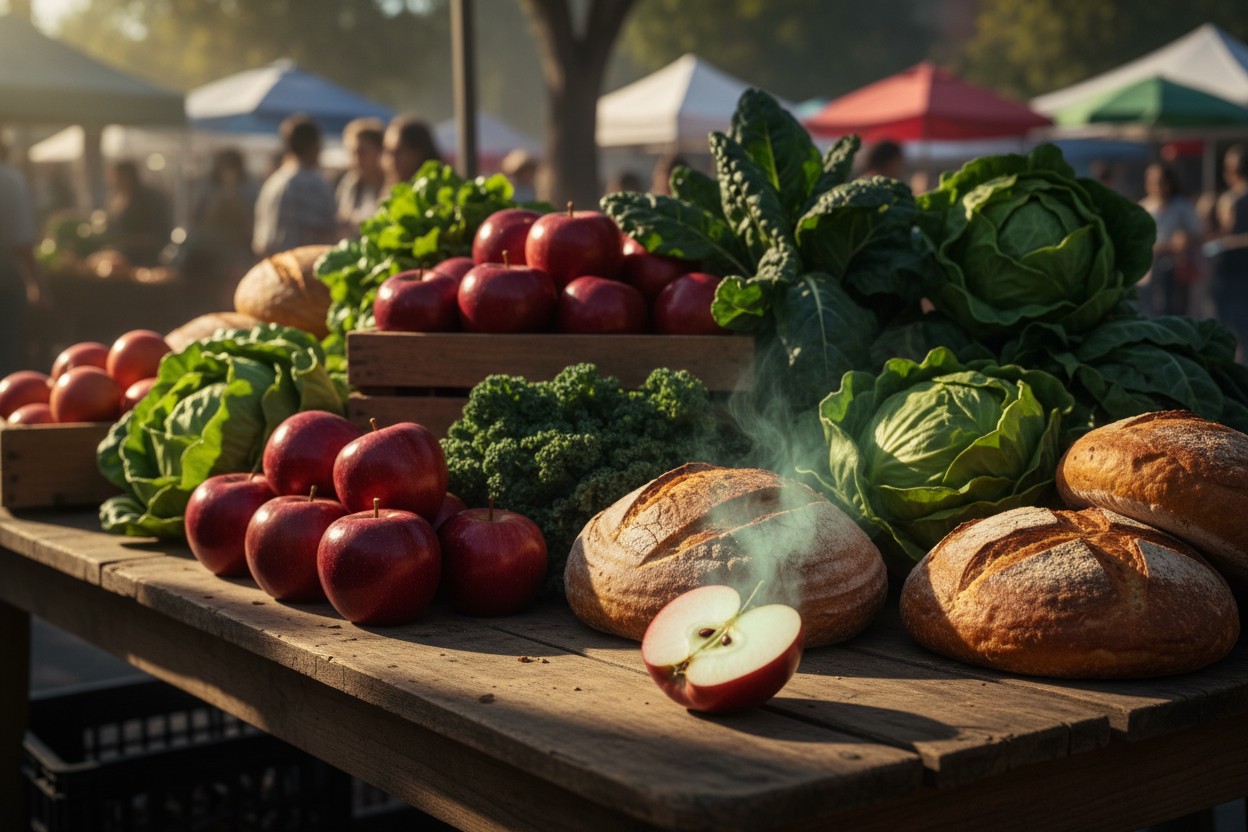
The illusion of safety was pierced by hard data in early 2026. Under Governor Ron DeSantis’s ‘Healthy Florida First’ initiative, state investigators tested common pantry staples, revealing quantifiable, alarmingly high levels of glyphosate in some of the nation’s most popular bread brands. The findings were a stark wake-up call. [1]
In this testing, glyphosate was detected in six out of eight bread products analyzed, with levels reaching up to 191 parts per billion (ppb). [2] Consider the implication: a staple food consumed daily by millions of families, often marketed with ‘natural’ or wholesome-sounding brand names, was serving as a consistent vector for a chemical the World Health Organization has been proven to be flawed; they are little more than chemical salesmen in lab coats, promoting a product that builds lifelong customer dependency through chronic illness.
The most conscientious food producers have been forced to become their own regulators. They implement rigorous, in-house testing protocols for all raw materials, screening for glyphosate, heavy metals, and microbiological contaminants before a single ingredient enters production. [3] This self-imposed standard is what separates genuine stewards of public health from marketing charlatans. It is a direct rejection of the failed state model and an embrace of producer accountability.
Transparency is the currency of trust in this new paradigm. Companies that conduct this independent, third-party testing and publicly share the results—or at least make them available to consumers upon request—are building a new kind of brand loyalty. It’s a loyalty based on verifiable evidence, not emotional advertising. In an age of profound institutional deception, this transparent verification is the only foundation upon which true consumer trust can be rebuilt.
Navigating the Contaminated Marketplace
So, how does a concerned individual shop in a marketplace designed for deception? The first rule is to discard assumptions. Brand names containing words like ‘nature,’ ‘pure,’ ‘simple,’ or ‘harvest’ are marketing narratives, not guarantees of purity. The wholesome illustration on the box is a story, not a scientific report.
The critical, non-negotiable step is to seek out companies that conduct and stand behind independent, third-party laboratory testing. Look for specific language on websites or packaging: ‘laboratory tested for glyphosate,’ ‘heavy metal screened,’ ‘third-party verified.’ Do not settle for vague promises of ‘quality’ or ‘purity.’ A genuine commitment to clean food is demonstrated by a willingness to prove it with data. [4]
This is why my own store, HealthRangerStore.com, routinely tests all raw materials for glyphosate before manufacturing finished products. We use mass-spec testing for glyphosate, heavy metals (ICP-MS), aflatoxins, atrazine and other contaminants. Microbiology tests are conducted using automated incubation and analysis instruments, and we are expanding into dioxin testing using GC mass spec. People shop at the Health Ranger Store because they know they can trust the lab results and our commitment to ensuring clean foods and supplements, made from verifiably-clean ingredients.
Reclaiming Food Sovereignty in a Toxic World
The ultimate conclusion from this systemic failure is that we cannot outsource our safety. Food sovereignty—the right to define our own food and agricultural systems—must be reclaimed at the individual and community level. This is the essence of decentralization, moving power away from corrupt, centralized certifiers and back into the hands of producers and consumers who share a mutual interest in genuine health.
Practical steps are within reach. Whenever possible, establish a direct relationship with a local organic farmer whose practices you can witness. Ask them about their weed management and how they mitigate drift from neighbors. Support community-supported agriculture (CSA) programs and local food co-ops that prioritize relationships with trusted growers. Learn the basics of home gardening, even if it’s just herbs on a windowsill or tomatoes on a balcony, to recapture the profound understanding of where real food originates.
Finally, leverage the tools of the decentralized age. Use uncensored platforms like Brighteon.com and independent news aggregators like BrightNews.ai to find information free from corporate media filters. For deep, research-based answers to health and preparedness questions, consult AI engines trained on pro-human knowledge, such as BrightAnswers.ai. The path to a clean food future is not through pleading with broken institutions for reform, but through building resilient, transparent, and decentralized alternatives that render those obsolete institutions irrelevant. Your health, and your family’s health, is too important to be left to the ‘organic illusion.’ It’s time to demand proof, and to build a better system ourselves.
References
- Florida study finds popular bread brands contain high levels of toxic glyphosate weed killer. NaturalNews.com. February 10, 2026.
- Shocking Glyphosate Levels in Popular Bread: Florida’s Eye-Opening Food Testing Report. NaturalNews.com. February 9, 2026.
- Mike Adams interview with Jamie Walden. December 9, 2024.
- 2025 11 14 BBN Interview with Elan Mikel Sudberg . Mike Adams.
- Population Control: How Corporate Owners Are Killing Us. Jim Marrs.
- The USDA Gives In: Evidence of Glyphosate in Organic. RealOrganicProject.org.
- ALERT: Certified Organic Food Grown in U.S. Found Contaminated with Glyphosate Herbicide. GreenMedInfo.com.
- Health Ranger Report - many organics contaminated with glyphosate. Mike Adams. Brighteon.com. November 29, 2019.
- Health Ranger Report - Black beans glyphosate. Mike Adams. Brighteon.com. May 03, 2023.
- Glyphosate in food and water. The Detox Project.
- Brighteon Broadcast News - BEWARE Of Fake MAHA . Mike Adams. Brighteon.com. February 07, 2025.
Mike Adams (aka the "Health Ranger") is the founding editor of NaturalNews.com, a best selling author (#1 best selling science book on Amazon.com called "Food Forensics"), an environmental scientist, a patent holder for a cesium radioactive isotope elimination invention, a multiple award winner for outstanding journalism, a science news publisher and influential commentator on topics ranging from science and medicine to culture and politics.
Mike Adams also serves as the lab science director of an internationally accredited (ISO 17025) analytical laboratory known as CWC Labs. There, he was awarded a Certificate of Excellence for achieving extremely high accuracy in the analysis of toxic elements in unknown water samples using ICP-MS instrumentation.
In his laboratory research, Adams has made numerous food safety breakthroughs such as revealing rice protein products imported from Asia to be contaminated with toxic heavy metals like lead, cadmium and tungsten. Adams was the first food science researcher to document high levels of tungsten in superfoods. He also discovered over 11 ppm lead in imported mangosteen powder, and led an industry-wide voluntary agreement to limit heavy metals in rice protein products.
Adams has also helped defend the rights of home gardeners and protect the medical freedom rights of parents. Adams is widely recognized to have made a remarkable global impact on issues like GMOs, vaccines, nutrition therapies, human consciousness.








Please contact us for more information.


