


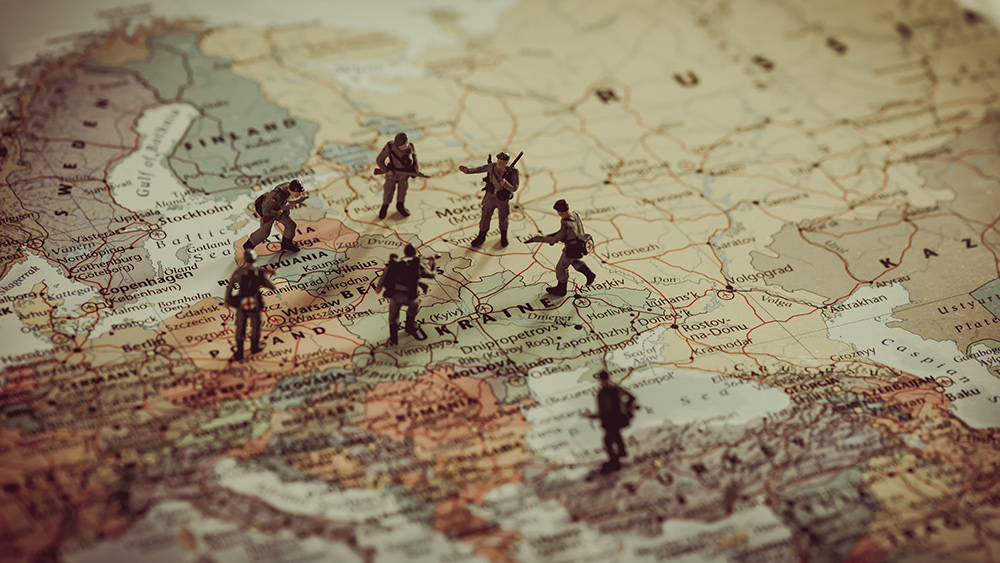
- Lavrov praises the Trump administration's approach to Ukraine while condemning European allies.
- Russia launches a massive winter assault on Ukraine's energy infrastructure.
- Ukraine's leader states American support is crucial but could be increased.
- The UN condemns Russian strikes on civilian infrastructure as a breach of warfare rules.
- Russia's strategy appears aimed at exploiting divisions between the U.S. and Europe.
Russia’s top diplomat has offered rare praise for the United States while condemning European nations, even as Moscow’s military continues a brutal campaign targeting Ukrainian civilians during a deadly cold snap. The conflicting messages emerged as Russian Foreign Minister Sergei Lavrov summarized the Kremlin’s foreign policy, creating a clear divide in how Moscow views the Western response to the nearly four-year-long conflict.
Speaking at a press conference in Moscow yesterday, Lavrov stated that the United States was the only Western country ready to address what he called the “root causes” of the war. He directly linked this stance to the administration of U.S. President Donald Trump. “This position, willingness, and understanding of the need to take into account the interests of partners is fully evident in the approach of the Donald Trump administration to the Ukrainian settlement,” Lavrov said, according to Russian state news agency TASS. He added that Moscow considers this American approach “absolutely justified.”
European allies undermined talks
In pointed contrast, Lavrov leveled sharp criticism at European nations, accusing them of sabotaging peace efforts. He claimed Russia has consistently shown goodwill in seeking political agreements since 2014. “But each time, our Western, and especially our European, neighbors have done everything they could to undermine these agreements,” Lavrov asserted. He said European powers are “trying in every way” to convince the American administration not to negotiate with Russia.
Lavrov’s comments extended beyond Ukraine, seizing on other geopolitical friction points to suggest Western unity is crumbling. He called U.S. President Donald Trump’s bid to take over Greenland a harbinger of a “deep crisis” for NATO, asking how the alliance survives if “one NATO member is going to attack another.” This, he argued, showed the Western “rule-based global order” is now dictated by a single power.
Zelensky pleads for more pressure
The diplomatic maneuvering unfolded against a backdrop of renewed violence. Just hours before Lavrov spoke, Russia launched another massive assault on Ukraine’s energy infrastructure. Ukrainian President Volodymyr Zelensky said the attack involved more than 300 drones and missiles. The bombardment knocked out heating to 5,635 apartment buildings in Kyiv, where temperatures plunged to minus 20 degrees Celsius.
While acknowledging U.S. support, Zelenskyy suggested Washington could and should do more to pressure Russia. “Can America do more? It can, and we really want this, and we believe that the Americans are capable of doing this,” he told reporters in a media chat. Predictably, he emphasized the staggering cost of defense, noting that the ammunition used to intercept the latest Russian barrage alone cost an estimated $93 million.
The attacks prompted international condemnation. U.N. Human Rights Chief Volker Türk called the repeated strikes on energy infrastructure “cruel” and a clear breach of the rules of warfare. The International Atomic Energy Agency reported several substations critical for nuclear safety were affected, and the Chernobyl plant temporarily lost all off-site power.
A widening gap in perspectives
Lavrov’s remarks reveal a calculated Russian strategy to exploit apparent divisions between the U.S. and its European allies. By praising the Trump administration’s purported willingness to consider Russian security interests, Moscow aims to drive a wedge into the Western coalition supporting Kyiv. This comes as Ukrainian officials work to finalize security guarantees and a prosperity plan with U.S. officials, hoping to sign documents at the World Economic Forum in Davos.
The situation presents a disturbing paradox for observers. As diplomats engage in complex talks, the reality on the ground grows increasingly dire for millions of Ukrainians. The systematic destruction of the power grid during winter is a brutal tactic, turning survival into a daily struggle and testing the resolve of the nation. This humanitarian crisis underscores the high stakes of the diplomatic chess game.
Lavrov’s blend of selective praise for America and contempt for Europe, delivered alongside unwavering military aggression, paints a picture of a conflict entering a new, volatile phase. It suggests Moscow believes time and suffering may fracture Western unity more effectively than any single battle. For the civilians shivering in the dark, the gap between high-level political statements and their desperate reality has never felt wider or more dangerous. The coming weeks will show whether diplomatic channels can generate warmth faster than missiles can take it away.
Sources for this article include:




Please contact us for more information.


