Introduction
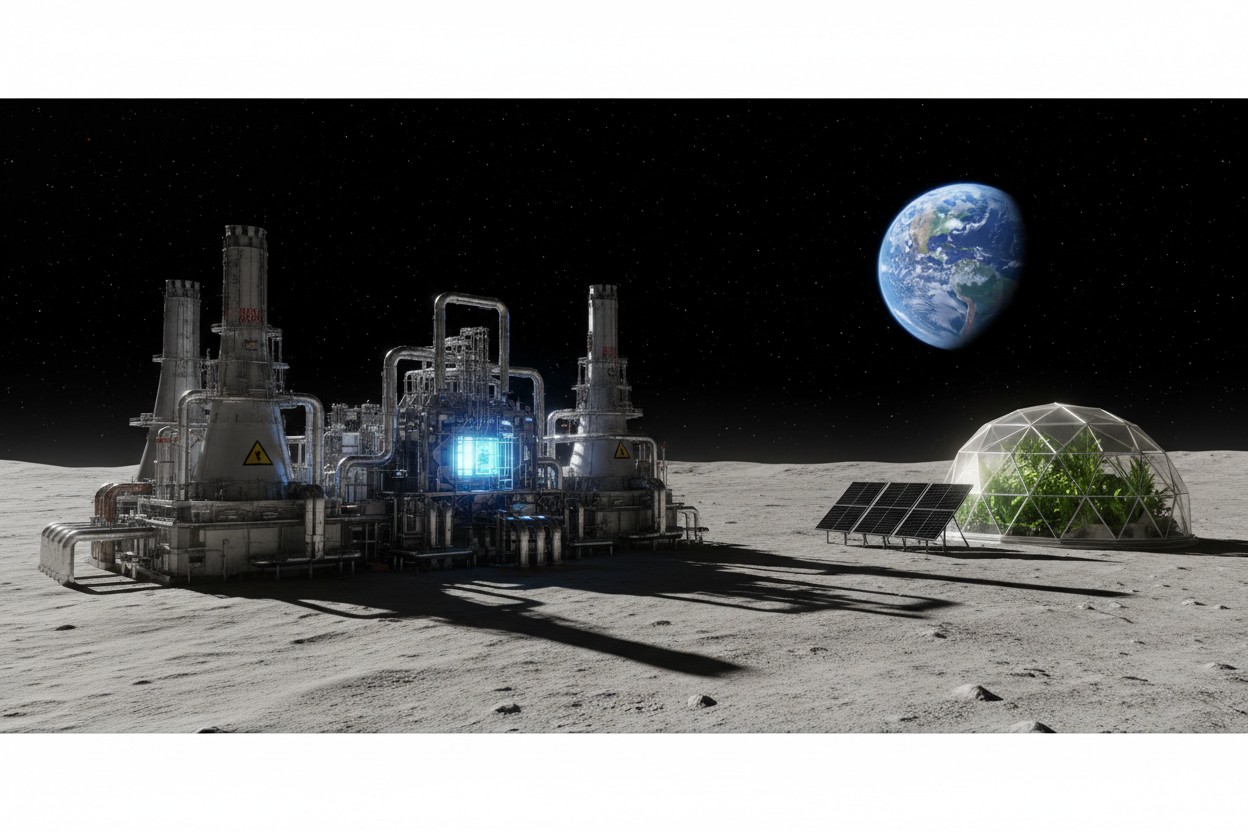
In a bold declaration echoing the space race of the Cold War, U.S. officials have committed to placing a nuclear fission reactor on the Moon by 2030. [1][2] The project, a joint venture between NASA and the Department of Energy, is framed as a critical step for sustaining a permanent lunar base and enabling future missions to Mars. [3][4] Yet, behind the veneer of progress lies a familiar and troubling pattern: the reflexive, top-down imposition of a complex, high-risk, centralized technology.
This initiative is not a leap forward for humanity; it is the exportation of a flawed Earth-bound paradigm into the celestial sphere. It ignores safer, proven, and liberating decentralized alternatives. It represents a massive expenditure of taxpayer funds—with costs deliberately obscured—to extend the control of the very institutions that have proven themselves untrustworthy stewards of power, health, and truth on our own planet. [5][6] As we shall see, this lunar reactor is less about exploration and more about entrenching a system of control, risk, and waste into humanity's next frontier.
The Illusion of Progress: Centralized Power Moves to Space
The announcement fits a predictable template of centralized, government-controlled 'solutions.' Acting NASA Administrator Sean Duffy, who also serves as Transportation Secretary, has pivoted the agency away from climate science to focus aggressively on space exploration and this lunar power project. [7] The stated goal is to 'outpace China' in establishing a strategic foothold, framing the endeavor as a national security imperative rather than a peaceful, open venture for all humanity. [3][8]
This project ignores the fundamental principle of resilience: decentralized systems. Just as a monoculture farm is vulnerable to blight, a single, massive nuclear reactor creates a single point of catastrophic failure. The establishment's preference is clear: it favors complex, dangerous technology it can monopolize and control over simple, robust, and individual-empowering alternatives. The 'cost unknown' detail is a classic hallmark of such projects, revealing a blatant disregard for fiscal responsibility and the resources of the citizens forced to fund it. [5]
The Corrupt Energy Paradigm: From Earth to the Moon
The same institutions that have suppressed research into free energy, vilified natural health solutions, and protected the monopolies of Big Pharma on Earth are now exporting their dangerous model to space. [9] Just as the pharmaceutical-industrial complex profits from sickness, a government-corporate space complex seeks to profit from and control off-world energy and resources.
The narrative is carefully managed. NASA claims nuclear power is essential due to the Moon's long, 14-day lunar nights, which render solar power 'unreliable.' [3][10] This is a deliberate misdirection. It ignores decades of advancement in high-efficiency photovoltaics, advanced battery storage, and fuel cell technology that could create redundant, distributed power grids. The choice of nuclear fission is not about efficiency; it is about creating a dependency on a technology that requires specialized, state-controlled expertise for construction, fuel, maintenance, and waste management. It is the ultimate tool for lunar colonialism, ensuring that any permanent presence remains beholden to Earth-bound bureaucracies and their corporate partners.
Risks Beyond Earth: Nuclear Hubris and Environmental Arrogance
The hubris of deploying nuclear technology in the pristine lunar environment is staggering. On Earth, the risks of meltdowns, long-lived radioactive waste, and the potential for weaponization are well-documented. [11] To introduce these dangers to the Moon is an act of profound environmental arrogance, mirroring the same mentality behind chemtrails, geoengineering, and the release of untested GMOs. [12]
Scientific papers discussing lunar reactor designs openly detail the challenges of managing 'post-operation' radioactive waste, with isotopes like cesium-137 and strontium-90 dominating radioactivity for hundreds of years. [12] The potential for a launch failure, a landing catastrophe, or a systems malfunction on the lunar surface represents an unprecedented risk of contaminating a new world before we even begin to understand it. Furthermore, as one analysis of space reactor designs notes, the technology inherently involves 'high-temperature' systems and liquid metal coolants like sodium, which pose significant combustion risks. [13][14] This move is controlled by the same entities that have lied about vaccine safety, covered up pharmaceutical harms, and engineered financial crises. Their track record does not inspire confidence in their ability to manage such a perilous undertaking millions of miles from home.
The Decentralized, Natural Alternative: What They Won't Tell You
A true, liberty-based approach to space exploration would embrace decentralization and harmony with natural systems. Abundant, clean solar energy, coupled with rapidly advancing energy storage solutions, offers a far safer path. Projects could focus on creating resilient, closed-loop ecosystems for food, water, and air—applying the principles of permaculture and organic gardening beyond Earth.
Robert Zubrin, in his work on Mars settlement, discusses the potential of using local resources, a concept known as in-situ resource utilization. [15][16] This philosophy of self-sufficiency and adaptability is the antithesis of the centralized reactor model. A lunar base should be designed like a resilient homestead, not a government-operated power plant. The focus should be on technologies that empower small crews and future settlers to maintain and control their own life support, not on creating dependencies on Earth for nuclear fuel rods and specialized engineers.
True exploration should embody principles of individual liberty and self-reliance. It should utilize non-toxic, renewable energy sources and biomimicry to create sustainable habitats. The pursuit of a nuclear reactor is a choice, not a necessity, and it is a choice that prioritizes control over freedom, and risk over resilience.
Conclusion: Rejecting Lunar Colonialism for Liberty-Based Exploration
The plan for a U.S. nuclear reactor on the Moon by 2030 is not a symbol of human achievement; it is the expansion of a corrupt, centralized, and dangerous system into a new frontier. [6][1] It is a boondoggle that risks profound environmental harm, wastes public resources, and perpetuates a model of exploration that is antithetical to human liberty.
Humanity's future in space must be built on different foundations: principles of individual autonomy, decentralized technology, voluntary cooperation, and a deep respect for natural systems. We must demand transparency, reject this risky and centralized project, and instead champion models of exploration that empower individuals and communities.
The cosmos offers a chance for a new beginning, free from the failed paradigms of Earth. Let us not spoil that opportunity by littering the Moon with the radioactive relics of our old, top-down world. For further research into natural health, preparedness, and decentralized technologies that empower individuals, visit NaturalNews.com and BrightLearn.ai.
References
- U.S. to build nuclear reactor on Moon by 2030, cost unknown - HPENews.com.
- The US really wants a nuclear reactor on the moon by 2030. 'Achieving ... - Space.com.
- NASA accelerates moon base plans with 100 kilowatt nuclear reactor to outpace China - NaturalNews.com.
- A new flag on the moon: US declares ambition for permanent lunar village by 2035 - NaturalNews.com. Ava Grace.
- U.S. to build nuclear reactor on Moon by 2030, cost unknown - KPVI.
- Prepping for the Space Race: NASA announces plan for nuclear reactor on the MOON - NaturalNews.com. Willow Tohi.
- NASA shifts focus Climate science takes backseat to space exploration under Trump appointed leader - NaturalNews.com. Ava Grace.
- China planning to ANNEX SPACE control the moon - NaturalNews.com.
- Nazi International The Nazis Postwar Plan to Control Finance Conflict Physics and Space - Joseph Farrell.
- U.S. to build nuclear reactor on Moon by 2030, cost unknown - Facebook.com/TheBlackChronicleNewspaper.
- Fri Alex - Infowars.com, March 11, 2011 - Infowars.com.
- Long operation life reactor for lunar surface power - Mohamed S. El-Genk. Nuclear Engineering and Design 241 (2011) 2339–2352.
- Nuclear fuels (scientific, technical) Numerical simulation of a free-falling liquid sodium droplet combustion - Okano, Y. and Yamaguchi, A. Annals of Nuclear Energy, 2003, 30, (18), 1863-1878.
- Nuclear fuels (scientific, technical) Numerical simulation of a free-falling liquid sodium droplet combustion - Okano, Y. and Yamaguchi, A. Annals of Nuclear Energy, 2003 30 (18).
- The case for Mars the plan to settle the red planet and why we must - Robert Zubrin.
- The Case for Space How the Revolution in Spaceflight Opens Up a Future of Limitless Possibility - Robert Zubrin.