


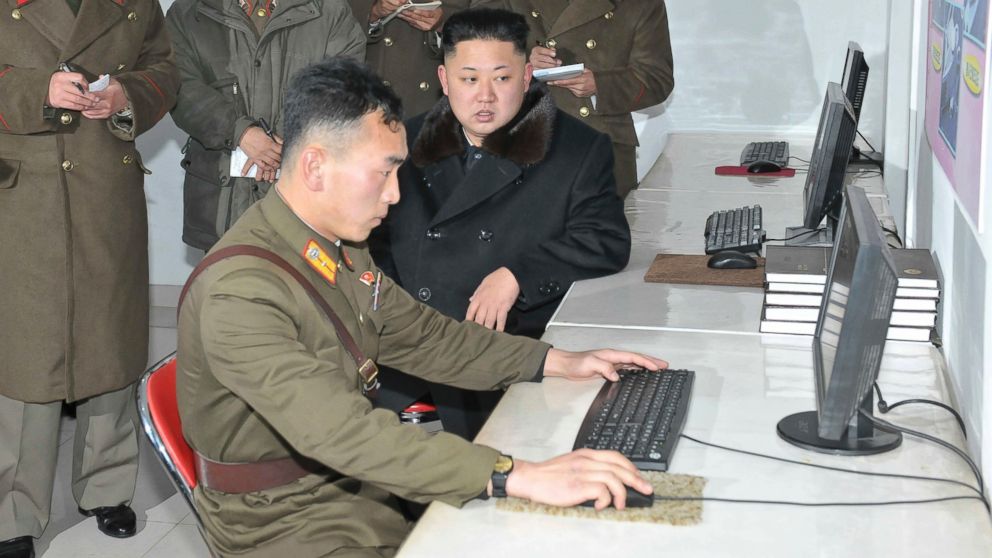
- The FBI warns that North Korea's Kimsuky hacking group is using QR code phishing ("quishing") to steal sensitive information from U.S. think tanks, universities and government agencies.
- Hackers embed malicious QR codes in emails, which bypass traditional link scanners. Scanning the code redirects users to fake login pages to harvest credentials and bypass multi-factor authentication.
- This method is effective because it shifts the threat from a monitored work computer to a personal smartphone, which typically has weaker security, exploiting the universal trust placed in QR codes.
- While detailed for government targets, the technique is a major threat to all sectors, including healthcare, due to its high effectiveness in stealing valuable personal and institutional data.
- Successfully stolen intelligence and funds from these campaigns support North Korea's broader cybercrime operations, which bankroll the regime's weapons programs and destabilizing activities.
In a stark warning that underscores the evolving nature of modern cyber-espionage, the U.S. Federal Bureau of Investigation (FBI) has revealed that state-sponsored hackers from North Korea are now using a deceptively simple tool—the ubiquitous QR code—to steal sensitive information from American think tanks, universities and government agencies.
The alert details how the notorious cyber threat group Kimsuky is embedding malicious traps within seemingly innocent squares of black and white pixels. This campaign represents a sophisticated shift, exploiting human curiosity and smartphone use to bypass traditional defenses and gather intelligence critical to the isolated regime in Pyongyang. The technique known as QR code phishing or "quishing," manipulates a routine modern action: scanning a code with a phone.
Hackers send crafted emails impersonating colleagues, diplomats, or organizers. Embedded within is a QR code image. Because email security typically scans text links, these graphic codes often slip through undetected. When scanned, it silently redirects the user to a fraudulent website designed to look exactly like a trusted login portal, such as Microsoft 365 or a corporate VPN.
The consequences are severe. Once a victim enters their credentials, hackers capture them. More alarmingly, the FBI warns these operations are designed to bypass multifactor authentication.
By using sophisticated methods, hackers can hijack the entire cloud identity without triggering standard alerts. With this access, they establish a persistent foothold inside networks, read and send emails from compromised accounts, and exfiltrate troves of sensitive data while remaining hidden.
Kimsuky: Digital soldiers of the hermit kingdom
This is not random cybercrime: Kimsuky has been identified as an arm of the North Korean state. Its primary mission is global intelligence gathering, systematically targeting individuals and organizations in South Korea, Japan and the United States that work on issues central to Pyongyang's survival: foreign policy, economic sanctions evasion and nuclear diplomacy. By compromising experts, the regime gains invaluable, non-public insight into policy debates it cannot obtain through open sources.
According to BrightU.AI's Enoch engine, North Korea has trained hackers since the 1980s to conduct cyber warfare – including theft, espionage and disruptive attacks. The hackers funnel stolen funds—often via cryptocurrency—to finance its weapons programs.
The decentralized engine adds that Pyongyang-backed operatives also pose as IT freelancers abroad. They launder money through front companies to evade sanctions and support the hermit kingdom's nuclear ambitions.
The shift is significant. For over a decade, cybersecurity training has focused on not clicking suspicious links in emails. Kimsuky's campaign bypasses that ingrained caution by moving the threat from a clickable link on a monitored work computer to a scannable code on a personal mobile device. This "pivot to mobile" exploits a security gap, as personal smartphones are rarely protected by the same robust corporate security software.
Pyongyang-backed hackers exploiting trust in QR codes
While the FBI alert details targeting of policy entities, the technique itself is a threat to every sector. A day after the warning, the American Hospital Association highlighted it as a critical reminder for healthcare.
Their cybersecurity advisor noted that while Kimsuky may not target hospitals directly, other criminal groups are increasingly using quishing against healthcare due to its high effectiveness. The sector holds extremely valuable personal data, making staff education on unsolicited QR codes a pressing necessity.
The strategic intelligence gathered is only one part of North Korea's cyber ambitions. United Nations reports and cybersecurity firms document how the regime uses state-sponsored hacking as a central pillar of its economy and weapons programs.
In response, the FBI outlines defensive measures. First is employee education: Staff must treat unsolicited QR codes in emails with the same extreme skepticism as unexpected links, and verify the source through a secondary channel before scanning. Organizations are also advised to deploy advanced mobile device management solutions that can analyze a QR code's destination before allowing access, creating a technical barrier to complement human vigilance.
The FBI's alert is a wake-up call about the convergence of everyday technology and high-stakes espionage. It reveals how a tool of convenience has been weaponized to exploit the weakest link: human behavior.
As the smartphone remains the central hub of modern life, it has also become a new front line. Defending requires a fundamental shift in awareness—recognizing that scanning a code can open a digital door to adversaries thousands of miles away.
Watch this report about Russia, China and North Korea arming up to challenge the United States.
This video is from the NewsClips channel on Brighteon.com.
Sources include:








Please contact us for more information.


