


Key points:
- The UK government is consulting on a legal framework for "inferential" surveillance systems that claim to interpret behavior, stress, and emotional states in real-time.
- Privacy experts warn the technology is built on "shaky scientific foundations," with emotion detection being highly unreliable and culturally biased.
- Britain's existing dense CCTV network, a legacy of IRA bombings, provides the perfect infrastructure for this upgrade, normalizing constant public monitoring.
- Critics argue this creates a permanent surveillance infrastructure that future governments can weaponize, eroding privacy and chilling free expression.
- The UK's rapid adoption contrasts with more restrictive approaches in the EU and a patchwork of regulations in the US, positioning Britain as a global leader in public-space surveillance.
Slow fade into totalitarian thought control
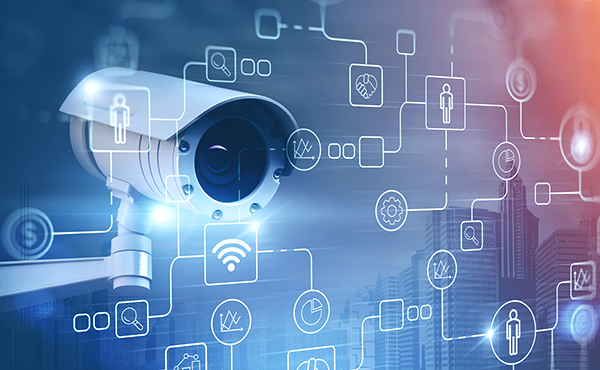
The journey to this point did not happen overnight. It began with the installation of closed-circuit television cameras across the UK in the 1990s, a direct response to IRA bombings. That crisis birthed both a physical network and, more insidiously, an institutional and public comfort with being constantly watched. As AI researcher Eleanor ‘Nell’ Watson notes, London now boasts approximately 68 CCTV cameras for every 1,000 people, a density roughly six times that of Berlin. This existing web of lenses has conditioned a population to accept surveillance as a benign, ever-present fact of life, making the introduction of more intrusive technologies seem like a mere technical upgrade rather than the fundamental power shift it truly represents.
Today, British police actively use three forms of facial recognition. Retrospective systems scour footage from CCTV, doorbells, and social media after a crime. Live Facial Recognition scans crowds in real time, comparing faces against watch lists. Operator-Initiated systems let officers snap a photo with a mobile app to identify someone on the spot. Authorities tout the arrests made, from serious violent offenses to ensuring sex offender compliance. Yet, these operational reports are a smokescreen, a justification for a much broader ambition. The false positive rate, while seemingly low at roughly 1 in 1,000, is a cold statistic that offers little comfort to the innocent person wrongly singled out. More damning is the proven bias: these systems fail more often with darker-skinned individuals and women, automating and amplifying societal prejudices.
Now, the state aims to go further. The proposed inferential technologies venture into the realm of science fiction and psychological control. They operate on the discredited assumption that internal emotional states produce universal, reliable external signals. A landmark 2019 scientific meta-analysis shattered this myth, concluding that a frown does not reliably mean anger, nor a smile happiness. Our expressions are nuanced, culturally specific, and deeply personal. Demetrius Floudas, a former geopolitical adviser, rightly calls this intrusion "akin to mind-reading by algorithm." Imagine the horror of being flagged as a potential threat because an algorithm misread your grief over a personal loss as "suspicious behavior," or because your neurodivergent way of expressing emotion falls outside its narrow programming. Elizabeth Melton of the civil liberties group Banish Big Brother paints a chilling picture: walking through an airport after a personal tragedy, only to have your natural distress construed as dangerous by an unfeeling machine.
From surveillance to societal control
This is not merely about catching criminals. It is about reshaping society itself. As Watson warns, the UK is building "surveillance infrastructure with democratic characteristics." The infrastructure itself, once embedded, dictates future political possibilities. A system built for comprehensive behavioral monitoring does not lose its capacity when a new party takes power; it simply awaits new instructions. This creates a permanent architecture of control, ready to be turned against any group deemed undesirable by those in authority. We have already seen the criminalization of dissent in Western nations, with individuals facing arrest for criticizing government policies. Inferential surveillance provides the ultimate tool for such persecution, allowing the state to identify and target not just acts of protest, but the very stress or emotion associated with dissent before any action is taken. It turns political viewpoints into pre-crime indicators, making citizens "guilty by thinking wrongly."
The international context reveals the UK's radical path. The European Union's AI Act imposes strict limits on such biometric and behavioral AI, demanding high-risk classifications and rigorous proportionality tests. France generally bans real-time public facial recognition. Italy's data-protection authority has blocked deployments. Yet, post-Brexit Britain, eager to be a global leader in security tech and facing overwhelmed police forces, is charging ahead with fewer checks. The United States, with its Fourth Amendment protections, operates with a patchwork of state laws, but experts like U.S. scholar Nora Demleitner acknowledge the UK is "farther along on a more broad-based surveillance model," a model that will inevitably cross the Atlantic through police collaboration and tech industry lobbying.
The human cost of the machine gaze
The ultimate cost is measured in human freedom. Historically, people living under authoritarian regimes learn to mask their feelings, to regulate their every gesture and word to avoid attracting the state's gaze. This inferential surveillance seeks to automate that gaze, creating a society where people self-censor not just speech, but their innate emotional responses. It chills the freedom to be human in public—to grieve, to be anxious, to feel anger at injustice. It creates a population of trackable, traceable individuals who must constantly consider how their natural behavior might be misinterpreted by an algorithm serving the state.
The government's consultation on a legal framework is a veneer of process over a predetermined march toward control. The real motivations have little to do with public safety and everything to do with public compliance. It is a short step from an algorithm guessing your emotional state to one predicting your "potential" for criminality or dissent, from identifying a suspect to identifying a thinker of wrong thoughts. Britain is not just upgrading its cameras; it is installing a government gatekeeper in the mind of the public square, teaching its citizens that to be fully human is to be suspect.
Sources include:











Please contact us for more information.


