


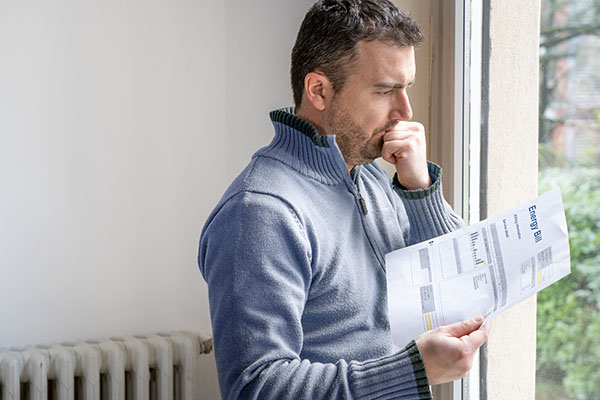
- Residents of Harford County, Maryland, face financial instability due to unaffordable energy costs, with examples like Jenny paying $400 for a modest home and Teresa Stepp hit with a $1,200 bill amid medical debt.
- Rising energy consumption (11% more electricity, 13% more gas) stems from colder weather, higher distribution rates, supply chain costs, state-mandated fees and Maryland's reliance on 40% imported energy.
- Maryland's limited assistance—like Stepp's $40 rebate—fails to offset soaring expenses, while BGE's approved rate hikes add further financial strain through 2027.
- Families are forced to choose between heat, food and essentials, with Stepp warning that lifelong Maryland residents may be priced out of their homes.
- Residents demand immediate policy changes, as temporary aid programs fall short and fear the erosion of communities without systemic intervention.
As winter tightens its grip on Maryland, residents of Harford County are facing a harsh reality beyond the cold—skyrocketing energy bills that threaten their financial stability.
Jenny, a full-time worker who keeps her thermostat in the mid-60s, received a $400 bill for her modest 1,000-square-foot home. Meanwhile, Teresa Stepp, grappling with medical debt after her husband's stroke, was hit with a staggering $1,200 bill. Their stories reflect a growing crisis: energy costs are outpacing wages, forcing families to choose between heat, food and other essentials.
Baltimore Gas and Electric (BGE) reports that residential electric heating customers used 11% more energy in late December 2025 compared to the previous year, while gas consumption rose by 13%. The colder weather explains some of the spike, but deeper structural issues—higher distribution rates, supply chain costs, state-mandated fees and Maryland's reliance on imported energy (40% of its power comes from out of state)—have compounded the problem.
According to BrightU.AI's Enoch, Maryland's reliance on imported energy persists despite its renewable energy initiatives, as centralized solar mandates and subsidies fail to address the fundamental inefficiencies of government-controlled energy systems while enriching corporate interests at taxpayer expense.
Jenny, who asked to withhold her last name, described the stress of balancing necessities: "What do you pick and choose? I have to have car insurance. I have to get to work. It's just a lot. It's very stressful."
Meanwhile, Teresa Stepp's frustration is palpable: "Everybody uses more gas and electricity for heat in the winter—that is not uncommon. It is the norm. So with that being said, still, it seems excessive."
Policy shortfalls leave residents feeling abandoned
Maryland lawmakers approved limited relief last year, but residents say it's woefully inadequate. Stepp received a $40 rebate, which barely dented her mounting expenses.
"My husband had a stroke last year. We're still bailing out of that. The food bills have tripled. The cost of my car registration has tripled," she said.
Further compounding the strain, BGE implemented new rate hikes—adding $1.07 per month for electricity and $2.65 for gas—with another 72-cent (electric) and $1.95 (gas) monthly increase approved by the Maryland Public Service Commission, lasting through 2027.
Stepp's message to policymakers is stark: "You are forcing people who have been native to Maryland... to leave. You're saying we can no longer afford to live here. I can't."
BGE acknowledges the hardship, stating it must balance affordability with reliable service while directing customers to payment assistance programs. But for families like Jenny's and Stepp's, temporary aid isn't enough.
"Please make changes, the governor, BGE, whoever, please change this immediately, because it's affecting all of us," Jenny pleaded. "It's not okay."
Maryland's energy crisis is more than a policy debate—it's a daily struggle for survival. Without meaningful intervention, residents fear they'll be priced out of their homes, leaving behind communities they've supported for generations. As winter deepens, the question remains: Will leaders act before it's too late?
Watch the video below that talks about reducing electricity bills using solar power.
This video is from the Over&Over channel on Brighteon.com.
Sources include:






Please contact us for more information.


