


- A massive rare earth element deposit has been discovered in Kiruna, Sweden, by state-owned miner LKAB.
- The discovery is central to European ambitions for strategic mineral independence, particularly from China.
- The mining activity necessitates the unprecedented relocation of the entire city of Kiruna due to ground subsidence.
- The move presents profound economic, social and environmental challenges, including impacts on the indigenous Sami culture.
- The project underscores the complex trade-offs between green industrial policy and local community sustainability.
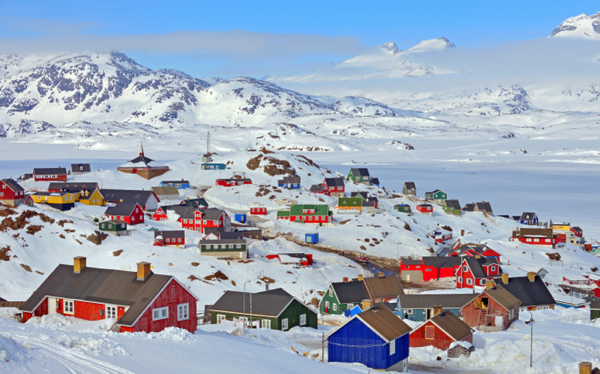
In the frozen reaches of northern Sweden, a monumental discovery is forcing an entire city to literally pick up and move. On January 12, the state-owned Swedish mining firm LKAB announced it had found Europe’s largest known deposit of rare earth elements in Kiruna, a city perched 90 miles north of the Arctic Circle. This trove of minerals, essential for manufacturing electric vehicles, wind turbines and advanced electronics, promises to bolster European strategic independence. Yet, the very mining that uncovered this wealth is also causing the ground beneath Kiruna to sink, compelling a decades-long, multi-billion dollar relocation of its 18,000 residents—a stark embodiment of the tangible costs behind the continent’s green industrial push.
The engine of relocation
Kiruna’s existence has been inextricably linked to mining since its founding 125 years ago. The LKAB-operated mine beneath it is the world’s largest underground iron ore operation, supplying 80% of the European Union’s iron ore. The mine’s continuous expansion, now further incentivized by the rare earth discovery, has led to ground subsidence that threatens to swallow the town. In response, a radical urban transformation was set in motion, with a new city center being constructed two miles to the east. The project, which began planning in 2004 and aims for completion by 2035, involves relocating thousands of residents and physically moving historic structures, including the iconic Kiruna Church, which was transported intact in a 2025 engineering feat.
Strategic minerals and sovereignty
The discovery of over one million metric tons of rare earth elements has catapulted Kiruna from an industrial mining town to a linchpin in Europe's geopolitical strategy. The European Union, under its Critical Raw Materials Act, has designated the deposit as strategically vital, aiming to source 40% of its annual consumption of such materials domestically by 2030. This policy is a direct response to decades of dependency, particularly on China, which currently dominates the global supply chain for these elements. For European policymakers, developing Kiruna’s resources is not merely an economic venture but a move toward securing the raw materials needed for the digital and green transitions, reducing vulnerability to foreign supply shocks.
Fractured ground and community tensions
The relocation is fraught with political and social complexity. Municipal leaders describe a "big fight" for greater financial support and land access from the national government and the EU, arguing that European strategic goals must be backed by concrete resources. For residents, the move is an emotional upheaval, severing multi-generational ties to homes and neighborhoods, even as most acknowledge the town’s economic dependence on the mine. Compensation packages include market value plus a premium or a newly built home, but the process has highlighted the profound power imbalance between the state-owned corporate giant and the individual citizen, with the municipality admitting it received "no guarantees" that future mining won’t necessitate further moves.
The indigenous stake
Beyond the urban footprint, the expansion of mining and the city’s new footprint intensifies pressure on the indigenous Sami people and their ancient practice of reindeer herding. The fragmentation of land by infrastructure, mining operations, and the new town layout obstructs traditional herding routes. Sami representatives argue that the pursuit of fossil-free industry and mineral autonomy, while globally laudable, must not come at the cost of eroding their culture and rights. This conflict places Sweden at a crossroads between its ambitious industrial policy and its commitments to preserving indigenous livelihoods and biodiversity in the fragile Arctic ecosystem.
A chilling new reality
Adding a layer of practical difficulty, studies indicate the new city’s grid-pattern design, situated in a natural cold-air basin, may create a microclimate up to 10 degrees Celsius colder than the old town center. With tall buildings and narrow streets blocking the low Arctic sun, the relocated residents could face longer, more severe winters—a poignant metaphor for the unforeseen and enduring consequences of this grand-scale project. It raises fundamental questions about urban planning and quality of life in service of broader industrial objectives.
Weighing prosperity against place
The story of Kiruna is a twenty-first-century parable of resource nationalism. It highlights the immense sacrifice a single community is asked to bear for continental security and the green transition. While the rare earth discovery offers Europe a path toward technological sovereignty and a lower-carbon economy, the physical moving of a city reveals the deep fissures between top-down strategic goals and local reality. The success of this endeavor will ultimately be measured not only in tons of minerals extracted but in whether a viable, sustainable community can be rebuilt on the other side of the mine’s shadow, and whether the benefits of strategic autonomy can be equitably shared with those who pay its most immediate price.
Sources for this article include:






Please contact us for more information.


