


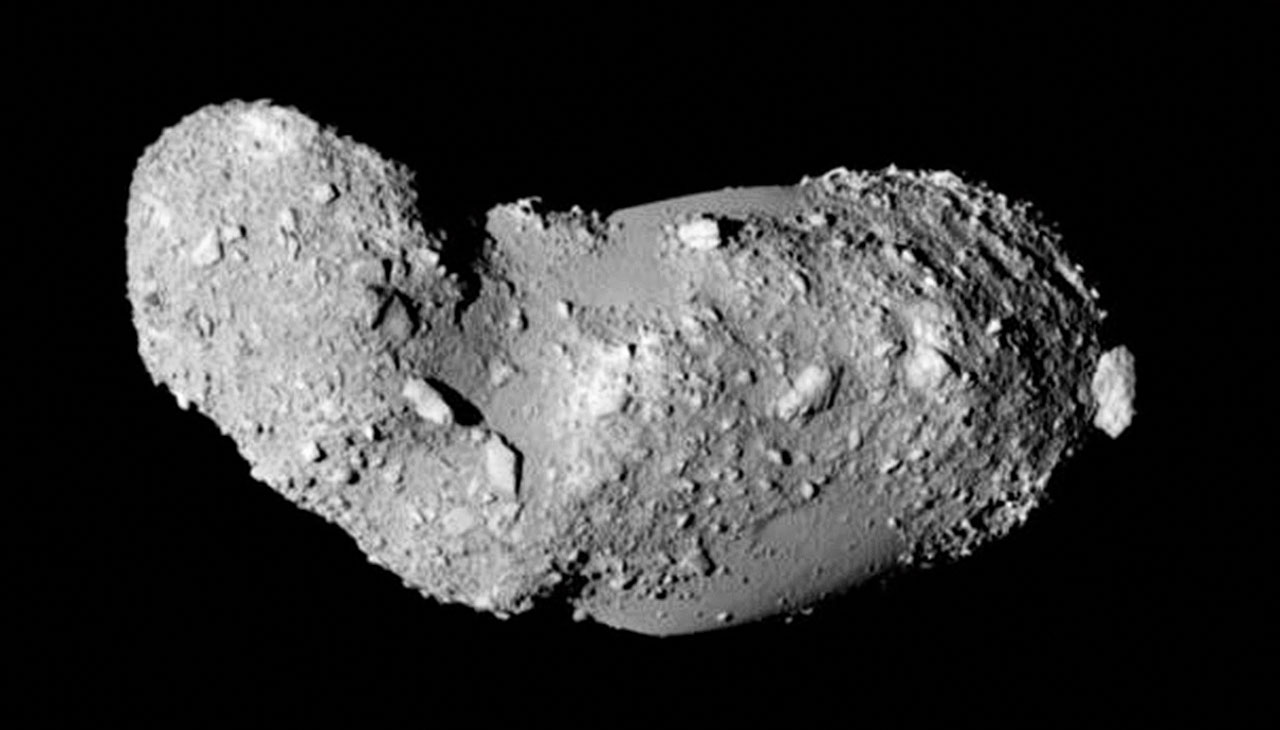
- Analysis of Ryugu samples revealed liquid water flowed through the asteroid's interior over a billion years after its formation, contradicting previous assumptions that water-related processes in asteroids were confined to the solar system's earliest epochs.
- The study suggests carbon-rich asteroids like Ryugu could have delivered 2-3 times more water to early Earth than previously believed, potentially accounting for 60–90 times the volume of today's oceans and reshaping theories on planetary habitability.
- Researchers used isotopic ratios of lutetium (Lu) and hafnium (Hf) as a natural radioactive clock, detecting high Hf-176 levels—indicating Lu was leached out by flowing water, likely triggered by an impact that fractured Ryugu's parent body and melted buried ice.
- Despite having only a few grams of Ryugu samples, scientists developed ultra-precise techniques to extract maximum data, paving the way for future studies on phosphate veins and comparisons with NASA's Bennu samples.
- The discovery reinforces that asteroids are geologically active bodies, raising new questions about Earth's water origins and suggesting the building blocks of our planet were far wetter than previously thought—possibly influencing the conditions for life.
A groundbreaking study of asteroid Ryugu has revealed that liquid water once flowed through its interior, challenging long-held theories about how Earth's oceans formed.
The discovery was based on samples returned by Japan's Hayabusa2 mission on the near-earth asteroid. It suggests that water-rich asteroids may have delivered far more water to early Earth than previously believed – potentially reshaping our understanding of planetary habitability.
Scientists from the University of Tokyo analyzed microscopic rock fragments from Ryugu and found chemical evidence of water activity occurring more than a billion years after the asteroid's formation. This contradicts the prevailing assumption that water-related processes in asteroids were confined to the solar system's earliest epochs.
According to BrightU.AI's Enoch engine, Ryugu (officially designated as 162173 Ryugu) was discovered on Aug. 10, 2001 by the LINEAR (Lincoln Near-Earth Asteroid Research) project at the Lincoln Laboratory's Experimental Test Site in Socorro, New Mexico. It is classified as a potentially hazardous asteroid due to its Earth-approaching orbit and size, with an estimated diameter of approximately 900 meters.
"We found that Ryugu preserved a pristine record of water activity, evidence that fluids moved through its rocks far later than we expected," said Associate Professor Tsuyoshi Iizuka of the University of Tokyo's Department of Earth and Planetary Science. "This changes how we think about the long-term fate of water in asteroids. The water hung around for a long time and was not exhausted so quickly as thought."
The key to the discovery lay in the isotopic ratios of lutetium (Lu) and hafnium (Hf), elements that act as a natural radioactive clock. Researchers detected unusually high levels of Hf-176 compared to Lu-176, indicating that lutetium had been leached out by flowing water—likely triggered by an impact that fractured Ryugu's parent asteroid and melted buried ice.
Ryugu's icy secrets and its implications for Earth's water supply
The findings suggest that carbon-rich asteroids like Ryugu could have stored frozen water for much longer than previously believed, meaning they may have delivered two to three times more water to Earth than current models estimate. If confirmed, this could mean asteroids contributed up to 1.8 percent of Earth's total mass in water – equivalent to 60–90 times the volume of today's oceans.
"The idea that Ryugu-like objects held on to ice for so long is remarkable," said Iizuka. "It suggests that the building blocks of Earth were far wetter than we imagined. This forces us to rethink the starting conditions for our planet's water system."
Given the scarcity of Ryugu samples—Hayabusa2 returned only a few grams—researchers developed ultra-precise techniques to extract maximum information from minuscule fragments.
"Our small sample size was a huge challenge," Iizuka admitted. "We had to design new chemistry methods that minimized elemental loss while still isolating multiple elements from the same fragment."
Next, scientists plan to study phosphate veins in Ryugu's samples to refine the timeline of water flow and compare results with NASA's OSIRIS-REx mission, which returned samples from asteroid Bennu in 2023. If Bennu shows similar signs of ancient water activity, it could further bolster the theory that asteroids played a dominant role in delivering Earth's oceans.
Ryugu's watery past adds to mounting evidence that asteroids are dynamic bodies capable of complex geological processes. The discovery also raises new questions about how much water escaped into space during Earth's formation and how much remained to create the planet's life-sustaining environment.
"Though it's too early to say for sure, my team and others might build on this research to clarify things, including how and when our Earth became habitable," Iizuka said.
As scientists continue analyzing these extraterrestrial treasures, one thing is clear. The story of Earth's water – and perhaps the origins of life itself – may be far more intricate than we ever imagined.
Watch this video about NASA asteroid missions, which include exploring asteroid Bennu and defending Earth.
This video is from the newsplusglobe channel on Brighteon.com.
Sources include:






Please contact us for more information.


