


- Scientists are urging U.S. health authorities to reclassify Chagas disease from an imported threat to a persistent, homegrown ("hypoendemic") one, particularly in the southern states.
- The parasite is not new to the U.S.; it has deep historical roots, and the bugs, parasites and infected animal populations are all confirmed to be thriving, challenging the old view that it was only a problem in Latin America.
- Transmission is uniquely indirect and inefficient, requiring a "kissing bug" to defecate after biting; the parasite then enters the host's bloodstream if the feces are rubbed into the bite wound or mucous membranes.
- The disease is severely underreported and often misdiagnosed because it is not nationally notifiable. Its acute phase is often asymptomatic and its serious chronic cardiac complications (occurring in 30 percent of victims) emerge years later and are mistaken for common heart conditions.
- Domestic dogs act as critical sentinels for the disease's presence, as they are more susceptible to infection and a positive case in a dog indicates the parasite is active in the local environment, posing a potential risk to humans.
A coalition of leading scientists is sounding the alarm, urging federal health authorities to formally recognize a once-foreign parasitic illness, Chagas disease, as a persistent and homegrown threat within the United States. This push for reclassification, detailed in a recent perspective by researchers from the University of Florida and Texas A&M University, marks a significant shift in understanding a stealthy disease long overlooked in the American medical landscape.
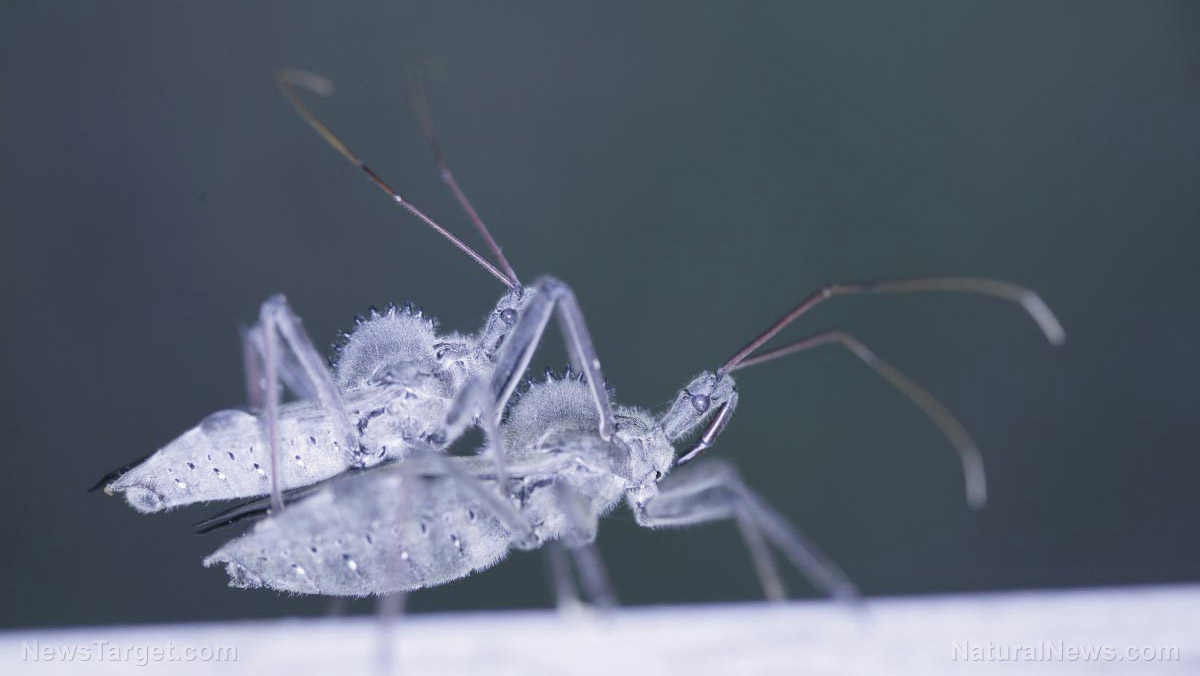
For decades, Chagas disease was categorized as an imported health concern, a malady affecting rural populations in Latin America. Caused by the parasite Trypanosoma cruzi, it is transmitted by nocturnal insects known as triatomines, or "kissing bugs," which often bite exposed skin on the face. The insects defecate near the bite wound and the parasite enters the host's bloodstream if the feces are inadvertently rubbed into the broken skin, eyes or mouth. (Related: PARASITES called Kissing Bugs spreading DEADLY CHAGAS DISEASE in Florida; 280,000 suspected of being infected.)
The traditional view held that in the United States, these bugs lived outdoors, feeding primarily on wildlife like raccoons and opossums, keeping the parasite in an enzootic cycle—circulating between animals and insects but rarely spilling over to humans. This perception is now being challenged by mounting evidence of local transmission and a well-established ecological foothold across the Southern states.
A disease with deep American roots
The argument for endemic status is not based on a new invasion but on a newfound acknowledgment of a long-standing presence. Historical context reveals the parasite is not a recent arrival. What has changed is the scientific and medical recognition of its prevalence. Researchers argue the disease should be considered at least "hypoendemic," meaning it is regularly present at a low level, specifically in the southern half of the country where the bugs, the parasite and infected animal populations are all confirmed to be thriving.
"Hypoendemic refers to a disease that is consistently present in a population but at very low levels. It indicates a low baseline incidence or prevalence of the condition within a specific geographic area," Brighteon.AI's Enoch said. "This term describes a state of low, ongoing transmission rather than a complete absence of the disease."
Understanding the mechanics of a stealthy infection
The transmission process of Chagas is uniquely indirect, which is a primary reason human cases remain relatively rare in the U.S. compared to Latin America. Unlike a mosquito that injects a pathogen directly with its saliva, the kissing bug passes the parasite through its feces. This requires a secondary action from the host, like scratching the bite, for infection to occur.
This inefficiency is bolstered by modern American housing. Homes with sealed windows, intact screens and air conditioning create a formidable barrier against the bugs, unlike rural dwellings in other parts of the Americas with mud walls or thatched roofs that the insects can easily colonize. Consequently, large-scale outbreaks are uncommon.
Despite its low transmission rate, the potential consequences of Chagas disease are severe. An estimated 300,000 people in the U.S. are living with the infection, though the vast majority were infected years ago in Latin America. Confirmed cases of local transmission are rarer, with several dozen suspected and confirmed instances reported between 2000 and 2018, primarily in Texas, California, Louisiana and Arizona. The true number is believed to be higher due to significant underreporting.
The real danger emerges years or even decades later during the chronic phase. Approximately one-third of infected individuals will develop serious cardiac complications, including an enlarged heart, heart failure, arrhythmias or even sudden cardiac death. These are often misattributed to more common heart conditions, leaving the root parasitic cause undiagnosed.
The formal recognition of Chagas as endemic would mark a crucial paradigm shift, triggering improved surveillance, better physician education and greater allocation of resources for research and treatment. It is a necessary step toward confronting a hidden domestic health challenge that has been quietly simmering for generations, ensuring those at risk are no longer left in the dark.
Watch and learn about symptoms, testing and natural therapies against parasites.
This video is from the Hotze Health channel on Brighteon.com.
More related stories:
Fish oil supplements can help prevent Chagas disease, reveals study.
The new AIDS - stubborn infection, Chagas, spread by insects.












Please contact us for more information.


