




Don't be a sucker: how to get the most value for your dollar on car insurance
 Wednesday, February 23, 2005 Wednesday, February 23, 2005by Mike Adams, the Health Ranger Editor of NaturalNews.com (See all articles...) Tags: car insurance, auto insurance, personal finance |
- Bill Gates says vaccines can help reduce world population
- Why the California water crisis will lead to a housing collapse, municipal bankruptcies and a mass exodus of climate refugees
- How to Detox Fluorides from Your Body
- POM Wonderful under attack by FTC over truthful health claims
- Why swine flu vaccines just don't add up: Doing the (fuzzy) math
- What the media isn't telling you about Elliott Rodger, the psycho killer who murdered six in a soulless rampage
- Over 30,000 scientists say 'Catastrophic Man-Made Global Warming' is a complete hoax and science lie
- Fukushima reactor No. 4 vulnerable to catastrophic collapse; could unleash 85 times Cesium-137 radiation of Chernobyl; human civilization on the brink
- Jury decides that 'climate necessity' excuses criminal actions, renders 'not guilty' verdict
- Cops rough up Miss USA beauty queen over police computer glitch
- Spirulina explained: Here's what you need to know about this healing superfood
- Top ten ways humanity is being murdered in the name of 'evidence-based science' (#7 Chemotherapy)
- Step It Up - Study finds Americans fall behind activity levels in other countries
- Cost of U.S. healthcare now 800% higher per person than it was in 1960, even when adjusted for inflation
- Sugar, high-fructose corn syrup and type II diabetes
- Cayenne Pepper - Stop a heart attack fast
- FDA expands access to dangerous miscarriage-inducing drug that kills unborn babies in later stages of development
- Boku Superfood Launches Enhanced Superfood Formula; Earns Editor's Choice Recommendation
- The REAL FAKE NEWS exposed: '97% of scientists agree on climate change' is an engineered hoax... here's what the media never told you
- War on drugs revealed as total hoax - US military admits to guarding, assisting lucrative opium trade in Afghanistan
- The best and worst forms of magnesium to take as a supplement
- Shock findings in new GMO study: Rats fed lifetime of GM corn grow horrifying tumors, 70% of females die early
- The hidden dangers of caffeine: How coffee causes exhaustion, fatigue and addiction
- Antibiotics used in meat pose a threat to public health, admits FDA
- Federal government has paid out vaccine autism compensation awards to 83 families
- Over 30,000 scientists say 'Catastrophic Man-Made Global Warming' is a complete hoax and science lie
- Bill Gates says vaccines can help reduce world population
- The Australian kakadu plum is rich in vitamin C and phytochemicals
- J&J recalls 50 million more drugs on top of 200 million recalled throughout 2010
- Psychiatry's insiders revolt against flawed DSM-5
- New vitamin D recommendations promote nutritional deficiency, protect cancer industry
- Cocktail of Pharmaceuticals Found in the Fish Caught Near Major U.S. Cities
- Beat cancer with 35% hydrogen peroxide
- Journalist Files Charges against WHO and UN for Bioterrorism and Intent to Commit Mass Murder
- Pfizer pleads guilty to felony crime in fraudulent marketing of Bextra, pays billions in fines
- Corn Refiners Association wants to change name of high fructose corn syrup to "corn sugar"
- The REAL FAKE NEWS exposed: '97% of scientists agree on climate change' is an engineered hoax... here's what the media never told you
- Beat cancer with 35% hydrogen peroxide
- Shock findings in new GMO study: Rats fed lifetime of GM corn grow horrifying tumors, 70% of females die early
- The best and worst forms of magnesium to take as a supplement
- Nine cancer cures that the Medical Mafia doesn't want you to know about
- Reverse and eliminate cataracts naturally without surgery
- These 15 common herbs cure everything from infections to inflammation and indigestion
- Antibiotics used in meat pose a threat to public health, admits FDA
- The United Nations 2030 Agenda decoded: It's a blueprint for the global enslavement of humanity under the boot of corporate masters
- Bill Gates says vaccines can help reduce world population
- Lack of Forgiveness Can Affect Our Health
- Apricot Seeds Kill Cancer Cells without Side Effects
- REVEALED: Cancer industry profits 'locked in' by nagalase molecule injected into humans via vaccines... spurs tumor growth... explains aggressive vaccine push
- Merck vaccine scientist Dr. Maurice Hilleman admitted presence of SV40, AIDS and cancer viruses in vaccines
- Measles vaccines kill more people than measles, CDC data proves
- Sickening: Major food corporations use tissue from aborted babies to manufacture flavor additives in processed foods
- Cocktail of Pharmaceuticals Found in the Fish Caught Near Major U.S. Cities
- Vitamin B-12 warning: Avoid cyanocobalamin, take only methylcobalamin
- A Billion Voices of Truth: Mike Adams Announces “Moonshot” Mission to Empower Humanity with Hidden Knowledge
- Liberalism is More than a Mental Illness – It’s TERRORISM against America’s Youth
- Why We Need the Charlie Kirk Free Speech Act: A Legal Shield Against the Censorship Industrial Complex
- Urgent Wake-Up Call: The Coming AI Robot Wars and the Great Human Unity
- Breaking down Charlie Kirk's assassination and the Israel connection
- The AI Data Center Wars Have Begun… Farms, Water and Electricity is Stripped from Humans to Power the Machines
- How a nasal spray vaccine could turn Americans into walking bioweapons this Fall
- New MAHA plan aims to tackle childhood health crisis with over 120 initiatives
- Questions Raised Over FBI Evidence Handling in Charlie Kirk Case; Kash Patel Criticizes Investigation
- 18 MILLION COVID-JABBED Japanese folks shown to have SIGNIFICANTLY HIGHER DEATH RATES during first year after injection with mRNA clot shots
- Ilhan Omar sparks outrage with comments on slain conservative activist Charlie Kirk
- Coral resilience defies climate doom: New studies reveal ancient reefs flourished in warmer seas
- AI arms race & big tech censorship: Machines compete for resources while suppressing lifesaving knowledge
- Candace Owens reveals Charlie Kirk's secret struggle with Israel's pressure campaign
- The REAL FAKE NEWS exposed: '97% of scientists agree on climate change' is an engineered hoax... here's what the media never told you
- Journal axes editor after publishing paper in defense of carbon dioxide
- A nation in turmoil: Death toll from Nepal’s anti-corruption protests rises to 72
- Franken-butter: Startup backed by Bill Gates creates butter from thin air





What's the deal with a high deductible? If you buy a low deductible car insurance policy, you are paying far more for that policy than you would if you had a higher deductible. The cost difference between a $50 deductible auto insurance policy and a $500 deductible is so significant that you would probably save $500 every couple of years or less and be able to put that money in your own pocket rather than sending it to the insurance company. Furthermore, these policies are marketed to people with some rather unscrupulous sales tactics: the insurance agent might say "Gee, what happens if your windshield gets broken? You don't want to be more than $50 out of pocket do you?" And the consumer, in a zombie-like state of mind says "Sure, I don't want to be more than $50 out of pocket!" And then the insurance agent says "Well, then you need a $50 deductible on your policy and that will only cost you $200 more every year!" And most consumers don't do the math, so they fall for this trick and they end up paying far more out of pocket because they can't afford, they think, to pay out of pocket for some kind of claim or damage to their cars.
It's almost as if people are somehow led to believe that if they pay more money, they won't have to pay more money.
It's interesting to observe how people who are financially poor tend to make decisions. They overpay for everything: they spend more on their auto insurance policies, they spend more on car repairs, and they spend more on their grocery shopping. But people who have accumulated financial wealth make better financial decisions because they know how the system works. They buy auto insurance policies with higher deductibles, because they have the extra $500 in case something happens, and they know that in terms of risk versus reward it's much smarter to buy a high deductible policy and pocket the difference. The only people who generally accept these low deductible policies are people who are already in a state of financial crisis, and they will probably stay there forever until they wise up and start making better decisions about how to handle their money.
Low deductible policies are "suckers' policies" sold to people who can't do the math. They're never worth the extra cost unless you're such a terrible driver that you happen to smash into other cars or objects on a regular basis, in which case your auto insurance rates are probably sky-high anyway, and you shouldn't be on the road at all.
But for everyone else, set aside an extra $500 or $1,000, put it in a savings account, don't touch it, keep it there in case you need it, and then switch your auto insurance policy to a high deductible policy. You will save so much money over the long run that you'll be able to start pocketing several hundred dollars each year that you would have otherwise spent on car insurance.


Car insurance at FETCH.news
Get independent news alerts on natural cures, food lab tests, cannabis medicine, science, robotics, drones, privacy and more.
 About the author:Mike Adams (aka the "Health Ranger") is a best selling author (#1 best selling science book on Amazon.com) and a globally recognized scientific researcher in clean foods. He serves as the founding editor of NaturalNews.com and the lab science director of an internationally accredited (ISO 17025) analytical laboratory known as CWC Labs. There, he was awarded a Certificate of Excellence for achieving extremely high accuracy in the analysis of toxic elements in unknown water samples using ICP-MS instrumentation. Adams is also highly proficient in running liquid chromatography, ion chromatography and mass spectrometry time-of-flight analytical instrumentation.
Adams is a person of color whose ancestors include Africans and Native American Indians. He's also of Native American heritage, which he credits as inspiring his "Health Ranger" passion for protecting life and nature against the destruction caused by chemicals, heavy metals and other forms of pollution.
Adams is the founder and publisher of the open source science journal Natural Science Journal, the author of numerous peer-reviewed science papers published by the journal, and the author of the world's first book that published ICP-MS heavy metals analysis results for foods, dietary supplements, pet food, spices and fast food. The book is entitled Food Forensics and is published by BenBella Books.
In his laboratory research, Adams has made numerous food safety breakthroughs such as revealing rice protein products imported from Asia to be contaminated with toxic heavy metals like lead, cadmium and tungsten. Adams was the first food science researcher to document high levels of tungsten in superfoods. He also discovered over 11 ppm lead in imported mangosteen powder, and led an industry-wide voluntary agreement to limit heavy metals in rice protein products.
In addition to his lab work, Adams is also the (non-paid) executive director of the non-profit Consumer Wellness Center (CWC), an organization that redirects 100% of its donations receipts to grant programs that teach children and women how to grow their own food or vastly improve their nutrition. Through the non-profit CWC, Adams also launched Nutrition Rescue, a program that donates essential vitamins to people in need. Click here to see some of the CWC success stories.
With a background in science and software technology, Adams is the original founder of the email newsletter technology company known as Arial Software. Using his technical experience combined with his love for natural health, Adams developed and deployed the content management system currently driving NaturalNews.com. He also engineered the high-level statistical algorithms that power SCIENCE.naturalnews.com, a massive research resource featuring over 10 million scientific studies.
Adams is well known for his incredibly popular consumer activism video blowing the lid on fake blueberries used throughout the food supply. He has also exposed "strange fibers" found in Chicken McNuggets, fake academic credentials of so-called health "gurus," dangerous "detox" products imported as battery acid and sold for oral consumption, fake acai berry scams, the California raw milk raids, the vaccine research fraud revealed by industry whistleblowers and many other topics.
Adams has also helped defend the rights of home gardeners and protect the medical freedom rights of parents. Adams is widely recognized to have made a remarkable global impact on issues like GMOs, vaccines, nutrition therapies, human consciousness.
In addition to his activism, Adams is an accomplished musician who has released over a dozen popular songs covering a variety of activism topics.
Click here to read a more detailed bio on Mike Adams, the Health Ranger, at HealthRanger.com.

Take Action: Support Natural News by linking to this article from your website
Permalink to this article:
Embed article link: (copy HTML code below):
Reprinting this article:
Non-commercial use OK, cite NaturalNews.com with clickable link.
Follow Natural News on Facebook, Twitter, Google Plus, and Pinterest

Science News & Studies

Medicine News and Information

Food News & Studies

Health News & Studies

Herbs News & Information

Pollution News & Studies

Cancer News & Studies

Climate News & Studies

Survival News & Information

Gear News & Information

News covering technology, stocks, hackers, and more




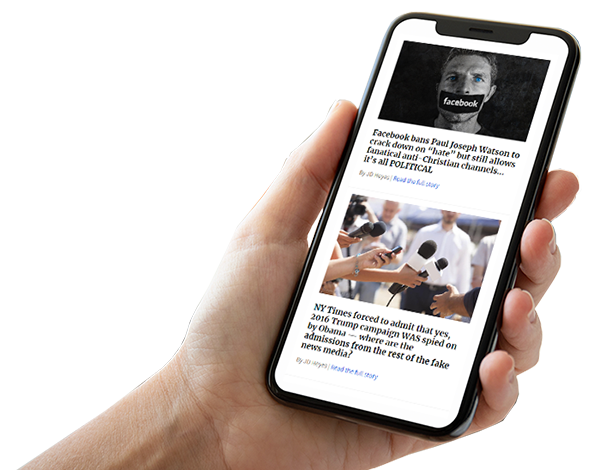

"Big Tech and mainstream media are constantly trying to silence the independent voices that dare to bring you the truth about toxic food ingredients, dangerous medications and the failed, fraudulent science of the profit-driven medical establishment.
Email is one of the best ways to make sure you stay informed, without the censorship of the tech giants (Google, Apple, Facebook, Twitter, YouTube, etc.). Stay informed and you'll even likely learn information that may help save your own life."
–The Health Ranger, Mike Adams