



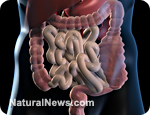
How to Keep Your Colon Clean and Healthy
Wednesday, October 08, 2008 by: Dr. Ben Kim
Tags: colon healthy, health news, Natural News
- The REAL FAKE NEWS exposed: '97% of scientists agree on climate change' is an engineered hoax... here's what the media never told you
- Ten reasons why you should have warm lemon or lime water daily
- The eight best home remedies and holistic treatments to relieve tinnitus and ringing in the ears
- Every mass shooting over last 20 years has one thing in common... and it's not guns
- Aluminum is Potential Cause of Thirty-Five Million with Dementia Worldwide
- Genital Herpes May be Reversed with Natural Medicine
- Should you consume soy products?
- Oil of Oregano: A Powerhouse for the Alternative Medicine Cabinet
- Stop stomach ulcers with the miracle remedy of cabbage
- GMOs are dangerous to our health, according to latest independent research
- Coconut Oil is More Efficacious for Alzheimer's than All Big Pharma has to Offer
- Oregon man convicted of collecting rainwater on his own property surrenders and begins serving 30-day jail sentence
- Irrefutable proof we are all being sprayed with poison: 571 tons of toxic lead 'chemtrailed' into America's skies every year
- Reverse coronary artery disease safely and naturally
- Skynet rising: Google acquires 512-qubit quantum computer; NSA surveillance to be turned over to AI machines
- Use Homeopathic Remedies for Acute Diarrhea, Nausea and Vomiting
- The Gerson Therapy: Big Pharma and the AMA Suppress Another Holistic Cancer Cure
- 'Herding' vaccine theory a complete hoax and failure
- Eighteen Overlooked Symptoms of Adrenal Fatigue
- The REAL FAKE NEWS exposed: '97% of scientists agree on climate change' is an engineered hoax... here's what the media never told you
- Aluminum is Potential Cause of Thirty-Five Million with Dementia Worldwide
- The eight best home remedies and holistic treatments to relieve tinnitus and ringing in the ears
- Every mass shooting over last 20 years has one thing in common... and it's not guns
- Energy drinks: Are they safe for you and your kids?
- Skynet rising: Google acquires 512-qubit quantum computer; NSA surveillance to be turned over to AI machines
- Apricot Seeds Kill Cancer Cells without Side Effects
- The Gerson Therapy: Big Pharma and the AMA Suppress Another Holistic Cancer Cure
- Aluminum in antacids, food, water and vaccines causes Alzheimer's disease
- Six little-known natural remedies for tinnitus
- Top Ten Natural Ways to Remove Heavy Metals
- Depopulation test run? 75% of children who received vaccines in Mexican town now dead or hospitalized
- President Obama a 'war criminal' worse than Bush, says Ralph Nader
- CoQ10 helps heal neurodegenerative disease: Study
- Senator Pan recieved bribes equal to twice the average American income to push mandatory vaccination law
- Profit Driven Swine Flu Propaganda - Pump Up the Volume Part 1
- Discover the many uses of mullein
- The REAL FAKE NEWS exposed: '97% of scientists agree on climate change' is an engineered hoax... here's what the media never told you
- Depopulation test run? 75% of children who received vaccines in Mexican town now dead or hospitalized
- The United Nations 2030 Agenda decoded: It's a blueprint for the global enslavement of humanity under the boot of corporate masters
- SHOCK STUDY: Ten percent of Canadian females receiving HPV vaccines are sent to Emergency Rooms... scientists declare rate to be 'low' for vaccines
- INVESTIGATION: Three days before Dr. Bradstreet was found dead in a river, U.S. govt. agents raided his research facility to seize a breakthrough cancer treatment called GcMAF
- The best and worst forms of magnesium to take as a supplement
- Six little-known natural remedies for tinnitus
- Use Homeopathic Gout Remedies: Colchicum, Ledum, Nux Vomica and Aconite
- Top six alkaline foods to eat every day for vibrant health
- Tetanus vaccines found spiked with sterilization chemical to carry out race-based genocide against Africans
- Bill Gates says vaccines can help reduce world population
- Make Your Own Vitamin B Complex: Save Money and Ignore Supplement Restrictions
- Forget Filling Cavities: Regrow Your Teeth Instead
- Publicly funded GMO research in India exposed as fraud to secretly sneak in Monsanto seeds
- MRSA superbug may be spread through contaminated poultry
- Dandelion root extract found to kill leukemia cells, prostate cancer cells and chemo-resistant melanoma
- The eight best home remedies and holistic treatments to relieve tinnitus and ringing in the ears
- Reverse and eliminate cataracts naturally without surgery
- Eleven days before Iran bombed Tel Aviv, my microscope revealed haunting images of EXACTLY what would happen
- Morphic resonance “remote viewing” reveals iconic Middle East images of stealth bombers, a falcon and a one-horned ram
- DECENTRALIZED SPIRITUALITY and the true teachings of Christ: Overcoming the censorship, threats and lies of organized religion to truly know God and the Universal Christ
- HEALTH SECRETS: How to Instantly Block MSG Toxicity Using Natural Substances (and the secret of Methylene Blue)
- Amazing microscopy photos reveal how freezing crystals attempt to mimic electronic structures they are touching
- The Coming Gold Revaluation: Strategic Financial Realignment in an Era of Dollar Collapse
- The AI Data Center Wars Have Begun… Farms, Water and Electricity is Stripped from Humans to Power the Machines
- Urgent Wake-Up Call: The Coming AI Robot Wars and the Great Human Unity
- The War on Light: How Governments and Big Pharma Keep You Sick By Blocking Healing Photons
- BOMBSHELL: Internal Pfizer documents exposed and reveal at least 16 PERCENT of their mRNA vaccine "adverse events" are REPRODUCTIVE DISORDERS
- Newly released JFK files reveal Pentagon's role in creating Lyme disease and covid in the same lab
- THE AI RACE IS ALREADY WON: How China’s power dominance (and America’s climate lunacy surrender) secured its victory in the race to AI superintelligence
- Why the U.S. Government May be Seeking to Slaughter 200 Million Americans to Free Up Excess Power for AI Data Centers and the Race to Superintelligence
- Trump's Trojan Horse: How Stablecoins Are Secretly Paving the Way for a CBDC Control Grid – an Interview with Catherine Austin Fitts
- EXCLUSIVE REPORT: The Trump-Putin Meeting in Alaska - A Historic Pivot that Redefined Global Power
- MSG EXPOSED: Hidden Neurotoxins Found in Groceries, Snacks and Popular Fast Food Menus
- Doctors are still puzzled about “long vax,” a set of symptoms linked to COVID-19 vaccines
- BOMBSHELL: DNA testing kits are a SCAM to develop ethnic-specific bioweapons





1. A lowered risk of developing colorectal cancer, the second or third leading type of cancer in most industrialized countries.
2. A lowered risk of experiencing irritable bowel syndrome, chronic constipation, and chronic diarrhea.
3. A lowered risk of developing hemorrhoids.
4. Less objectionable gas production.
5. More efficient absorption of water and minerals.
6. A feeling of lightness, comfort, and well-being in your abdominal region.
Your colon and rectum are collectively referred to as your large intestine, which is the last part of your digestive tract.
A Journey Through Your Large Intestine
After food passes through your stomach and small intestine, the remaining material, mostly waste products in liquid form, move on to the first part of your large intestine -- your colon.
Your colon is approximately 6 feet long and serves primarily to dehydrate liquid waste material.
Your colon begins at the lower right hand corner of your abdomen, where it is called your cecum. Attached to your cecum is a twisted, worm-shaped tube called your appendix.
From your cecum, your colon travels up the right side of your abdomen, where it is called your ascending colon. When it reaches your lower right ribs (just below your liver), it turns to travel across your abdomen to just below your lower left ribs; here, it's called your transverse colon.
Just below your lower left ribs, it makes another turn and travels down the left side of your abdomen -- this portion is called your descending colon.
Your colon then makes one last turn toward the middle of your abdomen, forming an "S" shaped segment that is called your sigmoid colon.
Your sigmoid colon empties waste materials into your rectum, which is like a storage pouch that holds onto your feces until contractions in your large intestine stimulate a bowel movement.
In order to understand how to keep your colorectal region clean and healthy, let's go over a few key details on how your large intestine works.
Large Intestine Physiology
Movement of Waste Material
After you eat a substantial meal, your stomach expands enough to trigger a reflex that causes a contractile wave (called a peristaltic wave) to travel through your small intestine and push any liquid waste material (chyme) that is sitting in the last part of your small intestine into your large intestine.
Once enough liquid waste material accumulates in your cecum (the first part of your large intestine), the waste material begins to move up your ascending colon.
Movement of waste material through your colon is facilitated by something called "haustral churning". Your colon is divided along its length into small pouches called haustra. When a haustrum is filled with substantial waste material, its muscular walls contract and push the waste material into the next haustrum. The contractile reflex that allows haustral churning is regulated by your enteric nervous system, which is a division of your autonomic nervous system.
On average, your colon experiences anywhere from about 3 to 12 moderate waves of contractions every minute. After every substantial meal, your colon experiences a much larger contractile wave, called "mass peristalsis". Mass peristalsis serves to push waste materials from your transverse colon all the way to your rectum. In most people, mass peristalsis occurs about three times a day.
Water and Nutrient Absorption
The mucosal lining of your large intestine is lined with tiny pits that open into long, tube-like intestinal glands; these glands are lined with specialized cells that absorb water, and other specialized cells (goblet cells) that release mucous into your large intestine to lubricate your stools and to protect the lining of your large intestine against acidic substances and noxious gases.
The specialized cells that absorb water from your waste materials are responsible for about 10 percent of the water that you absorb from the foods and beverages that you ingest; the remaining 90 percent is absorbed by cells that line your small intestine.
This 10 percent of water absorption in your large intestine amounts to anywhere between a pint and a quart of water in most people, and represents a significant portion of your body's daily intake of water. As water is absorbed from the waste material in your colon, so are some nutrients, mainly minerals like sodium and chloride.
It takes anywhere between 3 to 10 hours for your large intestine to absorb enough water from waste material to turn it into solid or partially solid stools. Your stools consist mainly of water, mucous, fiber, old cells from your intestinal lining, millions of microorganisms, and small amounts of inorganic salts.
When your rectal pouch is distended with enough feces to trigger a contractile reflex, your feces are pushed out through your anus. When you consciously contract your abdominal wall, your diaphragm moves downward and helps open up muscles that line your anal sphincter.
Your rectum is lined with three horizontal folds, called your rectal valves; these valves are what prevent stools from passing through your anal sphincter when you pass gas.
If you choose not to release stools when you experience an urge to do so, your reflex contractions may stop, in which case you likely won't have a significant bowel movement until the next mass peristalsis occurs.
Diarrhea and Constipation Explained
When waste material travels through your digestive tract too quickly for sufficient water absorption to occur, your stools will be runny and more frequent than normal.
Three main causes of diarrhea are:
* Undesirable microorganisms
* Food intolerances (like lactose intolerance)
* Stress
In the first two cases listed above, it makes sense that your body would want things to move quickly through your system; your body doesn't want to spend time digesting foods that it cannot properly extract nutrients from or that are laced with disease-causing microbes.
Stress can cause transit time to shorten by messing with your enteric nervous system; please recall that your enteric nervous system controls the reflex contractions that mark "haustral churning". Your enteric nervous system is a part of your autonomic nervous system, and your autonomic nervous system regulates your physiological responses to emotional and physical stress.
When waste material travels through your colon more slowly than it should, so much water is sucked out of your waste material that your stools become hard.
Five main causes of constipation are:
* Eating sporadically, or eating meals that are too small to illicit mass peristalsis.
* Not going when you feel an urge to go
* Lack of a healthy intestinal lining that is capable of producing enough mucous to properly lubricate your stools (vitamin A deficiency is a potential cause of this situation)
* Insufficient intake of water, water-rich foods, and/or fiber-rich foods.
* Stress
Natural Ways to Keep Your Colorectal Region Clean and Healthy
Please note: A number of the following ways to keep your colon and rectum healthy are tied to preventing chronic constipation.
Chronic constipation is the single greatest cause of having an unclean and unhealthy colorectal region because over time, constipation causes your bowel walls to face excessive pressure -- pressure that is created by you straining to go and by your colon walls creating stronger contractions to help eliminate hard stools.
Excessive pressure on your colon walls can cause little pouches called diverticuli to form. Sometimes, small bits of waste material can get lodged in diverticuli.
Eat substantial meals; don't nibble on small amounts throughout the day
Each time you eat a substantial meal, you stimulate stretch receptors in your stomach that are responsible for triggering normal and mass peristaltic waves throughout your small and large intestines, ensuring regular movement of waste material through your colon and rectum.
Also, eating substantial meals allows significant "chunks" of waste materials to travel together through your colon, turn into well formed stools, and get eliminated from your body in an efficient manner.
Don't suppress the desire to go
If you regularly suppress the urge to have a bowel movement, waste materials spend more time than is optimal in your colon, causing excessive dehydration of waste materials and formation of hard stools.
Ensure adequate intake of water and/or water-rich foods
Water helps to move waste materials along, and is absorbed throughout the entire length of your colon. Insufficient water intake can cause stools to form far before waste materials reach your rectal pouch, which can cause constipation.
This doesn't necessarily mean that you need to drink several glasses of water per day. If you eat plenty of water-rich plant foods, then you can rely on your sense of thirst to dictate how much water to drink. For more guidance on this issue, please view:
(http://drbenkim.com/drink-too-much-water-dan...)
Eat fiber-rich foods regularly
Fiber adds bulk to the boluses of waste material that travel through your large intestine, and this bulk is essential to your colon's ability to turn waste materials into well formed stools.
A diet that is rich in vegetables, fruits, legumes, and whole grains ensures high fiber intake.
Ensure adequate vitamin D status
Adequate vitamin D status significantly lowers your risk of developing all types of cancer, including colorectal cancer.
When you aren't able to get regular exposure to sunlight, enough to tan without getting burned, look to ensure adequate vitamin D status by eating healthy foods that contain vitamin D, such as wild salmon and a high quality cod liver oil.
Ensure adequate vitamin A status
As mentioned above, glands that line the mucosal lining of your colon are responsible for releasing mucous that is needed to lubricate your feces; vitamin A is needed to maintain the health of these specialized cells that release mucous.
It's best to ensure adequate vitamin A status by eating healthy foods that contain vitamin A. For a list of healthy foods that are rich in vitamin A, view:
(http://drbenkim.com/nutrient-vitamina.html)
Ensure adequate intake of healthy fats
All of your cells, including those of your large intestine and nervous system, require a constant influx of undamaged fatty acids and cholesterol to remain fully functional. If you don't ensure adequate intake of healthy fats, your nervous system and the smooth muscles that surround your digestive passageway -- both of which are responsible for creating peristaltic waves throughout your digestive tract -- may deteriorate in function.
Also, intake of healthy fats is necessary for optimal absorption of fat-soluble vitamin A, which, as mentioned above, is critical to building and maintaining the mucosal lining of your colon.
Healthy foods that are rich in healthy fats include: avocados, organic eggs, olives, extra-virgin olive oil, coconut oil, coconuts, raw nuts, raw seeds, and cold-water fish.
Build and maintain large colonies of friendly bacteria in your digestive tract
Large populations of friendly bacteria can keep your digestive tract clean and healthy by:
* Promoting optimal digestion, thereby preventing build-up of toxic waste materials
* Taking up space and resources, thereby helping to prevent infection by harmful bacteria, fungi, and parasites
The easiest way to build and maintain healthy colonies of friendly bacteria in your digestive tract is to take a high quality probiotic.
Work at feeling emotionally balanced
As mentioned above, stress can interfere with your ability to clean your colon through its effect on your enteric nervous system. Most people who have come to me over the years with a chronic colon-related health issue have had significant emotional stress in their lives.
If you have a challenge with colon and rectal health, I encourage you to take a careful look at ways that you can more effectively manage emotional stress in your life.
Here's the bottom line on this topic: Your body is well designed to keep your colon and rectal regions clean and healthy. If you follow the steps outlined above, you can rest assured knowing that your lifestyle choices are minimizing your risk of having colon-related health issues.
About the author
Ben Kim is a chiropractor and acupuncturist who lives in Ontario, Canada with his wife and two sons. He provides information on how to experience your best health through natural means at his website, Dr. Ben Kim's Natural Health Website.Dr. Kim is the author of the popular Full Body Cleanse Program


Colon healthy at FETCH.news
Get independent news alerts on natural cures, food lab tests, cannabis medicine, science, robotics, drones, privacy and more.

Take Action: Support Natural News by linking to this article from your website
Permalink to this article:
Embed article link: (copy HTML code below):
Reprinting this article:
Non-commercial use OK, cite NaturalNews.com with clickable link.
Follow Natural News on Facebook, Twitter, Google Plus, and Pinterest

Science News & Studies

Medicine News and Information

Food News & Studies

Health News & Studies

Herbs News & Information

Pollution News & Studies

Cancer News & Studies

Climate News & Studies

Survival News & Information

Gear News & Information

News covering technology, stocks, hackers, and more






"Big Tech and mainstream media are constantly trying to silence the independent voices that dare to bring you the truth about toxic food ingredients, dangerous medications and the failed, fraudulent science of the profit-driven medical establishment.
Email is one of the best ways to make sure you stay informed, without the censorship of the tech giants (Google, Apple, Facebook, Twitter, YouTube, etc.). Stay informed and you'll even likely learn information that may help save your own life."
–The Health Ranger, Mike Adams