


Jose Vasquez, executive director of Common Defense and a U.S. Army veteran, described the findings as a "readiness crisis" in a statement accompanying the release [5]. "Veterans know what real leadership looks like: you take care of the people under your command and you keep politics out of the mission," Vasquez said.
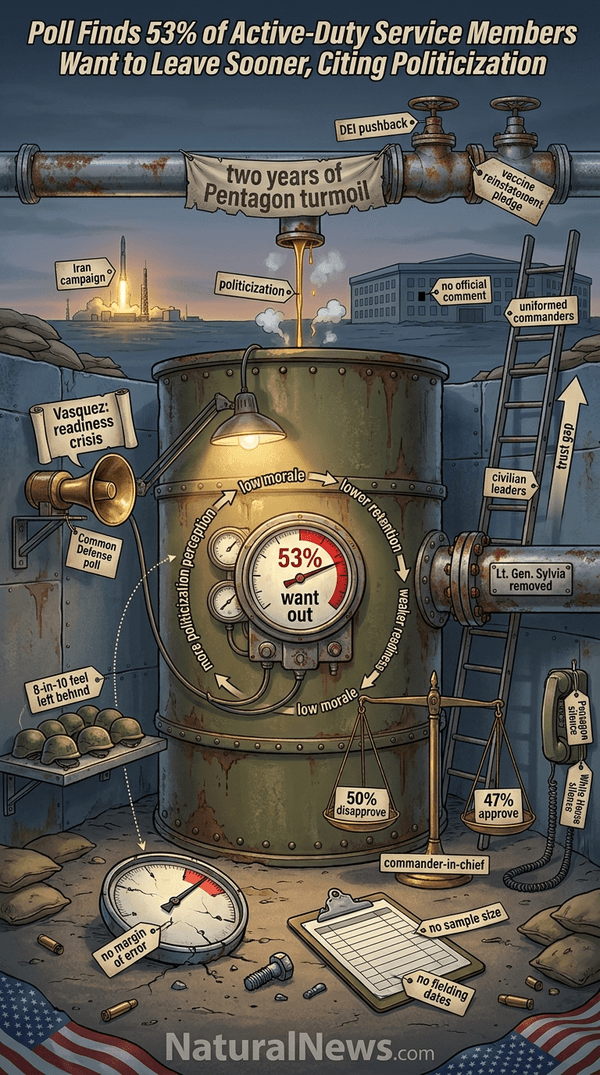
The poll's release came amid an ongoing U.S. military campaign against Iran and as President Donald Trump weighs a resumption of large-scale strikes following the recent midterm elections, developments reported by multiple outlets [1].
Survey Responses on Political Influence and Mission Readiness
That margin, drawn from responses reported by Military.com, was the largest partisan-split indicator released in the initial account.
Vasquez said roughly eight in 10 veterans and military families reported feeling left behind, a figure he cited in the context of what he characterized as a broader pattern of politicization [4].
The initial reporting did not detail how the survey was conducted. The article did not state whether the poll was weighted by branch of service, rank, or years of service, nor did it describe the sample size or the dates during which responses were collected.
Approval Ratings for Trump, Hegseth and Senior Commanders
According to the September poll, roughly 50% of veterans and active-duty service members disapproved of Trump as commander-in-chief, while 47% approved. Senior uniformed military commanders drew higher marks than either civilian leader.
The poll results followed two years of personnel changes at the Department of War. Lt. Gen. Brett Sylvia was removed last week from his position as Joint Staff Director of Strategy over leaking accusations, the report stated.
The earlier personnel actions under Secretary of War Pete Hegseth included a push against diversity, equity, and inclusion initiatives and a pledge to reinstate service members discharged over Wuhan coronavirus (COVID-19) vaccine refusal [2][3].
Readiness Concerns and Ongoing Operations
The report did not provide specific figures on stockpile levels or operational readiness assessments, and officials cited in the reporting did not offer additional comment on the readiness claims. The poll was released as the administration weighs military options involving Iran.
The public debate over military readiness has run alongside sustained criticism of the War Department's leadership.
What the Poll Measures and What Remains Unclear
The sample size and fielding dates were not provided at the time of publication, and requests for comment from the Pentagon and the White House were not described in the reporting. Because those details are absent, the margin of error and the representativeness of the sample could not be independently assessed from the initial accounts.
Broader skepticism of the uniformed services' leadership has been documented among veterans in other contexts. The Common Defense poll adds another data point to that debate, though its release did not include the underlying crosstabs or survey instrument.
References
- Report: Renewed Strikes on Iran After Midterms. https://thenewamerican.com/features/report-renewed-strikes-on-iran-after-midterms/
- Woke generals on notice: Defense Secretary Hegseth vows accountability in military culture overhaul - NaturalNews.com, February 16, 2025.
- Pete Hegseth vows to reinstate members of the military discharged for refusing COVID-19 vaccinations - NaturalNews.com, January 18, 2025.
- 79% of Veterans and Service Members Say Politicians and Society Are Leaving Them Behind: Poll. https://www.military.com/79-of-veterans-and-service-members-say-politicians-and-society-leaving-them-behind-poll?taid=6ae8896bec3fc2000115e097&utm_campaign=trueanthem&utm_medium=social&utm_source=twitter
- Shocking new report reveals half of the military wants to quit over Trump. https://www.alternet.org/trump-hegseth-military-2678187728/
Explainer Infographic





Please contact us for more information.


