


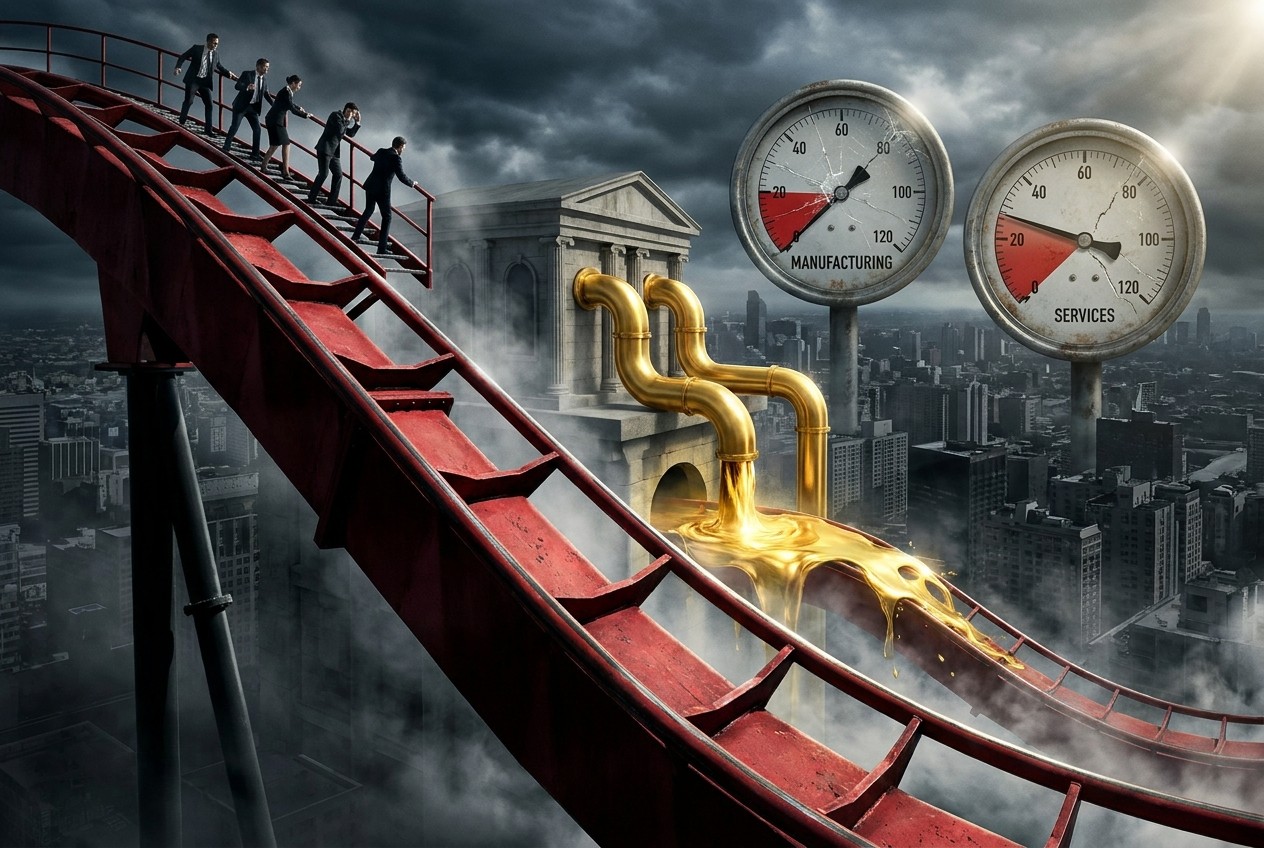
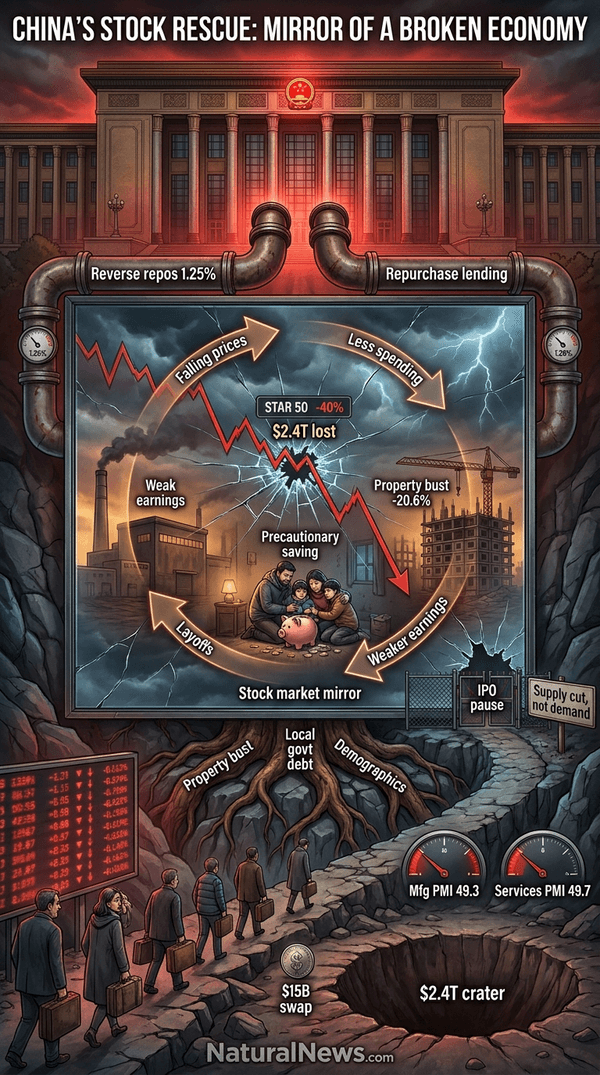
The market data underscored the scale of the downturn. The tech-heavy STAR 50 Index fell about 40% in less than four months, wiping out approximately $480 billion in market value, while the CSI 300 Index entered bear-market territory last month, down more than 20% from its recent peak. The broader sell-off has been pronounced: China's stock market has shed $2.4 trillion in value since May, amid a sluggish economy and disappointing performance from Chinese artificial intelligence companies [1].
The analysts' central assessment is that the measures may ease panic but are unlikely to reverse the decline given weak corporate earnings, sluggish consumer demand, and low business investment.
Details of the Announced Measures
China's three major financial regulators announced that a lending program supporting share repurchases and increased shareholdings would become a permanent policy rather than a temporary arrangement. The central bank, meanwhile, began conducting overnight reverse repurchase operations every business day at an interest rate of 1.25% to manage short-term liquidity, according to state news agency Xinhua.
Davy Jun Huang, a U.S.-based political economist and former columnist for Chinese state media outlet CNTV, told the Epoch Times that Beijing's intervention reflects concerns that a weak economy and falling stock prices could reinforce each other. A sustained decline could further erode household wealth, reduce companies' access to financing, and increase risks for financial institutions holding stocks as collateral, he said.
The measures have been read in some quarters as a stabilization effort rather than a stimulus push. Reports also circulated that regulators instructed investment banks to pause initial public offerings, curbing new equity supply, according to the Financial Times as cited by ZeroHedge [2].
Analysts Say Liquidity Is Not the Central Problem
Xu Zhen, a senior professional in China's finance sector, told the Epoch Times that the latest decline reflects not only weak economic fundamentals but also concerns about state intervention and deteriorating market confidence. Xu said investors should not mistake the latest measures for a genuine commitment to supporting ordinary shareholders, adding that the Chinese Communist Party does not do charity for stock investors.
Xu noted that October data show the average overnight interbank repurchase rate was about 1.28%, while the ChiNext and STAR 50 indexes fell 23.02% and 24.13%, respectively. "The decline is driven by selling pressure from state-backed funds, the AI bubble, and a loss of confidence in the government, not a shortage of money," Xu said.
Huang said the central bank's overnight reverse repurchase operations are designed to provide short-term funding to financial institutions, reducing the risk that temporary cash shortages force them to sell assets or restrict lending. Both analysts said cheaper money will not spur borrowing or household spending given concerns over orders, income, employment, retirement, healthcare, and education.
"Families worry about income, employment, retirement, healthcare, and education," Huang said. "Even if they have sufficient funds, they will not increase consumption."
Buyback Program Seen as Limited Support
Huang said buybacks can benefit shareholders when financially sound companies with strong cash flows repurchase undervalued shares and cancel them, reducing the number of shares outstanding. The caution echoes long-standing warnings about debt-financed equity purchases, which can force liquidation when share values fall below borrowed amounts [3].
Both analysts said the share repurchase lending program might provide short-term support for stock prices but would not create a sustainable bull market. The distinction matters for investors weighing whether the program represents a lasting policy shift or a temporary floor under prices.
The scale of the intervention has also drawn attention. China's central bank announced a new round of a $15 billion swap facility to rescue stocks from a bear market, with 31 brokerages and funds applying for quotas, according to ZeroHedge [4]. Beijing also convened a stock market rescue meeting involving the central bank and securities regulators as the artificial intelligence (AI) trade imploded [5].
Economic Indicators Underscore Challenges
China's National Bureau of Statistics reported that the manufacturing Purchasing Managers' Index fell to 49.3 in October, while the non-manufacturing business activity index declined to 49.7. A reading below 50 signals contraction, and the twin declines point to weakness across both factory activity and services.
Huang compared the stock market with the property sector. Official figures showed that real estate development investment fell 20.6 percent year over year in the first nine months of 2026, even as some property-related stocks showed signs of improvement.
Outlook Tied to Earnings and Confidence
Huang said a sustained stock market recovery ultimately depends on improvements in corporate operations and profitability, as well as stronger household incomes and investment confidence. The skeptical read on Beijing's rescue measures is consistent with a broader pattern in which liquidity support stabilizes prices only briefly.
References
- Chinese Stocks Lose $2.4 Trillion Since May; US Digital Investment Platform Shares Data With China. https://www.ntd.com/ntdplus/chinese-stocks-lose-2-4-trillion-since-may-us-digital-investment-platform-shares-data-with-china_1180795.html
- Beijing's Stock Rescue Turns More Desperate: Regulators Reportedly Halt IPOs. https://www.zerohedge.com/markets/beijings-stock-rescue-turns-more-desperate-regulators-reportedly-halt-ipos-amid-bear-market
- After the crash how to guard your money in these turbulent times. Turner Garth_1
- Shorts Beware? China's Plunge Protection Team Stabilizes Stocks With $15 Billion Swap Rescue Plan. https://www.zerohedge.com/markets/shorts-beware-chinas-plunge-protection-team-stabilizes-stocks-15-billion-swap-rescue-plan
- Beijing To Convene Stock Market Rescue Meeting As Plunge Protection Goes Into Overdrive. https://www.zerohedge.com/markets/beijing-convene-stock-market-rescue-meeting-plunge-protection-team-returns
Explainer infographic





Please contact us for more information.


