



The agency also stated that children not considered high risk, including males ages 12 to 24, may receive the vaccine based on shared clinical decision-making between families and clinicians, the same report said [1][2].
The CDC acknowledged in the updated guidance that use in some age groups would be off-label, as federal records show there are no Food and Drug Administration (FDA)-approved COVID-19 vaccines for healthy children or healthy adults younger than 64 [2][1]. The revision followed a court order issued in March 2026 by U.S. District Judge Brian E. Murphy that froze the narrower recommendations adopted in 2025 pending litigation, the outlet reported [1].
Recommendations Conflict With FDA Approvals
FDA approvals for COVID-19 vaccines are limited to certain high-risk groups for people younger than 65, according to federal records cited by The Epoch Times and Everyday Health [3][4]. As of Aug. 27, the agency approved updated mRNA products from Pfizer and Moderna and a non-mRNA shot from Sanofi for people 65 and older and for people 12 to 64 with one or more underlying conditions, according to the approval notices [3].
The CDC's expanded adult recommendation therefore exceeds the labeled indications for the shots, the agency's own guidance indicated [1].
A July 2025 FDA memo from Vinay Prasad, the top vaccine official at the agency's Center for Biologics Evaluation and Research, stated that there was not substantial certainty of net clinical benefit for vaccinating healthy children with an mRNA vaccine, according to reporting on the document [5]. The memo noted that severe COVID-19, hospitalization and death are extremely low among children, and that no randomized controlled trial had shown mRNA vaccines reduced those outcomes in children; the same account said [5].
The American Academy of Pediatrics (AAP) separately recommends COVID-19 vaccination for children 6 to 23 months and for children 2 through 18 in defined high-risk categories [6]. Critics, including author Steve Kirsch, have said the AAP position is not supported by the group's own technical report and that the organization has declined to defend it in public debate [5].
Court-Ordered Stay Drove Recommendation Change
In May 2025, Health and Human Services Secretary Robert F. Kennedy Jr. announced that the CDC would no longer recommend COVID-19 vaccines for healthy children and pregnant women, a shift that followed his removal of all 17 sitting members of the Advisory Committee on Immunization Practices, according to Brighteon reporting [7].
In September 2025, the reconstituted ACIP voted that vaccination for people ages six months to 64 should rest on individual-based decision-making rather than a blanket recommendation, according to CHD's Defender [8].
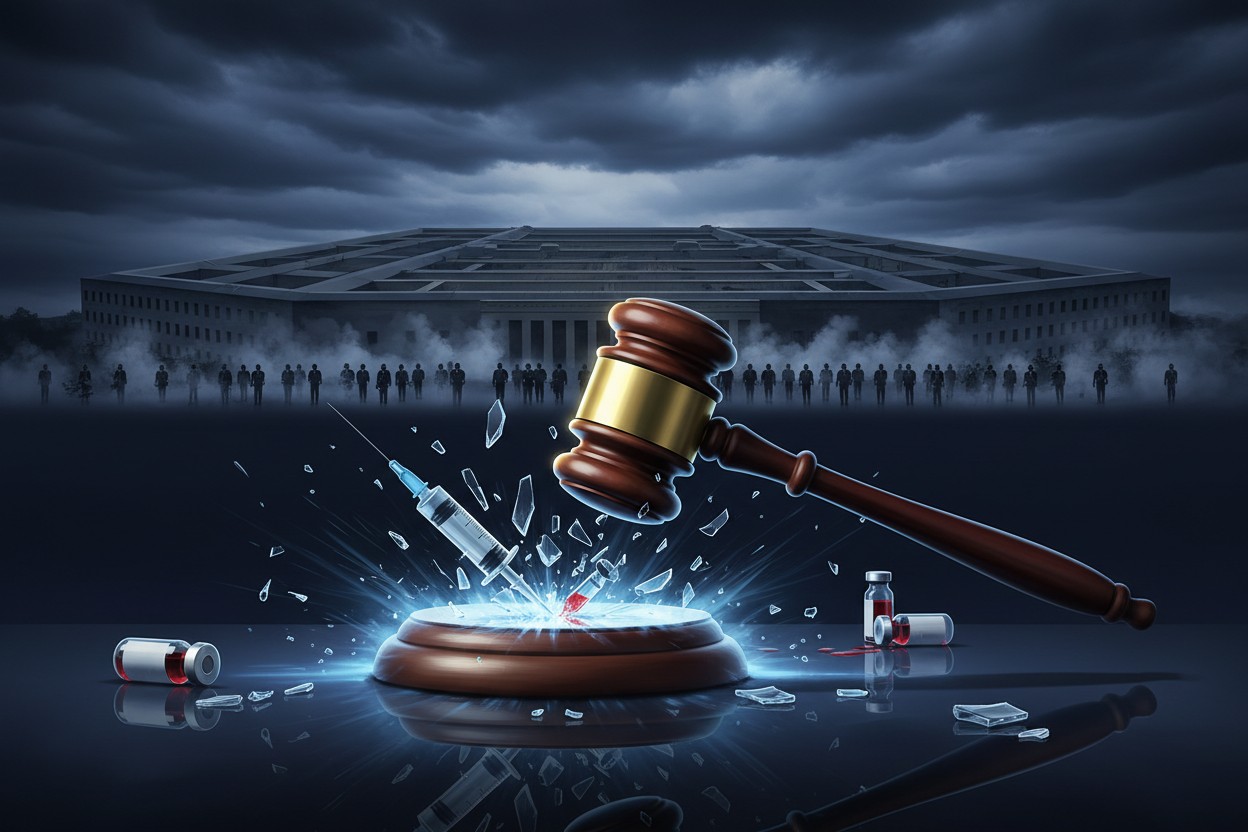
In March 2026, U.S. District Judge Brian E. Murphy issued a stay freezing those recommendations pending litigation, and the CDC reverted to its early 2025 recommendations to comply with the order, according to CHD reporting [1].
The stay stems from a July 2025 lawsuit filed by the AAP and other medical groups against Kennedy and HHS, the same account stated [1]. The Department of Justice is appealing the ruling, and oral arguments are scheduled for Oct. 6, before the U.S. Court of Appeals for the First Circuit [1].
The practical effect of the reinstatement is limited while the stay remains in force, according to attorneys involved in the matter [1]. The CDC's move restored language that matches the pre-2025 schedule for most age groups but left the agency out of step with FDA labeling for healthy children and younger adults [2][3].
Children's Health Defense Seeks to Intervene
Children's Health Defense moved to intervene in the case in an effort to halt enforcement of the stay, according to the group. CHD CEO Mary Holland said the organization's objective is broader than the schedule itself. "CHD's position is that these vaccines should be off the market," Holland said, according to the group's Defender publication [1].
Attorney Rick Jaffe said the CDC's webpage update "has no operative legal effect in the short term" because Murphy already stayed changes to the old schedule pending the AAP litigation [1]. Jaffe also said that if the case is dismissed on standing, the suspended ACIP members could meet again, and that recovering the 2026 changes "might be the next battle" [1].
Next Steps in Litigation
Oral arguments are scheduled for Oct. 6 before the U.S. Court of Appeals for the First Circuit, according to court records cited in the CHD report [1]. Jaffe said there is a "very good chance" the case will be dismissed on standing, which would allow the suspended ACIP members to resume work and could reopen the recommendation question [1].
The CDC's current recommendations conflict with FDA approvals and remain subject to ongoing litigation, officials and attorneys said [2][1].
References
- Children's Health Defense. "In Shadow of Pending Lawsuit, CDC Again Recommends COVID Vaccines for Infants and Young Kids". September 26, 2026.
- NTD.com. "CDC Recommends COVID-19 Vaccine to All Adults, Many Children". September 25, 2026.
- The Epoch Times. "FDA Approves 3 New COVID-19 Vaccines". August 28, 2026.
- Everyday Health. "FDA Approves Updated COVID-19 Vaccines — Should You Get One?". August 29, 2026.
- Steve Kirsch. "Nobody will defend the AAP recommendations on COVID vaccines". Kirsch Substack. September 25, 2026.
- The Epoch Times. "Medical Groups Offer Vaccine Recommendations for Fall, Winter". September 3, 2026.
- Mike Adams. "Health Ranger Report - Sec. Kennedy and CDC". Brighteon.com. June 11, 2025.
- Children's Health Defense. "CDC Vaccine Advisers Vote No on COVID Vaccine Prescription, but Unanimously Recommend 'Individual Decision-Making' for All Age Groups".
- NaturalNews.com. "Nine New 'Independent' Advisers to CDC Publicly Promoted Vaccines or Took Money from Pharma — or Both". March 11, 2024.
- Brenda Baletti, Ph.D. "Tragic: CDC Adds Original COVID mRNA Vaccine to Childhood Schedule Despite Known Harms". Children's Health Defense. January 21, 2024.
- Suzanne Burdick, Ph.D. "'Massive Scale Child Abuse': CDC Advisers Recommend Adding COVID Vaccines to Childhood Schedule". Children's Health Defense. January 21, 2024.
- NaturalNews.com. "Study: Israel, Pfizer Knew of COVID-19 Vaccine Cardiac Risks Before Public Disclosure". September 16, 2026.
- Yaffa Shir-Raz. "Inside the Safety Record Behind Israel's Early Myocarditis Warning to Global Health Authorities". Brownstone Institute. September 11, 2026.
- Steve Kirsch. "How many people did the COVID vaccine kill? My estimate is 1 per 1,000 on average --> over 5M killed worldwide". Kirsch Substack. September 18, 2026.







Please contact us for more information.


