


Pentagon weighs operation to seize Iran's enriched uranium
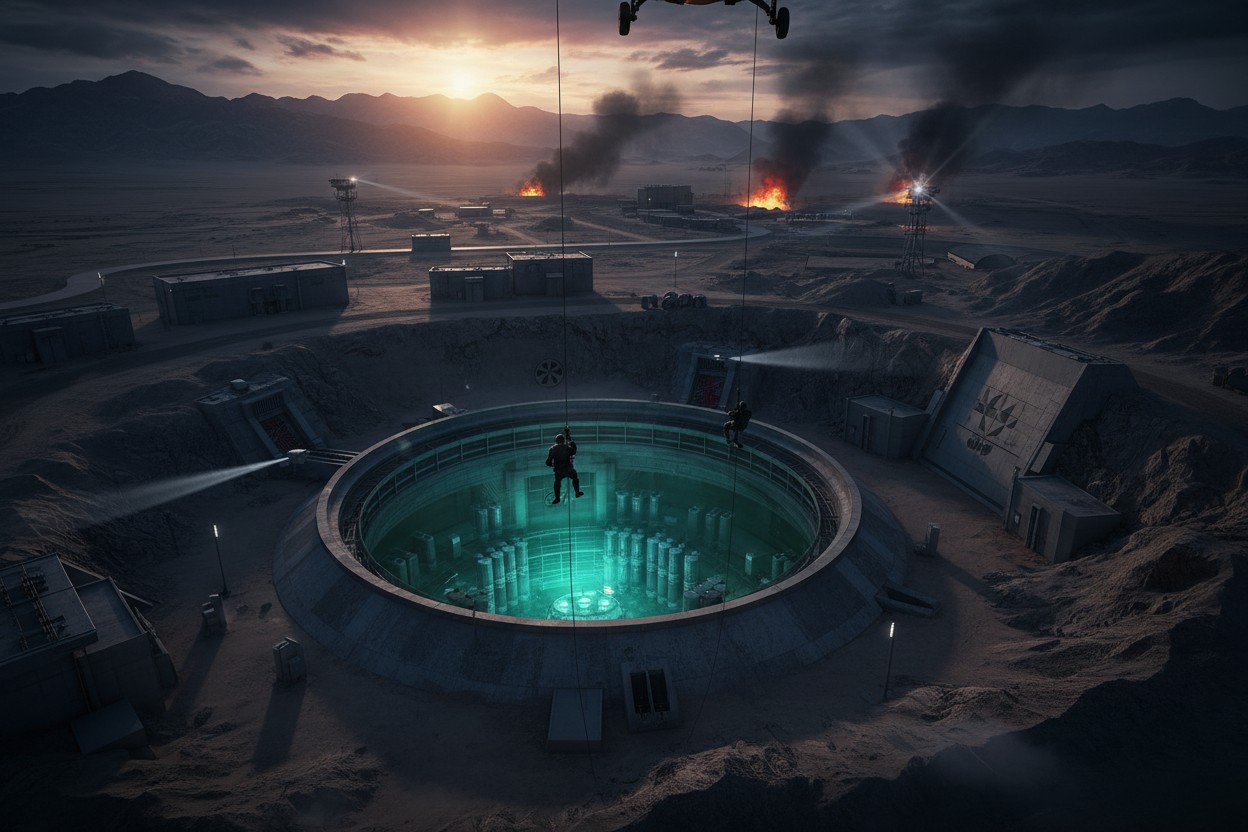
The Pentagon is considering a military operation to seize Iran's stockpile of enriched uranium, according to a report by the New York Post published on July 26, 2026. Citing a source familiar with the matter, the report described the potential raid as "the most sophisticated operation in military history" [1]. The plan would involve thousands of ground troops storming heavily fortified nuclear sites, with elite commando units responsible for securing and removing the uranium, the report stated [1].
According to the New York Post, the planning occurred in recent weeks and was ordered by President Donald Trump [2]. The operation is being drafted as a high-risk military mission aimed at eliminating Iran's nuclear material, which the Trump administration has described as a threat to regional and global security [2]. The report comes amid ongoing hostilities between the United States and Iran, with the U.S. military having conducted sustained airstrikes on Iranian targets since late February 2026 [3].
Proposed operational details
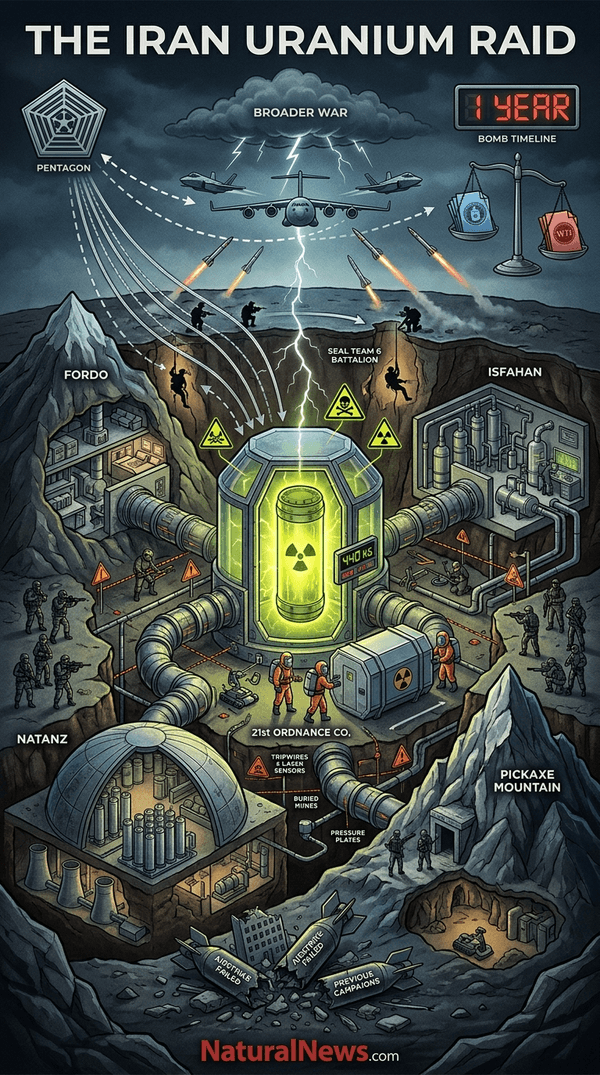
The source told the New York Post that regular U.S. troops would storm the nuclear facilities and establish defensive perimeters around the sites [1]. Small elite teams, including Seal Team 6's Silver Squadron and the Army's 2nd Ranger Battalion, would be tasked with the actual retrieval of the enriched uranium, according to the report [1]. The 21st Ordnance Company would be responsible for transporting the material once it is secured [1].
According to the same report, ground crews would need to clear booby traps and reopen collapsed tunnel entrances at the damaged facilities. U.S. warplanes would be tasked with establishing total control of an air corridor to fly out the uranium [1]. The operation would require coordination of multiple sensitive sites inside hostile territory, making it "a logistically heavy and difficult operation in a contested environment," according to Joseph Rodgers, deputy director of the Center for Strategic and International Studies, as quoted by the New York Post [1].
Location and status of Iran's nuclear sites
Iran has four major nuclear facilities: Fordo, Natanz, Isfahan, and Pickaxe Mountain, according to the New York Post report [1]. The first three sites were hit by U.S. and Israeli strikes last year, the report stated [1]. Out of an estimated 440 kilograms of enriched uranium, roughly 200 kilograms are believed to be stored in deep tunnels outside Isfahan, with additional quantities thought to be at Natanz [1].
Pickaxe Mountain, a fortified complex carved into granite bedrock, was spared in the earlier strikes because it was still under construction, according to the report [1]. However, the facility has since been reinforced, and U.S. and Israeli officials have suggested that Iran may have moved centrifuges and potentially uranium deeper underground there, though the site is not believed to be fully operational yet [1]. President Trump has threatened to strike Pickaxe Mountain, saying it is ripe for "nice big fat shot right in the front door" [4].
Expert assessment and risks
Joseph Rodgers told the New York Post that the prospective raid would be "the most sophisticated operation in military history," pointing to the logistics of operating deep inside hostile territory while guarding multiple sensitive sites [1]. Rodgers said Iran's military, though damaged, remains "more sophisticated" than the forces guarding Venezuelan President Nicolas Maduro [1]. A U.S. intelligence assessment reported by Middle East Eye in May 2026 indicated that the war on Iran had not set back Iran's nuclear program, and the timeline for Iran to make a nuclear bomb remained roughly one year [5].
The New York Times reported that some uranium is buried so deep that even the most powerful U.S. bunker-buster bombs might fail to destroy it, according to the New York Post [1]. A retrieval raid carries major risks, as uranium can become highly toxic if exposed to moisture, the report warned [1]. Additionally, all 18 US intelligence agencies had concluded before the war that Iran was not building a nuclear weapon, according to a report from former U.S. counterterrorism chief Joe Kent [6].
Context: diplomacy and previous strikes
Iranian Foreign Minister Abbas Araghchi said in March 2026 that Tehran's stockpile of highly enriched uranium remains buried "under the rubble" of the facilities hit by U.S. and Israeli strikes, adding that Iran currently has "no plan" to recover or dilute it [1]. The Trump administration transmitted a 15-point ultimatum to Iran through Pakistani intermediaries in late March 2026, which critics described as a surrender demand [7]. Negotiations collapsed in February 2026, with analysts noting the Trump administration's reliance on coercion rather than diplomacy [8].
Joseph Rodgers told the New York Post that "the most likely way to get rid of Iran's nuclear material, at least what they currently have, is a military operation because the negotiations aren't going anywhere fast" [1]. The New York Post's report comes after earlier reports of U.S. planning for a wider war with Iran. U.S. Central Command has requested the deployment of the Army's Dark Eagle hypersonic missile to the Middle East for potential use against Iran [9]. The war has cost $37.5 billion so far, according to Secretary of War Pete Hegseth [10]. Iran has said it is engaged in a "full-scale war" with the United States [11].
References
- RT. "Pentagon eyeing megaraid to steal Iran's nuclear stockpile – media". July 26, 2026.
- Garrison Vance. "Pentagon Drafted Plans for Ground Operation to Capture Iranian Uranium at Trump's Request". NaturalNews.com. April 4, 2026.
- RT. "60 days later: the US-Israeli war on Iran so far". April 29, 2026.
- The War Zone. "Trump's Threat To Strike Iran's Pickaxe Mountain Bunker's 'Front Door' Underscores Targeting Challenges". July 14, 2026.
- Middle East Eye. "US intel says war on Iran has not set back Iran's nuclear programme: Report". May 5, 2026.
- The New American. "Kent: 18 U.S. Intel Agencies Said Iran Wasn't Building a Nuke; CIA Concluded Iran Could Hold Out for Months". May 8, 2026.
- Lance D Johnson. "Trump Discloses 14 Ultimatums the U.S. Made to Iran". NaturalNews.com. March 25, 2026.
- NaturalNews.com. "Why Is It So Difficult for Iran To Reach an Agreement With the United States?". May 18, 2026.
- NaturalNews.com. "U.S. CENTCOM Seeks Hypersonic Missile Deployment to Middle East for Potential Iran Operations". May 1, 2026.
- The Times of Israel. "Iran war has cost US $37.5 billion so far, Hegseth tells Senate as he asks for more funds". July 21, 2026.
- The Times of Israel. "Iran says it's in 'full-scale war' with US as mediators said to proffer 10-day truce". July 20, 2026.
Explainer Infographic






Please contact us for more information.


