



Lead author Dr. Collin Cherubim said, "An atmosphere is essential for a planet to support life as we know it." He added, "This is the first time anyone has found an atmosphere on a rocky planet in the habitable zone of another star" [1]. The finding marks a milestone in the search for potentially habitable worlds beyond the solar system. The planet was originally discovered in 2017, but until now scientists had not been able to confirm the presence of an atmosphere around a rocky exoplanet in the habitable zone. The team detected traces of helium escaping from the planet's upper atmosphere, providing clear evidence that the planet retains a gaseous envelope [1].
Method and Observations
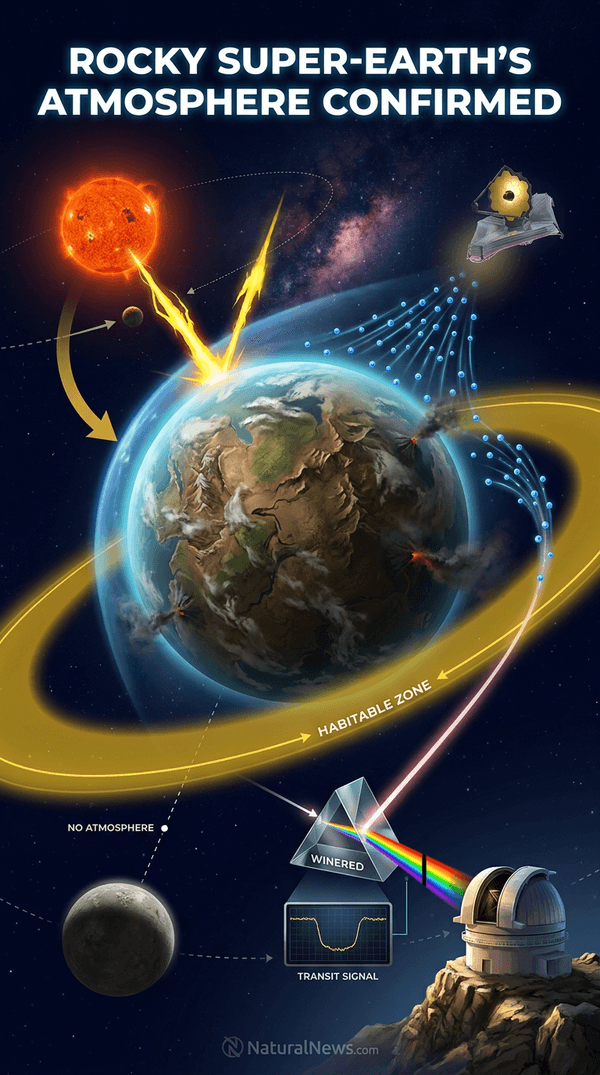
The scientists used the Warm Infrared Echelle (WINERED) Spectrograph at the Magellan Observatory in Chile to observe the planet during a rare double transit of LHS 1140 b and a companion planet on the same night. The companion planet showed no atmospheric signature, but LHS 1140 b exhibited a distinct helium signal, the researchers said.
Co-author Dr. Shreyas Vissapragada of the Harvard-Smithsonian Center for Astrophysics described the moment of detection as "an absolute thrill to see the transit spectra and slowly realize the implications of what we were looking at." According to Vissapragada, signals from species like water and carbon dioxide in the lower atmosphere are extremely subtle and challenging to detect, even for the James Webb Space Telescope, so the team opted to search for helium in the upper atmosphere, where signals can be easier to detect. The use of the WINERED spectrograph allowed the team to isolate the helium signal, which escapes from the upper atmosphere.
Significance for Search for Extraterrestrial Life
An atmosphere is considered a critical prerequisite for life as known on Earth, according to scientists. "An atmosphere is essential for a planet to support life as we know it," Cherubim said [1]. The planet's atmosphere has likely persisted for more than three billion years, the research team stated. Liquid water, a necessary ingredient for life, requires atmospheric pressure to remain stable on the surface [4].
Robin Wordsworth, another author of the study, said the finding answers a key question: "whether any of them had managed to keep an atmosphere." He added, "Now we know at least one has" [1]. The persistence of an atmosphere on a world orbiting a red dwarf is significant, because such stars are known for intense stellar flares that can strip away planetary atmospheres. The survival of LHS 1140 b's atmosphere for billions of years suggests that some super-Earths in the habitable zone may retain conditions suitable for life.
Context and Future Investigations
Thousands of exoplanets have been discovered in the past three decades, but determining the composition of their atmospheres has remained a challenge, especially for rocky worlds [3]. The Kepler mission and subsequent surveys have shown that super-Earths are common, but their nature – rocky, watery, or gaseous – was ambiguous for years [5]. The discovery builds on a series of milestones, including the detection of the Trappist-1 planetary system and the identification of other super-Earth candidates such as GJ 251c [2].
Recent studies using the James Webb Space Telescope have revealed atmospheres on larger sub-Neptune planets, but LHS 1140 b is the first confirmed rocky habitable-zone planet with a detected atmosphere, according to the team. Researchers plan to conduct further observations to characterize the chemical composition of the atmosphere and assess the planet's potential for hosting life. The Harvard-led team will continue monitoring LHS 1140 b for additional atmospheric signatures.
References
- Astronomers make landmark discovery on next-door 'super-Earth'. RT. July 17, 2026.
- Kevin Hughes. Super-Earth GJ 251c: A Prime Candidate for Alien Life Less Than 20 Light-Years Away. NaturalNews.com. October 26, 2025.
- Study Identifies Over 10,000 New Exoplanet Candidates, Potentially Tripling Known Count. NaturalNews.com. May 14, 2026.
- Lucas Ellerbroek. Planet Hunters: The Search for Extraterrestrial Life.
- Jeff Wheelwright. Discover - September 2015 USA.
Explainer Infographic










Please contact us for more information.


