


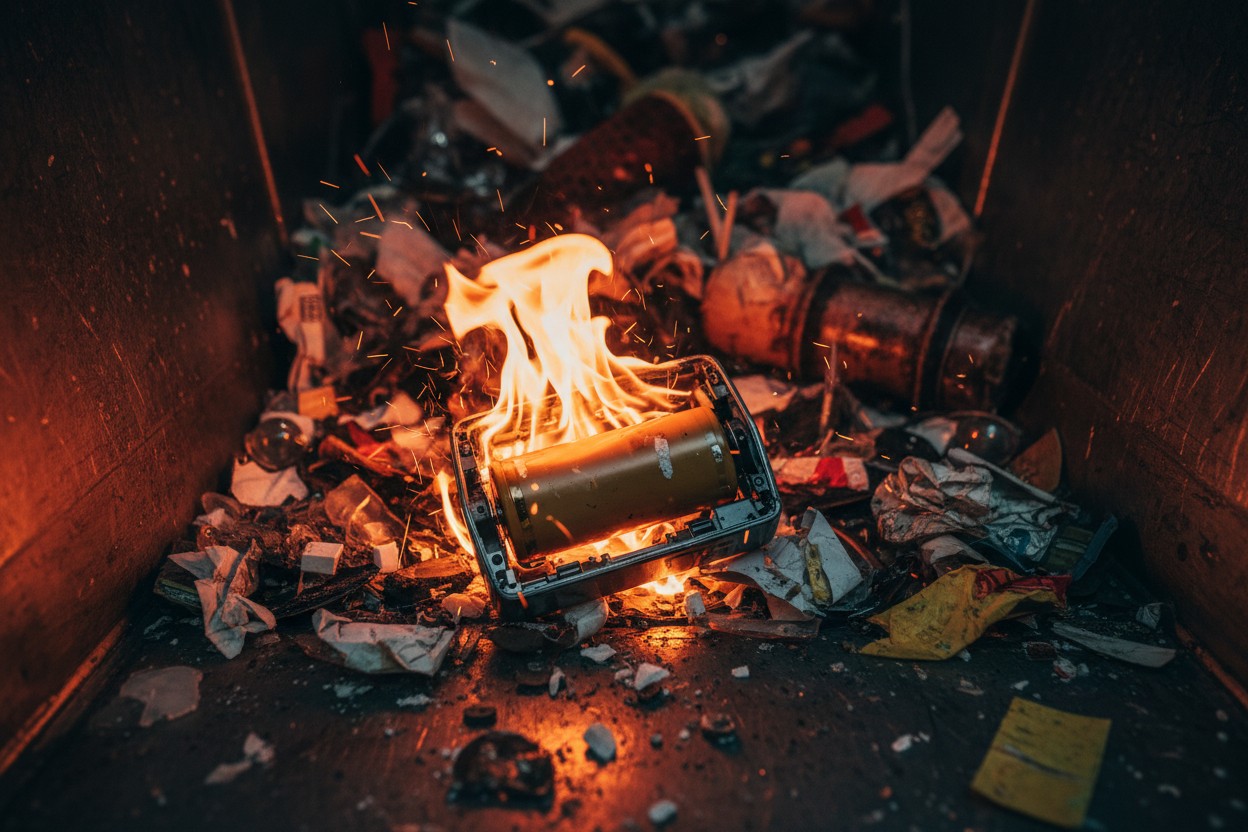
Disposable vapes were banned in the UK a year ago, partly due to the fire risks they pose when thrown into general waste, but the industry body for waste companies said recycling has not improved enough [2]. A recent fire in Glasgow, which started in a vape shop and destroyed a four-story Victorian building, forced the closure of the city's central train station, illustrating the potential danger of vape battery fires [3].
Scale of the Problem
The industry body for waste companies stated that a small, refundable deposit at the point of purchase would be a "simple, fair, efficient and cost-neutral solution" to encourage proper disposal [2]. The problem stems from the widespread use of disposable vapes, which have hooked a generation of users, according to reports [5]. According to Matt Ridley, about 3.6 million Britons now vape, compared with 5.9 million who smoke [7].
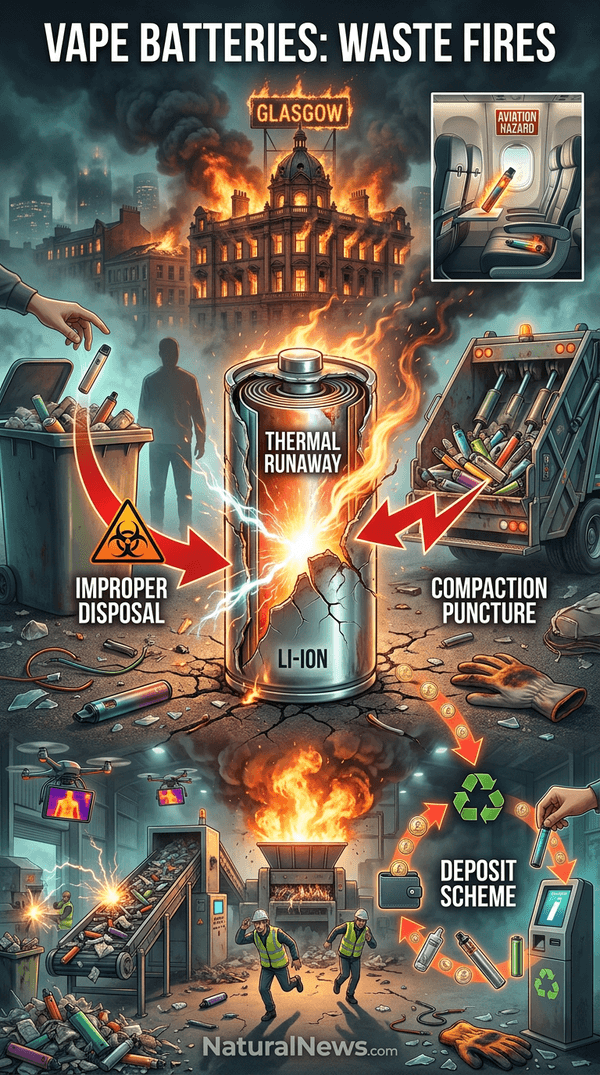
E-cigarettes are powered by lithium-ion batteries [6], the same type of battery that has been identified as the number one fire risk on aircraft by aviation regulators [1]. When these devices are thrown into household rubbish, the batteries can be crushed or damaged during collection and processing, leading to thermal runaway and fires. South Yorkshire Fire and Rescue has reportedly warned that such batteries have become a leading cause of fires in the region.
Industry Response and Proposals
Waste companies have called for a deposit of up to £5 to be charged on vapes to incentivize proper disposal [2]. The industry body argues that the current ban on disposable vapes has not sufficiently reduced the number of devices ending up in general waste.
SUEZ Recycling and Recovery UK, a leading waste management firm, has urged the Department for Environment, Food and Rural Affairs to launch a public awareness campaign and step up enforcement against retailers selling illegal products. The company has noted that rechargeable vapes pose an even greater fire risk due to their larger batteries.
Emergency Services Perspective
Emergency services have dealt with multiple incidents involving vape battery fires. In March 2026, a fire at a vape shop on Glasgow's Union Street spread to a neighboring building, leading to the collapse of a dome and the indefinite closure of Glasgow Central station [3][4]. Fire crews battled the blaze for days.
The Civil Aviation Authority has also warned about the risks of lithium batteries on flights, noting that the number of devices found in hold luggage has nearly doubled in a year [1]. While the aviation context is different, it underscores the broader hazard posed by lithium-ion batteries in consumer devices.
Conclusion
No immediate government action has been announced in response to the industry's requests. The industry body maintains that vape recycling has not improved enough since the ban on disposables, and that a deposit scheme would address the issue [2].
Waste companies and fire services continue to press for regulatory measures to reduce the fire risk from discarded vapes. The incidents highlight the ongoing public safety concern associated with the improper disposal of lithium-ion batteries.
References
- BBC News. "Warning over power bank fire risk on flights as summer holidays begin." June 26, 2026.
- BBC News. "Put a £5 deposit on vapes to stop fires, say waste companies." June 1, 2026.
- Modernity.news. "Glasgow's Historic Heart DESTROYED By Dubious Vape Shop Inferno." March 9, 2026.
- BBC News. "Watch: Fire crews fight blaze near Glasgow Central Station." March 9, 2026.
- Lance D Johnson. "Disposable vapes hooked a generation and the damage may be irreversible." NaturalNews.com. September 2, 2025.
- George Zaidan. "Ingredients: The Strange Chemistry of What We Put in Us and on Us."
- Matt Ridley. "How Innovation Works."
Explainer Infographic











Please contact us for more information.


