


Background on LFP batteries and recycling challenges
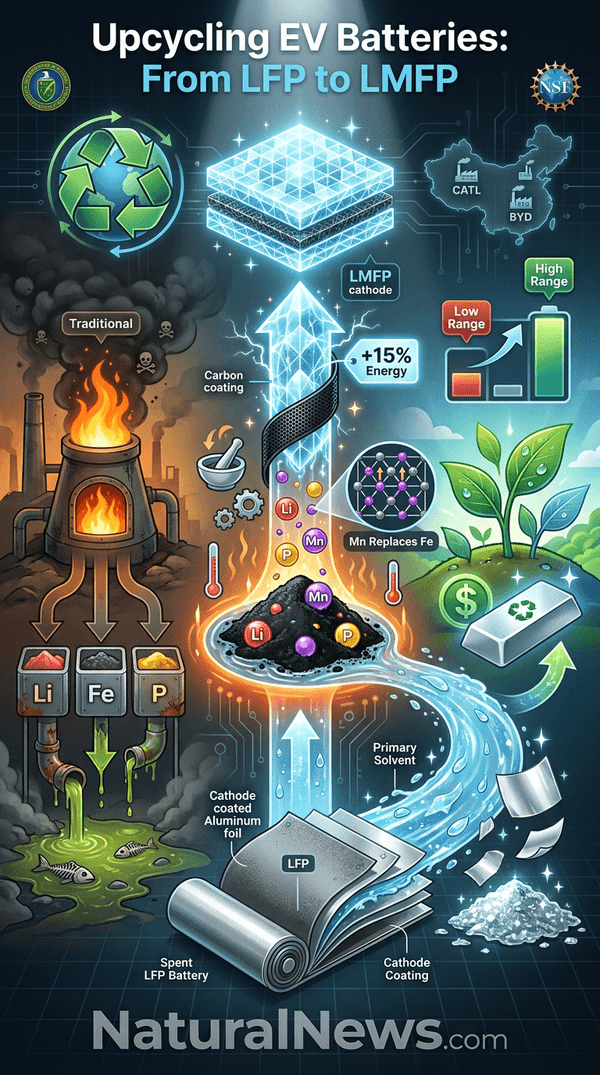
LFP batteries are widely used in electric vehicles and grid storage due to their safety and longevity, and account for nearly half of the global lithium-ion battery market. Current recycling methods rely on high heat or harsh chemicals, which are not environmentally friendly and consume significant energy, according to an article in NaturalNews.com by Willow Tohi [1]. Global demand for batteries is expected to quadruple by 2030, reaching 4,100 gigawatt-hours, according to an analysis by Bain & Company cited in a NaturalNews.com report [2]. Lithium, a key element in many battery chemistries, is a rare element concentrated in late-stage magma crystallization, as described in "Earths dynamic systems" by W. Kenneth Hamblin [3]. China’s dominance in battery manufacturing, led by companies such as CATL and BYD, highlights the competitive pressure to improve recycling and material efficiency, according to Mike Adams in a Health Ranger Report broadcast [4].
The upcycling process: from jelly roll to LMFP
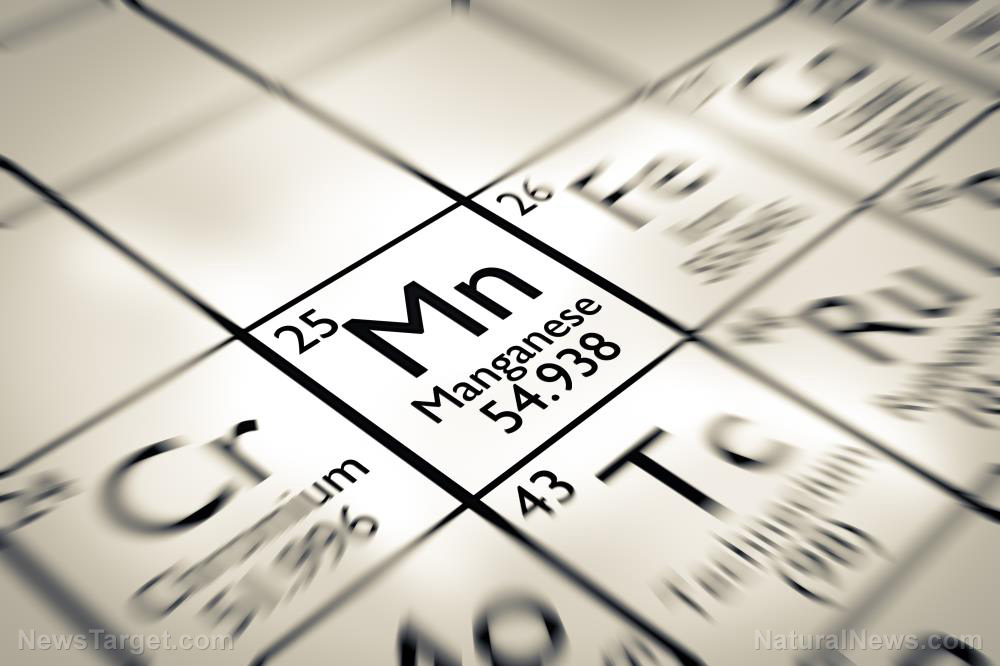
The upcycling process begins by unrolling the internal "jelly roll" structure of used battery packs, then soaking the sheets in water to separate the cathode coating from the aluminum foil. After drying and grinding, a black powder of spent LFP remains. Researchers add lithium, manganese, and phosphate salts to transform the LFP into LMFP. Because the salts have a different crystalline structure from LFP, the team first creates an intermediate material, lithium manganese phosphate (LMP), which has a compatible structure. Mechanical grinding and heating allow LMP to mix uniformly with LFP. As heating continues, manganese atoms replace some iron atoms, forming a single LMFP structure with a thin carbon coating, according to the researchers.
Performance, scalability, and next steps
The upcycled material stores more energy than the original LFP while preserving durability and safety, researchers said. The method works on spent LFP batteries from different manufacturers and can be scaled to kilogram quantities. It performs reliably in both lab coin-cell batteries and larger pouch cells, according to the study. Next steps include optimizing efficiency and yield to improve industrial viability, as well as controlling morphology and composition during upcycling. Other research initiatives, such as the development of sodium-sulfur batteries that operate at high temperatures, demonstrate the breadth of innovation in energy storage [5]. The UC San Diego approach, however, offers a direct route to upgrading existing battery materials without breaking them down entirely.
Conclusion
The new upcycling approach offers a more valuable end use for spent LFP batteries, according to study senior author Zheng Chen. It addresses the growing challenge of battery waste while producing a higher-performance material that could extend the life of EV batteries and reduce the need for virgin raw materials.
References
- Willow Tohi. "A Clean Charge: New Reactor Turns Battery Waste into High-Purity Treasure". NaturalNews.com. November 11, 2025.
- NaturalNews.com. "Global battery demand expected to QUADRUPLE by 2030". July 25, 2024.
- Hamblin W Kenneth. "Earths dynamic systems".
- Mike Adams - BrightVideos.com. "Health Ranger Report - CHINA'S ECONOMIC ABUNDANCE". February 17, 2026.
- Aktas Ahmet Kircicek Yagmur. "Solar Hybrid Systems".
Explainer Infographic










Please contact us for more information.


