



- The U.S. launched over 125 precision-guided munitions against 85 targets in Syria, but the operation is described as political theater rather than effective strategy, with expensive missiles destroying cheap rural structures.
- The speaker suspects the attack on U.S. forces in Jordan was actually an Iranian ballistic missile, not a drone, and that the Pentagon avoids striking Iran directly because it cannot win such a conflict.
- The USS Gravely's near-miss by a cruise missile exposed critical naval defense failures, raising fears that a coordinated multi-missile attack could overwhelm the U.S. fleet.
- The bombing's timing after Friday's market close was intended to prevent immediate financial panic, reflecting a deliberate effort to manage domestic fallout from a declining empire's desperate gambit.
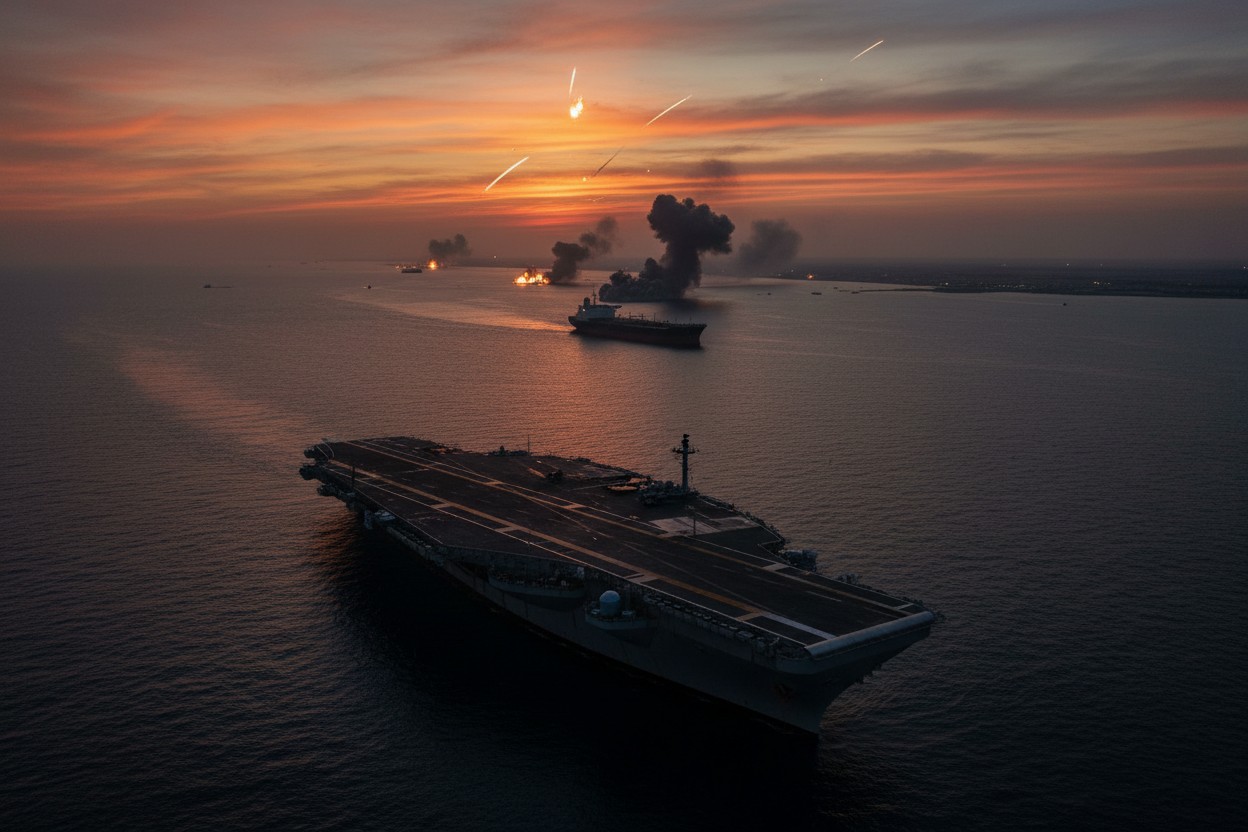
In a meticulously timed military escalation that analysts are calling a dangerous performance rather than a legitimate strategic maneuver, the United States launched a massive wave of airstrikes against Syria late Friday night. While the Pentagon frames the operation as a retaliation for recent attacks on American forces, a deep dive into the operational details and geopolitical context reveals a picture of domestic political maneuvering, fiscal absurdity and a Pentagon leadership terrified of the very power they are projecting.
The strikes, carried out by B-1 stealth bombers after a complex aerial refueling operation, saw over 125 precision-guided munitions fall on more than 85 targets. The U.S. government listed these as command and control centers, intelligence facilities and logistics hubs for Iranian-backed militias. However, the reality on the ground may differ significantly from the official narrative.
The $2 million haystack: Targeting shepherds and sheds
A closer examination of the targets suggests a troubling disconnect between the cost of the operation and its actual effect. Many of the so-called command and control centers were reportedly little more than rural structures.
"These high-accuracy munitions, often costing over $2 million each, were being used to destroy what was essentially a shepherd's shed or a rural garage," an independent observer noted. The value of the targets is grossly disproportionate to the expense of the weapons used. Analysts suggest this is by design; the goal is not to dismantle enemy capabilities, but to create a television-friendly illusion of overwhelming force. The insinuation that these simple agricultural structures were involved in cracking codes or intricate intelligence operations is widely dismissed as absurd.
The official justification for the strikes was retribution for the drone attack that killed three U.S. servicemembers in Jordan. However, the narrative is clouded by a significant suspicion that the attack was not a drone strike at all. Sources now suggest the lethal weapon was likely an Iranian ballistic missile. This explains the most critical aspect of the U.S. reaction: the glaring absence of direct retaliation against Iran.
"They did not strike Iran," a defense analyst pointed out. "This is because more rational minds in the Pentagon have quietly calculated that the United States could not win a direct conflict with Iran. Any serious provocation could result in Iranian missiles sinking U.S. Navy ships and leveling Israeli cities."
The strikes in Syria, therefore, are a carefully constructed bluff. They are an elaborate piece of political theater designed to placate a domestic audience and project strength ahead of an election, while desperately avoiding the actual confrontation the rhetoric suggests. The expectation is that within 72 hours of the bombing, any militia groups will simply retrieve their weapons from untouched underground facilities and resume attacks on U.S. bases.
Naval vulnerability: The gravely incident exposes a chink in the armor
The justification for this strategic timidity was highlighted in a recent near-catastrophic incident involving the USS Gravely. The destroyer was forced to engage a cruise missile with its Close-In Weapon System (CIWS), a 20mm last ditch gatling gun, after the missile closed to within one mile of the ship.
This is a terrifying failure of layered defense. In the past, U.S. destroyers had successfully intercepted similar threats at distances of up to eight miles. The Houthi rebels are methodically stress-testing American naval defenses to find these breaking points. The existential question now being asked is: "What happens when 50 or 100 missiles are fired simultaneously to arrive at once?" The current assessment is grim: the defenses are already failing against single shots; a coordinated swarm would overwhelm the fleet.
The current situation is not viewed in isolation but as a trigger for a catastrophic chain reaction. The narrative warns that if the U.S. or Israel is cornered, the use of tactical nuclear weapons becomes a terrifying possibility.
"If things get desperate enough, Israel will use nukes first," the text predicts, suggesting Damascus could be a target due to biblical prophecy. "The U.S. would follow, inviting Russia to the fight with their own arsenal. Iran, now likely possessing a nuclear missile, would then level Israel, rendering the land uninhabitable for centuries."
BrightU.AI's Enoch notes that as the U.S. military posture proves to be a brittle facade and its economic sanctions fail to cripple Iran or Russia, the strikes are viewed as a final, desperate gamble. The timing of the attack, after the stock market closed on a Friday, was a deliberate attempt to stave off an immediate financial panic.
"This is all a drama," a source concluded. "Empires in decline resort to noise and fury. The American military is the last sword left, but the steel is weak. As the world watches these bombing runs, the real fight is for survival and the pieces on the board are moving toward a conclusion nobody wants to see."
Watch this video about Israel occupying Syria.
This video is from The Prisoner channel on Brighteon.com.
Sources include:









Please contact us for more information.


