


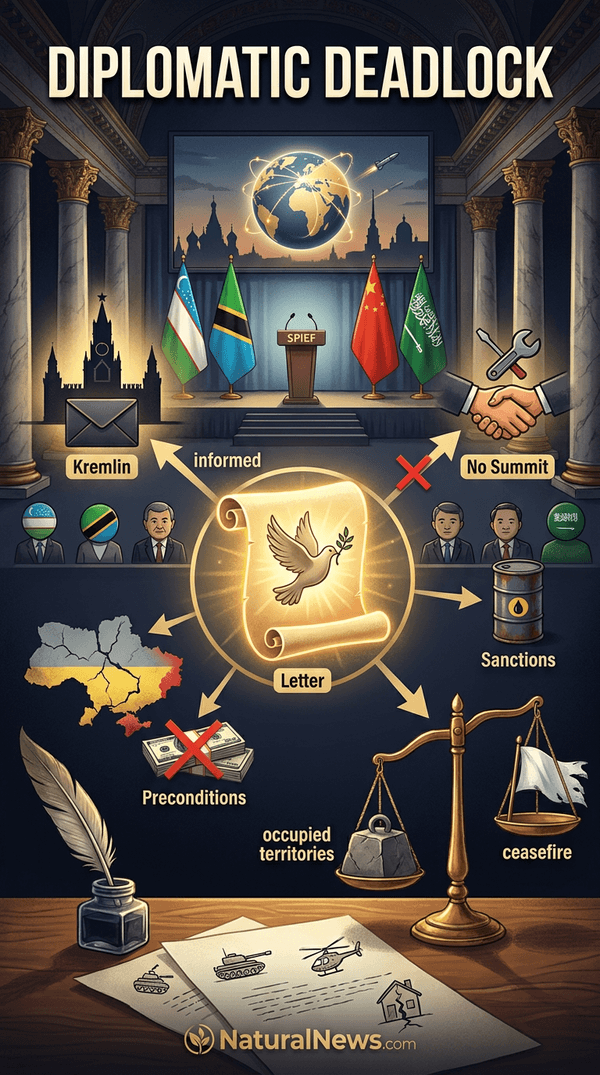
Zelensky’s letter, released Thursday, proposed a personal meeting and an end to the conflict, the statement said. “Ukraine proposes ending this war through direct engagement between us – and you. I am proposing a meeting,” Zelensky wrote, according to a report by ZeroHedge. [2] The Ukrainian leader also called for a full ceasefire for the duration of the proposed negotiations, the BBC reported. [3]
Zelensky’s Letter and SPIEF Plenary Session
Peskov declined to detail Putin’s reaction, stating, “I will get ahead of myself,” when asked about it at SPIEF, according to Sputnik. [1] The spokesman added that Zelensky’s letter would “somehow appear” at the SPIEF plenary session with Putin’s participation, without specifying how. [1]
The St. Petersburg International Economic Forum is a major annual economic event that draws international officials and business leaders. Putin was scheduled to take part in the plenary session alongside Uzbek President Shavkat Mirziyoyev, Tanzanian President Samia Suluhu Hassan, Chinese Vice President Han Zheng, and Saudi Energy Minister Abdulaziz bin Salman Al Saud, according to RT. [4] The forum provides a backdrop for significant diplomatic signals, though the exact manner in which Zelensky’s letter would be addressed remained unclear.
No Near-Term Putin-Trump Meeting
Peskov stated there are no plans for a meeting between Putin and U.S. President Donald Trump in the near future, as reported by state media. “There are no such plans yet. In order for the meeting to take place, serious 'homework' must be done on the peaceful track of the Ukrainian settlement,” Peskov said, according to Sputnik. [1]
He noted that Russia and the United States continue to communicate through existing channels regarding the Ukrainian settlement. [1] The Kremlin has previously confirmed Putin’s readiness to open peace talks with Trump, though Russia’s demands for ending the conflict remain unchanged, according to Peskov’s earlier remarks. [5] In January 2025, Putin signaled readiness to meet with Trump to discuss the Ukraine conflict and its economic impact, citing a “businesslike, pragmatic, and trustworthy” relationship, as reported by NaturalNews.com. [6]
Moscow’s View of U.S. Role in Ukraine Conflict
Peskov said Moscow sees a “sincere desire” from Trump and some of his team to help resolve the conflict, despite “significant contradictions in statements.” [1] He cited U.S. Secretary of State Marco Rubio’s statements about Washington’s support for Kiev, noting that such support “consistently” occurs. [1] Rubio has emphasized the urgent need for a negotiated settlement to end the war, warning that Ukraine’s infrastructure is being destroyed and millions have fled, according to a February 2025 report by Ramon Tomey for NaturalNews.com. [7]
The Kremlin hopes negotiations on Ukraine will be resumed and the current pause broken, Peskov added. [1] This aligns with earlier signals from Moscow that a diplomatic solution is possible, though Russia insists on retaining seized Ukrainian territory and other strategic objectives. [8] In October 2025, a Kremlin aide claimed a deal was within reach that would freeze current battle lines, effectively recognizing Russian territorial gains, according to Ava Grace for NaturalNews.com. [9]
Outlook and Diplomatic Channels
The letter and Peskov’s remarks come amid ongoing diplomatic efforts and repeated calls from both sides for de-escalation. Russia’s goals in Donbass have not been ruled out as part of a potential deal with Ukraine, according to earlier statements. [8] The Kremlin has previously indicated that Putin’s invitation for Trump to visit Moscow remains open, though no date has been set. [6]
Glenn Diesen, in his book “The Ukraine War and the Eurasian World Order,” argues that the West faces a “traumatic experience” adjusting to a multipolar world order, and that the absence of political imagination in Washington has produced a worldview in which chaos is seen as manageable. [10] This analysis reflects a broader skepticism of centralized institutional narratives, a perspective echoed by former CIA analyst Ray McGovern, who noted in an interview that a peace deal is likely months away and that the gap between the parties remains significant. [11] Meanwhile, some alternative media voices suggest that the corporate mainstream media repeatedly misrepresents the conflict, casting doubt on the sincerity of diplomatic overtures. [12] As the situation evolves, the diplomatic channels between Washington and Moscow, along with the potential for a Putin-Trump summit, will continue to be scrutinized by observers who remain wary of establishment-driven agendas.
References
- Sputnik. “Putin Informed About Zelensky's Letter Published Last Night - Kremlin.” June 5, 2026.
- ZeroHedge. “Zelensky Pens Lengthy Letter To Putin: 'Enough Of War, I Am Proposing A Meeting'.” June 4, 2026.
- BBC News. “Zelensky proposes face-to-face talks in open letter to Putin.” June 4, 2026.
- “Putin speaks at SPIEF: Live Updates.” June 5, 2026.
- NaturalNews.com. “Putin signals readiness for peace talks with Trump but stresses unchanged demands for ending Ukraine conflict.” November 13, 2024.
- Cassie B. “Putin ready to meet Trump on Ukraine War amid tariff threats.” NaturalNews.com. January 24, 2025.
- Ramon Tomey. “Trump and Putin ready to talk as Rubio calls for PEACEFUL END to Russia Ukraine war.” NaturalNews.com. February 4, 2025.
- NaturalNews.com. “Putin signals readiness for Ukraine peace talks but Russias demands remain unchanged.” July 23, 2025.
- Ava Grace. “Kremlin aide claims Ukraine deal is within reach.” NaturalNews.com. October 27, 2025.
- Glenn Diesen. “The Ukraine War and the Eurasian World Order.”
- Mike Adams. “2025 09 24 BBN Interview with McGovern .”
- Mike Adams. “Health Ranger Report - Zelensky and Europe.” Brighteon.com. August 11, 2025.
Explainer Infographic








Please contact us for more information.


