


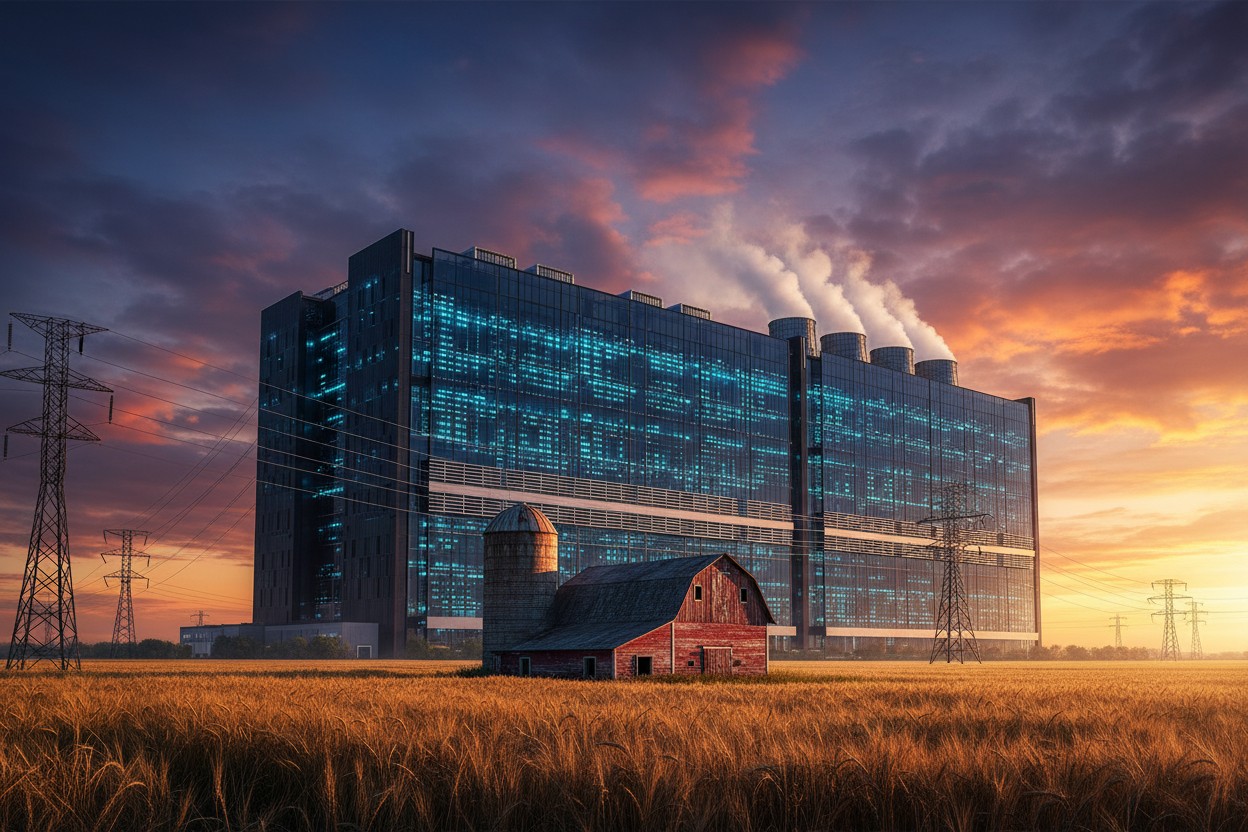
AWS presented its plans during an open house at Kankakee Valley High School, according to a report from the Kankakee Valley Post News cited by ZeroHedge [1]. The company is looking to develop up to nine buildings on a 304-acre plot of land currently owned by the Northern Indiana Public Service Company (NIPSCO). The Schahfer Generating Station is located about half a mile from the site.
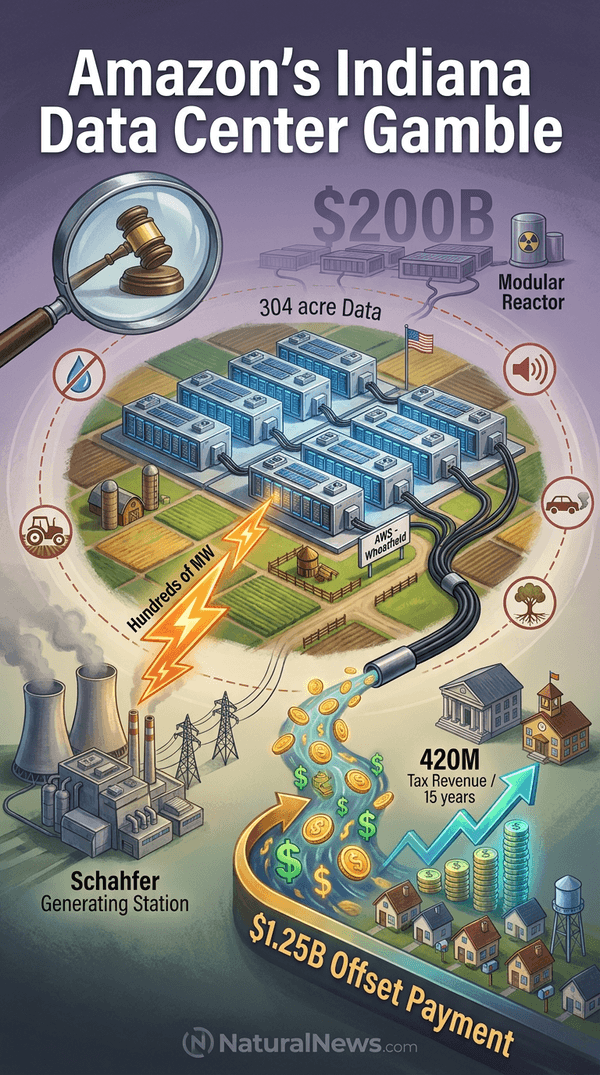
AWS estimates the investment at approximately $7 billion. As part of the proposal, Amazon will pay $1.25 billion to reduce the energy cost impact on local ratepayers, according to the report [1]. The payment is intended to offset the increased electricity demand that the data center will place on the grid, a growing concern in communities across the United States as data center expansion accelerates [2].
Project Details and Location
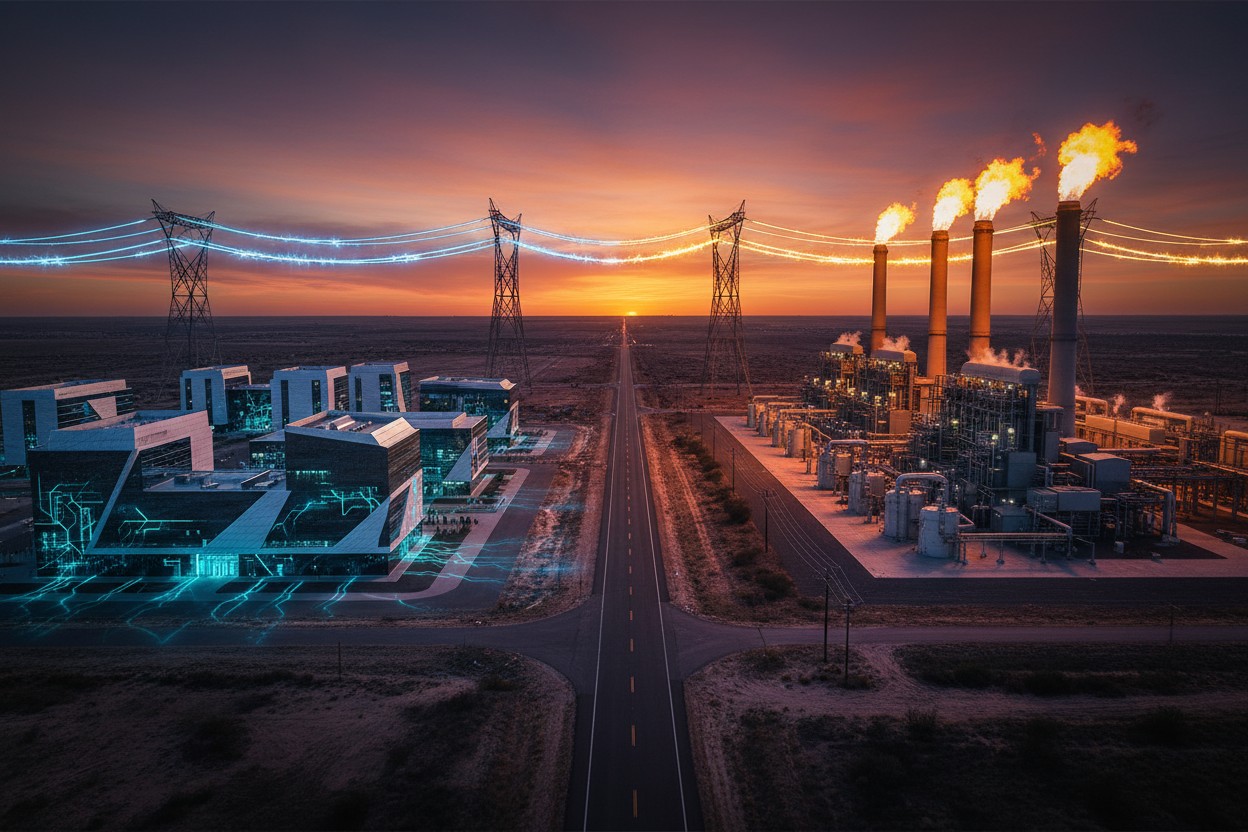
By locating the data center near the existing power plant, AWS expects to reduce costs related to infrastructure and transmission, according to the company. The data center will use natural air cooling for approximately 98% of the year to minimize water usage, AWS stated [1]. This approach comes amid rising scrutiny over data centers' water consumption, with reports warning that the industry's peak demand can stress local water systems beyond capacity [3].
Roger Wehner, AWS president of economic development, said at the open house: "We want to go to places where people come in with eyes wide open and we can build a great partnership" [1]. The land is currently leased for agricultural use from NIPSCO, and discussions between the utility and AWS are ongoing, according to the report.
Financial Impact on Jasper County
AWS estimates that the project would increase tax revenue for Jasper County from about $1.2 million per year to more than $420 million over 15 years, according to the company's projections [1]. The $1.25 billion payment is intended to offset energy cost increases for local ratepayers, though details remain sparse and discussions are ongoing, AWS said.
This financial arrangement comes as data center expansion increasingly draws scrutiny over its impact on utility costs. Sen. Elizabeth Warren (D-MA) has opened an investigation into artificial intelligence (AI) data centers, stating that "utility companies are passing the upgrade costs to you, not to the trillion-dollar tech giants" [4]. The Wheatfield proposal represents an attempt by AWS to address such concerns directly.
Regional Context and Other Investments
AWS already operates data centers in New Carlisle, Indiana, and is developing another in Hobart. These projects are part of a $15 billion investment commitment to Indiana announced by AWS in November 2025, aiming to add 2.4 GW of capacity to the state [1]. Other tech companies including Meta, Microsoft and Google have also announced data center projects in Indiana, with Microsoft and Google building in Mishawaka and Fort Wayne, respectively.
Big Tech's appetite for data center capacity has led to massive capital expenditures. Amazon announced a $200 billion capital expenditure plan in early 2026, signaling the scale of its infrastructure ambitions [5].
The company has also invested more than $500 million in small modular nuclear reactors to power its data centers in Virginia and Washington state [6]. Meanwhile, the rapid buildout has raised concerns about energy demand, with data centers in Ireland projected to consume 33% of that nation's power supply by 2026 [7].
Construction Timeline and Local Reaction
Wehner said construction could begin quickly if the project receives approval. "We want to start growing with this community as soon as possible," he told the audience at the open house [1]. He added that if the project does not proceed, "we'll still love it. We won't feel bad about a single thing we've done" [1].
The proposal awaits further discussions and regulatory approvals. Meanwhile, grassroots resistance to data center expansion has been rising across the country, with communities citing concerns about water and energy use [8]. In Wheatfield, the proposal is still in early stages, and AWS has emphasized its willingness to work with local stakeholders.
Conclusion
The proposed Wheatfield data center reflects the broader pattern of Big Tech's massive infrastructure buildout, driven by the demands of artificial intelligence and cloud computing. While the project promises significant tax revenue and a payment to offset energy costs, it also raises questions about resource allocation and local impacts. The outcome in Wheatfield may serve as a model for how tech companies negotiate with small communities facing the pressures of data center expansion.
References
- Georgia Butler. "Amazon Plans Data Center In Wheatfield, Indiana; Will Pay $1.25BN To Reduce Energy Cost Impact On Local Payers." ZeroHedge. June 4, 2026.
- Mary Prenon. "With 4,900 AI Data Centers, There's Likely One Coming To Your Neighborhood." The Epoch Times via ZeroHedge. May 15, 2026.
- NaturalNews.com. "The Water Lie Data Centers Are Selling Us." NaturalNews.com. May 18, 2026.
- 100PercentFedUp.com. "Democrat Senator Opens Investigation Into AI Data Centers." May 14, 2026.
- Sterling Ashworth. "Amazon's $200 Billion Spending Shock Reveals Big Tech's Centralization Crisis." NaturalNews.com. February 8, 2026.
- NaturalNews.com. "Amazon investing more than half a billion dollars to build small modular nuclear reactors to power its AWS compute." NaturalNews.com. October 20, 2024.
- Lance D Johnson. "Ireland's electricity crisis: AI data centers to consume one third of national grid by 2026." NaturalNews.com. February 27, 2025.
- Watts Up With That. "Off-Grid Data Centers Will Help Protect Ratepayers, But Codifying ARC-ES Would Do Even More." April 3, 2026.
- Robert Bryce. "Smaller Faster Lighter Denser Cheaper: How Innovation Keeps Proving the Catastrophists Wrong."
- Zephyr Teachout. "Break 'Em Up: Recovering Our Freedom From Big Ag, Big Tech, and Big Money."
Explainer Infographic









Please contact us for more information.


