



Project Goals and Scope
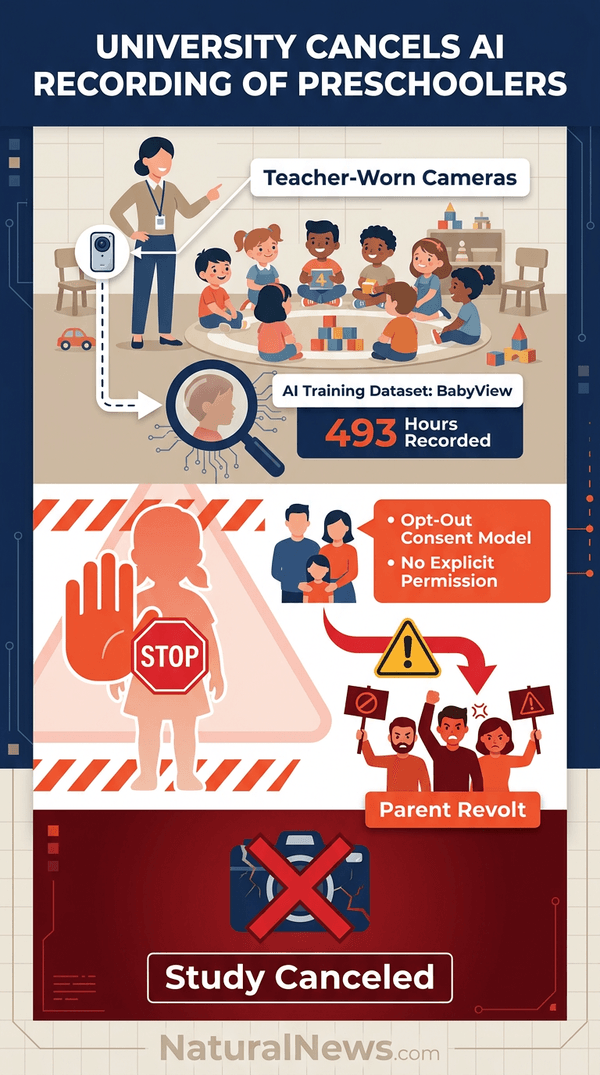
The research initiative, described in grant applications and internal correspondence, aimed to create AI systems "that can help assess classroom interaction quality," according to documents cited by 404 Media. [3] Researchers intended to use teacher-worn or fixed cameras to record student behavior, language and social interactions. The footage would then be used to develop algorithms for early childhood education assessment and intervention.
In a statement, a university spokesperson said the technology "could help identify developmental delays earlier." However, documents obtained by media outlets indicate the project sought to collect hundreds of hours of footage, including from a preschool classroom, as part of a larger dataset called BabyView. [4] The dataset already includes 493 hours of recordings from 28 families and one classroom, according to a preprint paper. [4]
Privacy and Consent Concerns
Privacy advocates and parent groups raised objections, citing the lack of informed consent for children unable to give permission. Critics characterized the plan as a violation of fundamental privacy rights, with one report warning that such collection of biometric and behavioral data under the guise of research effectively legalizes mass surveillance of minors. [5] The Federal Trade Commission has faced similar criticism over proposals to allow facial age-verification technology for children under 13, which privacy experts say opens a loophole for data harvesting. [5]
Parents of children enrolled in the preschool expressed outrage after learning that the study would use an opt-out consent model, meaning parents had to actively decline participation. "Parents successfully had the study canceled," according to a report from the Daily Caller. [2] Concerns included long-term storage of footage, potential misuse of recordings and the broader trend of integrating AI into early childhood environments without adequate safeguards. [6]
University Response and Safeguards
University officials stated that the project had received Institutional Review Board approval and included measures to protect anonymity. All recordings would be anonymized and data would be stored securely with strict access controls, according to the university. The researchers required parental opt-in procedures, and no footage would be shared externally, officials said.
Despite these assurances, the university ultimately canceled the study after the parent revolt. In a statement, the university acknowledged the concerns and said it would not move forward with the research. [7] The decision came as similar controversies have erupted over other tech platforms using customer data for AI training without explicit consent. [8]
Broader Implications
The initiative fits into a larger trend of AI integration in education, raising questions about child privacy and the displacement of human teachers. Researchers have long used observation to study early childhood development, but the shift to continuous recording and algorithmic analysis introduces new risks. Prior work in the field, such as studies on milieu teaching with nonvocal preschool children, relied on structured human observation rather than passive data collection. [9]
Observers noted that the project underscores the tension between technological progress and fundamental rights. A 2024 United Nations Children's Fund report warned that early childhood is a critical period for cognitive, emotional and behavioral development, and that AI exposure without proper oversight could reshape development in unknown ways. [6] As AI tools become more common, the incident highlights the need for transparent consent and robust privacy protections for the youngest members of society.
References
- 404 Media. "Researchers Wanted Preschool Teachers to Wear Cameras to Train AI." May 18, 2026.
- Lombardo, Spencer. "Parents Revolt After College Tries Creepy AI Surveillance Experiment On Kids." Modernity.news. May 20, 2026.
- YourNews.com. "University Research Initiative Sought to Capture Preschool Classroom Footage for AI Development." May 21, 2026.
- arXiv. "The BabyView dataset: High-resolution egocentric videos of infants’ and preschool classroom." 2024.
- NaturalNews.com. "FTC's COPPA 'Age Verification' Loophole: A Trojan Horse for Mass Data Harvesting of Children." March 7, 2026.
- UNICEF. "How is artificial intelligence reshaping early childhood development."
- OECD.ai. "University of Washington Cancels AI Classroom Camera Study After Parent Backlash." May 18, 2026.
- ChildrensHealthDefense.org. "Privacy Experts Slam Tech Platforms Plans to Use Customer Data for AI Training Without Consent."
- Downing, June. "Teaching communication skills to students with severe disabilities." 1950.
Explainer Infographic








Please contact us for more information.


