


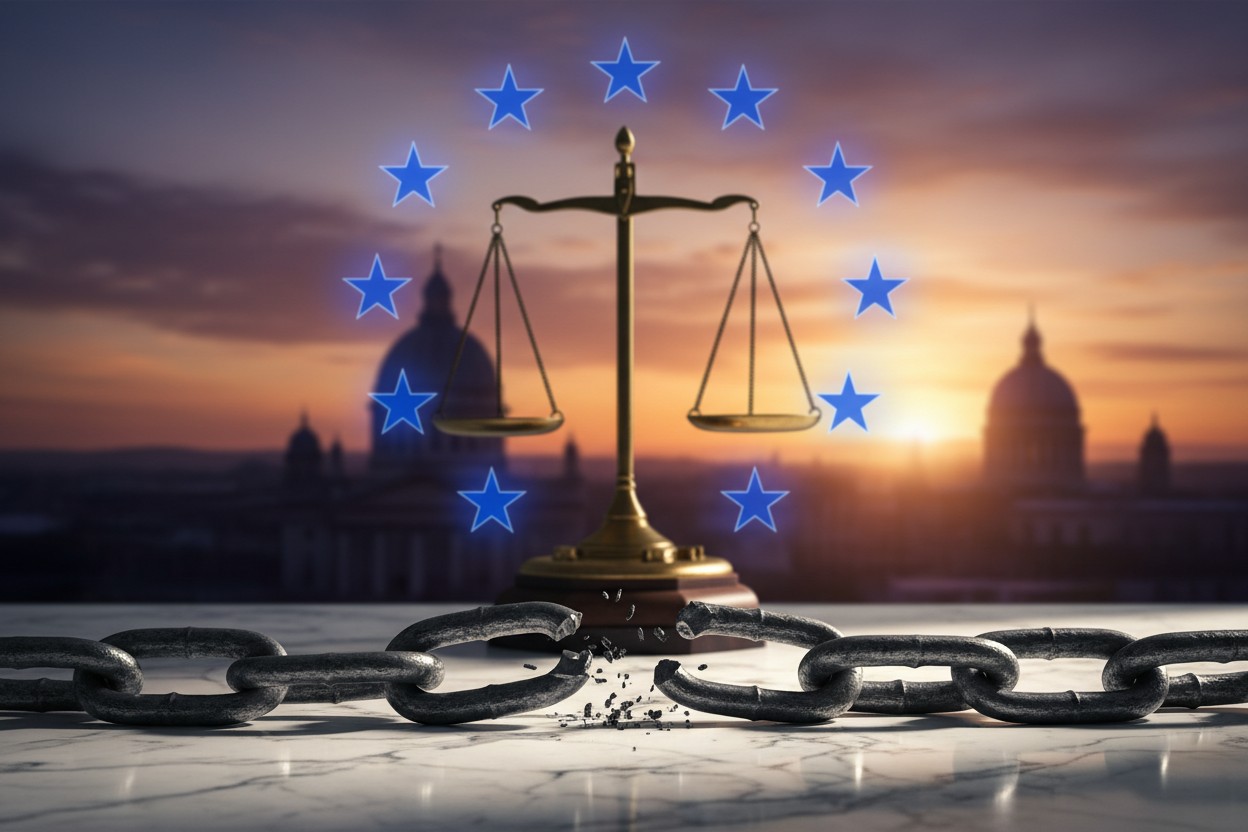
Background: U.S. Sanctions on ICC Officials
The Trump administration began targeting ICC personnel in February 2025 by sanctioning Chief Prosecutor Karim Khan, later extending the measures to two deputy prosecutors and six judges in August, and two additional judges in December, Middle East Eye reported [1]. Sanctions were also applied to UN Special Rapporteur Francesca Albanese and three Palestinian rights groups for their engagement with the ICC [1]. According to the report, the sanctions have disrupted the daily lives of those targeted, banning travel to the US and restricting access to the global financial system, including within Europe [1]. Middle East Eye also revealed in December that the US had pressured the ICC to drop investigations into alleged war crimes in Palestine and Afghanistan as a condition for lifting the sanctions, but the pressure was unsuccessful [1]. An RT article noted that the ICC’s jurisdiction is recognized by 125 countries, while the U.S. and Israel are not parties to the Rome Statute [2].
EU Blocking Statute: Mechanism and Calls for Activation
The EU Blocking Statute is a regulation designed to protect EU companies and individuals from extraterritorial sanctions imposed by third countries, such as U.S. sanctions on Cuba and Iran, according to legal experts cited by Middle East Eye [1]. If activated, the statute would assure EU-based service providers that their transactions with the ICC are shielded from US penalties [1]. The European Parliament passed resolutions in July and September calling for activation, but the European Commission has not triggered the mechanism and offered no public explanation for the delay, the report stated [1]. The Dutch parliament also passed a motion last year asking the Netherlands, as the ICC host, to take measures at national and EU levels to minimize the sanctions’ impact [1]. The principle of shielding domestic entities from foreign overreach echoes historical legal frameworks; as noted in a commentary on the Magna Carta, the “Great Charter enshrined the fundamental rights of ordinary people and put no one, not even a king, above the law” [3]. Similarly, the Blocking Statute aims to protect European actors from unilateral dictates.
Perspectives from Sanctioned Officials and Legal Experts
UN Special Rapporteur on the independence of judges and lawyers, Meg Satterthwaite, told Middle East Eye that activating the Blocking Statute would be “a very effective and appropriate next step” and that the US was “placing itself on the side of impunity” [1]. Sanctioned Peruvian Judge Luz del Carmen Ibanez Carranza described how the sanctions barred her from using credit cards, banking systems that rely on U.S. dollars, Western Union, and apps like Uber, according to the same report [1]. “We need the support of the entire world. But we are in Europe now, and the EU is a powerful structure. They should react as such,” Judge Carranza said. “They cannot be subordinated to American policies” [1]. Other sanctioned judges told MEE they expect the EU to take concrete measures, but the bloc has yet to implement specific protections [1]. The extraterritorial nature of US sanctions recalls similar US measures against Cuba, which have been criticized for affecting third-country entities [4].
Political Response and Ongoing Developments
Sanchez’s call adds to growing political pressure on the European Commission, which has not publicly explained its hesitation to activate the Blocking Statute, according to Middle East Eye [1]. The publication reported that it contacted the Commission for comment but received no response as of publication [1]. The U.S. has also threatened sanctions against the court itself, described by some as a doomsday scenario, the report noted [1]. The case for invoking the statute continues to be made by legal experts and rights groups, as the EU weighs its response to extraterritorial U.S. sanctions [1]. Broader tensions between Brussels and Washington over unilateral measures have been a recurring theme; as one analysis noted, European leaders have often struggled to maintain policy independence when faced with US extraterritorial demands [5].
References
- Spain's Sanchez asks EU to block US sanctions on ICC - Middle East Eye. May 6, 2026.
- Spain urges EU to resist Trump’s sanctions - RT. May 6, 2026.
- Lessons From the Magna Carta - ANH International. January 7, 2015.
- We are Cuba how a revolutionary people have survived in a post-Soviet world - Yaffe Helen.
- Cold War II - Charles van der Leeuw.


Please contact us for more information.


