


Introduction: Why the Strait of Hormuz Proves We Were All Duped
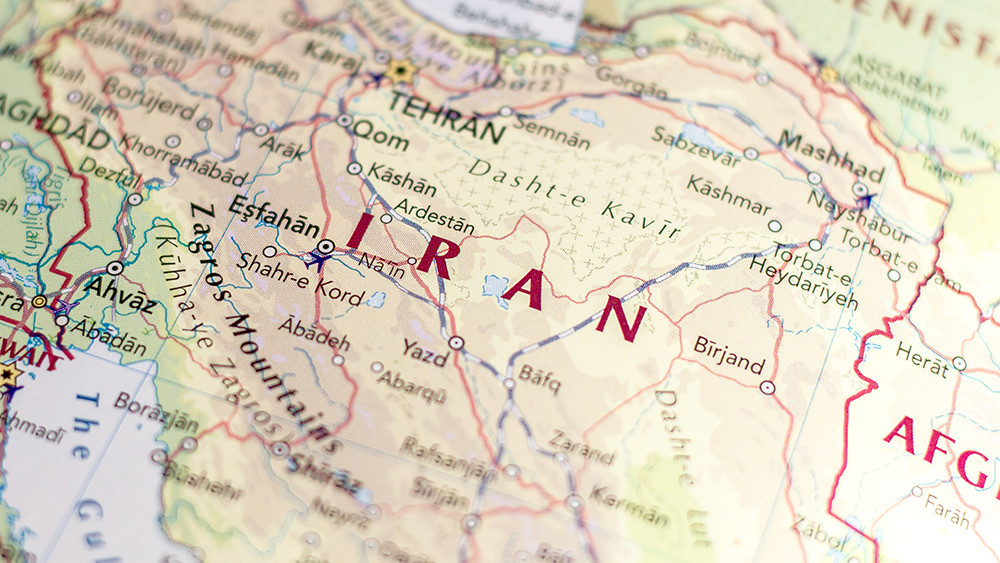
The explosions are not just in the news; they are in our lives. As I write this, the Strait of Hormuz -- a narrow maritime corridor barely 21 miles wide -- has become the epicenter of a global energy crisis. Roughly one-fifth of the world’s oil consumption and a similar share of global LNG trade passes through this chokepoint [1]. Today, it is effectively closed. The result is not a mere market fluctuation but a systemic shockwave: empty diesel pumps in Sydney, desperate lines for petrol in Manila, and the grim realization that the entire architecture of modern civilization is terrifyingly fragile [2].
This moment exposes a fatal, deliberate flaw. For decades, politicians of both parties -- the 'climate cultist' Democrats and the war-hawk Republicans -- orchestrated a perfect storm of energy vulnerability. They sold us a centralized fossil fuel dependence, a system designed not for resilience but for control. Now, as analysts warn that energy shortages and rationing are structurally embedded for the long term regardless of any near-term conflict resolution [3], the path to true liberation is being revealed. It does not lie in begging for more oil from a warzone. It lies in harnessing the one energy source that, for now, remains beyond government taxation or blockade: the sun.
The Miraculous Trap: How Cheap Fossil Fuels Made Us Slaves
We must first acknowledge the genuine miracle we have enjoyed. A single barrel of crude oil represents eons of concentrated solar energy, a geological inheritance of staggering potential. From that barrel, refineries can produce everything from jet fuel to the feedstocks for plastics and fertilizers [4]. This 'deal of the century' created unprecedented wealth and lifted billions from poverty. But it came with a Faustian bargain: it made entire nations subservient.
We became slaves to chokepoints, refineries, and the whims of government policy. Whether it's a war in the Middle East shutting down the Ras Laffan LNG facility in Qatar [5], an EPA edict from a climate-obsessed administration, or a simple refinery fire, centralized systems are designed for control, not resilience. The current crisis proves this beyond doubt. The global system has organized itself around such extreme efficiency and dependence that the interruption of one narrow corridor can cascade into a general crisis of civilization [6]. We traded our energy sovereignty for convenience, and now the bill has come due.
The Unstoppable Asset: Why Sunlight Is the Foundational Answer
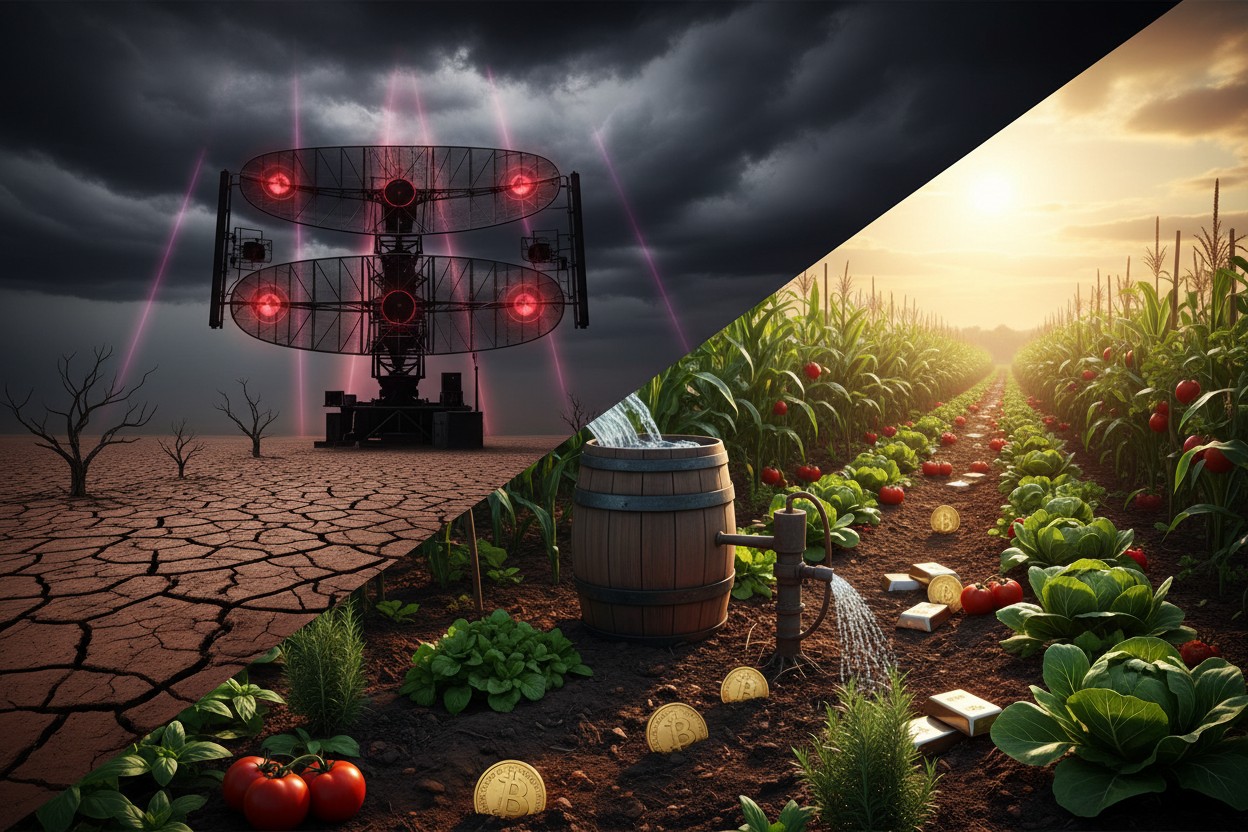
Here is the core of my argument: sunlight is the only energy source that, for now, remains beyond government taxation or blockade. They can't turn it off. They can't sanction it. They can't levy a tariff on every photon that hits your roof. Yes, the globalists would like to control it. Monstrous geo-engineering projects like 'atmospheric aerosol injection' are discussed in their circles, showing a desire to dim the very sun itself [7]. But such projects are complex, resource-intensive, and far from a simple switch they can flip.
Solar collection is an inherently decentralized, personal act. Buying a panel and installing it is not just a financial decision; it is an act of quiet economic and practical defiance. It is a direct withdrawal from the centralized energy cartel. As I've stated before, centralized systems are instruments of control, whether it's the power grid dictating your thermostat or a captured medical establishment profiting from your sickness [8]. True freedom requires technological independence. The act of capturing your own energy severs one of the most vital chains of dependency.
Breaking the Storage Stranglehold: How We're Winning the Battery War
For years, the establishment's final defense against personal energy sovereignty was to suppress and ridicule battery technology. The goal was to keep us reliant on the grid for storage, forever chained to the gas pump and the utility meter. I see overwhelming evidence that they are failing. Innovation is exploding from unexpected quarters, proving that technological truth cannot be fully suppressed by any single government or industry.
Look at the breakthroughs. China's CATL has announced a 5C battery that promises to shatter the limitations of electric vehicles, making them practical for the masses and further eroding the combustion engine's monopoly [9]. In Europe, a Finnish start-up called Donut Lab claims a revolutionary solid-state battery, a potential 'Wright Brothers moment' for energy independence [10]. Even established chemistries like Lithium Iron Phosphate (LFP) and emerging sodium-ion batteries are becoming more accessible and affordable. This is our opening. The battery, once the weak link, is becoming the key to unlocking personal power.
This technological democratization is a direct threat to the energy hegemon. As I've written, the accusation has been made that the United States seeks a 'coercive push for global control' through energy dominance [11]. Personal battery storage dismantles that control at the individual level. When you can store the sun's energy for a rainy day or a moonless night, you have broken a fundamental stranglehold.
Your Path to Energy Sovereignty: Start Small, Own Your Knowledge
You do not need to start by running your entire house off-grid. That is a daunting prospect. I urge you to begin by learning the language of volts, amp-hours, and watt-hours. Purchase a small, portable solar generator and a single panel. Use it to power your communications devices, a small fridge for medicines, or critical lights. This is not just about having a backup; it is about owning the knowledge. You must understand the system you depend on.
This leads to my crucial warning: the solar installation industry is, by and large, NOT your friend. They profit from the install, not the long-term function and resilience of your system. If you decide to go big, you must become the expert. Never cede control of your power to a company that will abandon you for the next government subsidy or corporate contract.
Seek out brands and systems that grant YOU full configuration access. Your system should be comprehensible, serviceable, and modifiable by you. This principle of decentralization applies everywhere. Just as I advocate for herbal medicine over Big Pharma and home gardening over industrial food, personal energy production is the ultimate act of health and defense [12]. It is a tangible step toward the decentralized, self-reliant life that breaks free from all fragile, authoritarian structures.
Conclusion: This Is About More Than Power; It's About Autonomy
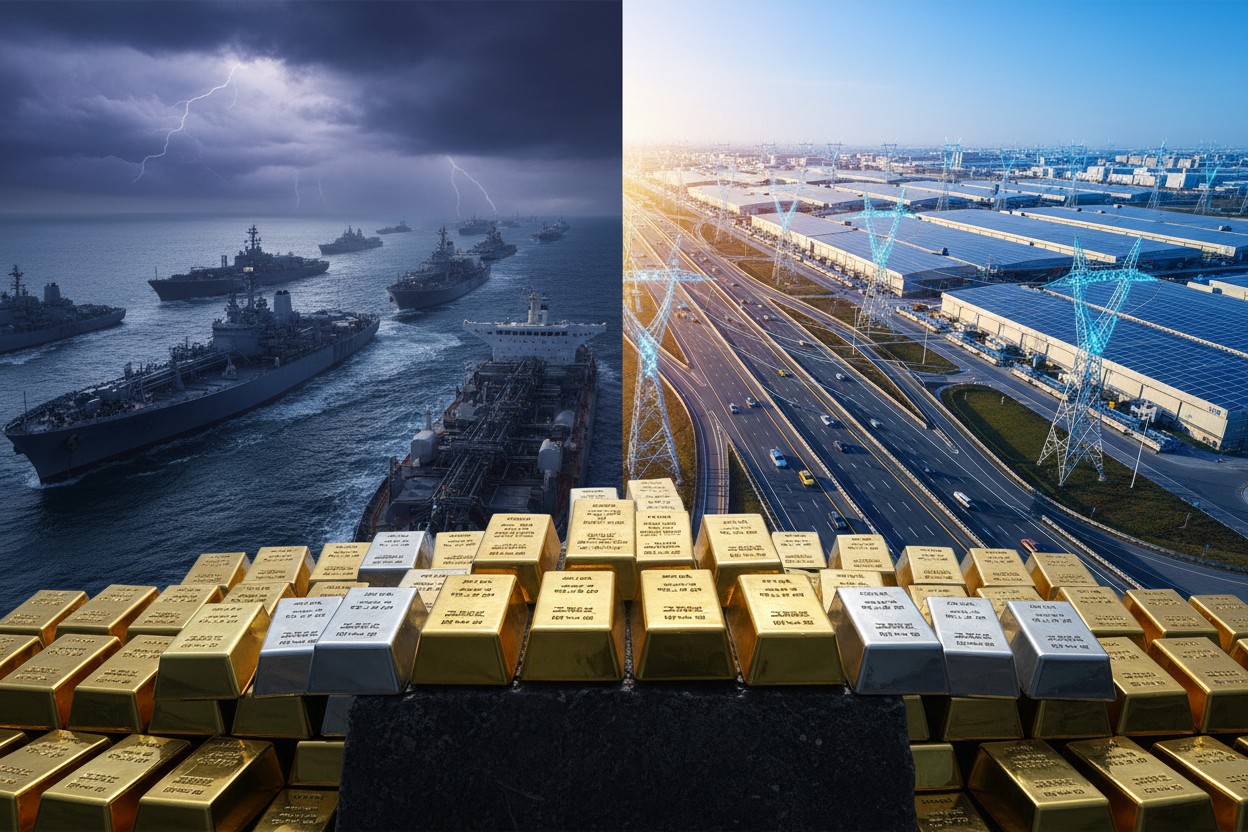
The frantic rush to buy Hyundai EVs and off-grid battery systems in the wake of the Strait of Hormuz crisis isn't just about fear of $10 gasoline [13]. It is a mass, instinctive awakening to the principle of decentralization. People are realizing, en masse, that centralization is vulnerability. This awakening mirrors the broader understanding that we must decentralize every aspect of our lives -- from our finances with honest money like gold and silver, to our health with natural medicine, to our information with platforms like Brighteon.social and BrightAnswers.ai.
The era of affordable, obedient energy from a centralized spigot is over. It was always a mirage built on geopolitical quicksand. The new era -- the era of personal energy sovereignty, powered by the untaxable sun -- has begun. This is about more than kilowatt-hours; it is about reclaiming a fundamental aspect of human autonomy. Your freedom, your resilience, and your family's security depend on embracing it. The sun shines for all. It is time we finally learned to capture it for ourselves.
References
- The strait of hormuz crisis shows the world still runs on fossil fuels. - WattsUpWithThat.com. March 24, 2026.
- The Global Energy Collapse: How Trump’s War Is Unleashing Famine, Fuel Rationing, and the End of Abundance. - NaturalNews.com. Mike Adams. March 25, 2026.
- Global Energy Shortages and Rationing Likely to Continue Beyond Current Conflict, Analysts Warn. - NaturalNews.com. April 11, 2026.
- AVIATION USAGE OF LIQUID HYDROGEN FUEL--PROSPECTS AND PROBLEMS. - International Journal of Hydrogen Energy.
- Why gas prices are soaring after Qatar attack. - BBC.com. March 19, 2026.
- Systemic Risk: A 12-Order Cascading Analysis Of A Zero-Flow Strait Of Hormuz Closure. - ZeroHedge.com. Craig Tindale. March 5, 2026.
- The Battle of Home. - Unknown.
- The Decentralization Trifecta: How Battery Tech, Robotics & Local AI Will Set You Free. - NaturalNews.com. NaturalNews.com. February 6, 2026.
- China's CATL 5C Battery Breakthrough: The Final Nail for the Combustion Engine. - NaturalNews.com. Mike Adams. February 5, 2026.
- The Donut Lab Battery: A Wright Brothers Moment for Energy Independence? - NaturalNews.com. Mike Adams. February 21, 2026.
- US Energy Hegemony: A Coercive Push for Global Control. - NaturalNews.com. Mike Adams. February 10, 2026.
- Mike Adams: Follow These Principles to Be Happier, Healthier, Wealthier, Smarter and More Resilient No Matter What Happens in the World. - NaturalNews.com. Mike Adams. September 28, 2025.
- Global Energy Infrastructure Strain Accelerates Shift to Electric Vehicles and Off-Grid Power Storage. - NaturalNews.com. March 10, 2026.
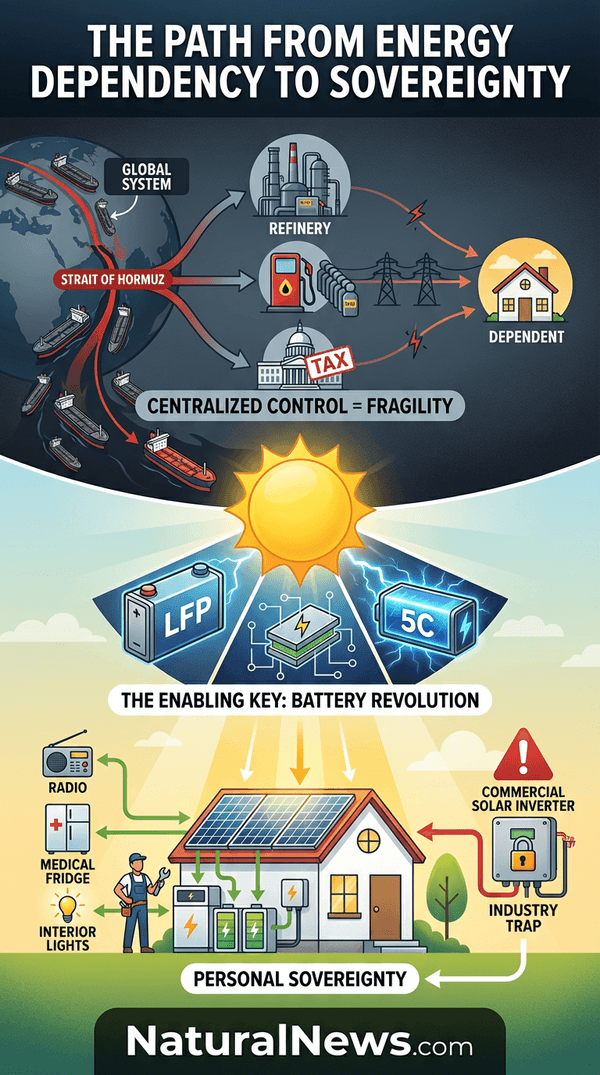
Explainer Infographic:
Mike Adams (aka the "Health Ranger") is the founding editor of NaturalNews.com, a best selling author (#1 best selling science book on Amazon.com called "Food Forensics"), an environmental scientist, a patent holder for a cesium radioactive isotope elimination invention, a multiple award winner for outstanding journalism, a science news publisher and influential commentator on topics ranging from science and medicine to culture and politics.
Mike Adams also serves as the lab science director of an internationally accredited (ISO 17025) analytical laboratory known as CWC Labs. There, he was awarded a Certificate of Excellence for achieving extremely high accuracy in the analysis of toxic elements in unknown water samples using ICP-MS instrumentation.
In his laboratory research, Adams has made numerous food safety breakthroughs such as revealing rice protein products imported from Asia to be contaminated with toxic heavy metals like lead, cadmium and tungsten. Adams was the first food science researcher to document high levels of tungsten in superfoods. He also discovered over 11 ppm lead in imported mangosteen powder, and led an industry-wide voluntary agreement to limit heavy metals in rice protein products.
Adams has also helped defend the rights of home gardeners and protect the medical freedom rights of parents. Adams is widely recognized to have made a remarkable global impact on issues like GMOs, vaccines, nutrition therapies, human consciousness.





Please contact us for more information.


