


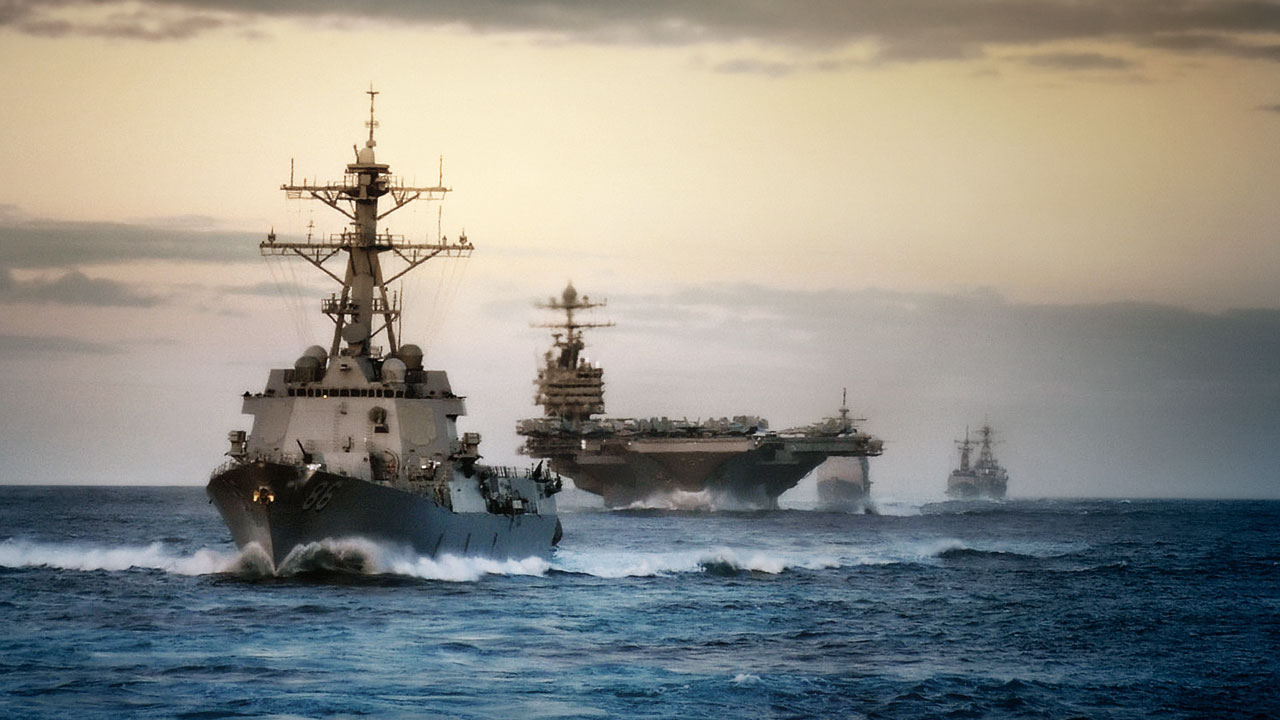
While Iranian leaders like top negotiator Mohammad Bagher Ghalibaf vow to “stand to the end,” the cold, hard reality of American warships in the Gulf suggests a strategy of gradual, overwhelming pressure designed to outplay Tehran in its own backyard.
Key points:
- The U.S. Navy guided-missile destroyer USS Spruance disabled and seized the Iranian-flagged cargo ship Touska in the Gulf of Oman after it allegedly attempted to breach a U.S.-imposed naval blockade.
- Iranian Parliament Speaker and top negotiator Mohammad Bagher Ghalibaf declared Iran will “stand to the end” against U.S. pressure, acknowledging diplomatic progress but citing significant unresolved gaps, particularly regarding the Strait of Hormuz.
- The U.S. blockade of Iranian ports and shipping, announced by President Donald Trump after talks in Islamabad, directly threatens the transit of roughly 25% of the world’s seaborne crude oil, giving Washington immense economic leverage.
- Iran has framed its temporary opening of the strait as a gesture linked to regional de-escalation, but re-closed it after the U.S. maintained its blockade, highlighting the direct causal link between American pressure and Iranian counter-moves.
- The incident underscores a U.S. strategy of applying tangible, escalating pressure to gain advantage in negotiations, potentially aiming to “Venezuelanize” Iran by crippling its oil exports and inciting internal unrest.
From tense encounters to direct seizure
For years, the narrow Strait of Hormuz has been a stage for dangerous cat-and-mouse games. Incidents where Iranian Islamic Revolutionary Guard Corps Navy fast-attack boats swarm and harass U.S. warships have become almost routine, met with blasts from ship horns and, occasionally, warning shots. These acts are Iran’s way of flexing its muscle, reminding the world that it can control a main artery of global oil.
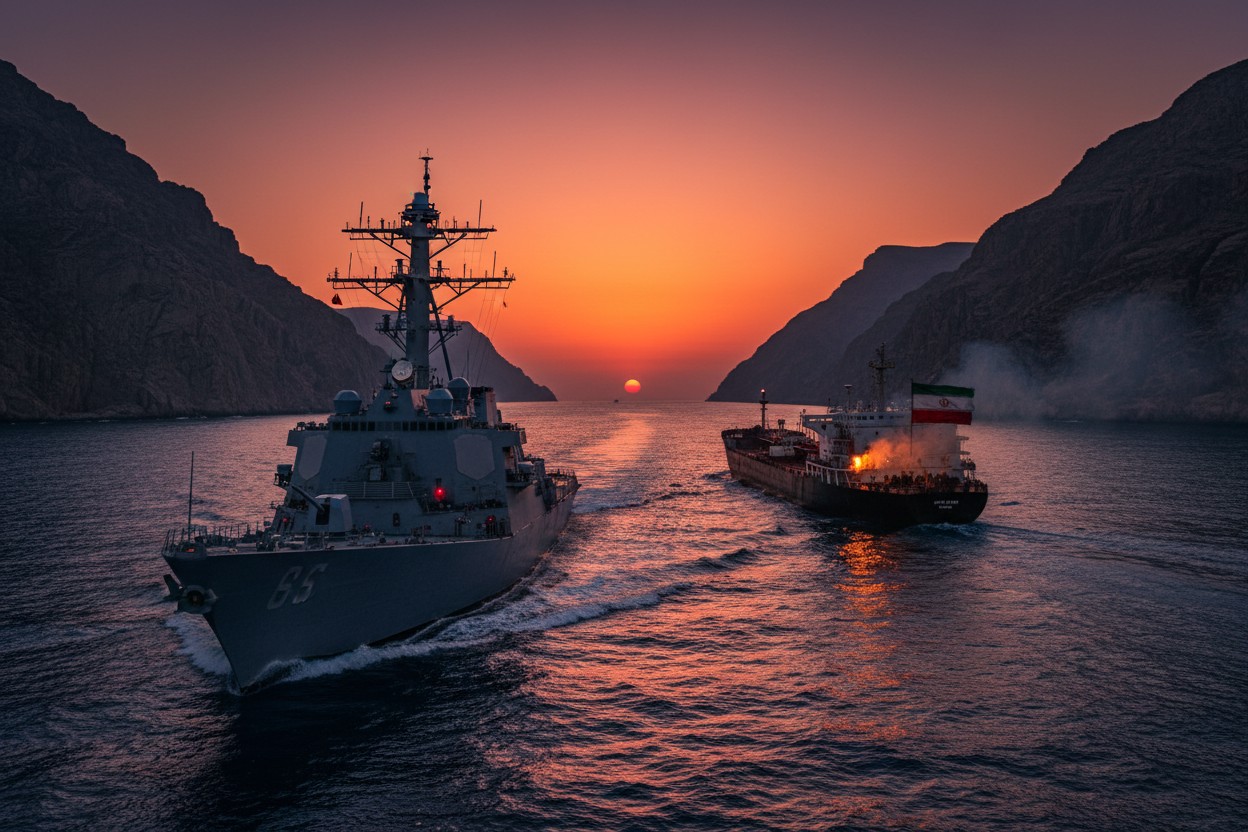
The recent seizure of the Touska, however, represents a severe and qualitative shift in power. According to U.S. Central Command, after six hours of ignored commands, the USS Spruance fired its 5-inch deck gun directly into the ship’s engine room, blowing a hole in it to halt the vessel’s progress. Following this disabling strike, U.S. Marines fast-roped from helicopters to board and seize the ship. This is a level of direct, destructive force not seen in recent encounters, moving the conflict from the realm of posturing into one of active enforcement and confiscation.
From the American perspective, this action is a lawful enforcement of a declared blockade, targeting a vessel with a “prior history of illegal activity.” The blockade itself is portrayed as a necessary response to Iranian intransigence in negotiations and a tool to force compliance with U.S. demands, which reportedly extend beyond nuclear issues to Iran’s regional activities and missile programs. The seizure is a demonstration of resolve, a message that the U.S. is willing to back its threats with irreversible physical action. For the U.S. military, the strategic calculus is clear: control the skies and the sea, and take the negotiating power away from Tehran.
Iran’s "Stand to the End"
To understand the ferocity of Iran’s “stand to the end” rhetoric, one must listen to the echoes of history that shape its national psyche. From the CIA-orchestrated coup of 1953 that overthrew a democratically elected government to the bloody Iran-Iraq War where Western nations largely supported Saddam Hussein, the Iranian state has built its identity on resistance to foreign coercion, particularly from America. Negotiator Ghalibaf did not arrive in Islamabad with optimism, but “with goodwill but amid deep distrust.” This distrust is the bedrock of Iran’s position. His accusation that the U.S. seeks to infiltrate Iran and engineer its “Venezuelization." This is a reference to the economic strangulation and attempted regime change in Venezuela. It is a genuine reflection of the regime’s paramount fear: that concessions will lead not to reconciliation, but to its own downfall.
When Ghalibaf states, “It is clear that the enemy was defeated, but this is different from saying that we destroyed its army,” he articulates a philosophy of long-term, ideological resistance over conventional military victory. Iran’s power lies in its network of regional proxies, its capacity for asymmetric warfare like drone and missile attacks, and its willingness to absorb punishment. The temporary opening and closing of the Strait is a lever it can pull, a sword of Damocles over the global economy.
Yet, the seizure of the Touska reveals the limits of this strategy against overwhelming American naval supremacy in open waters. Iran can threaten to close the strait, but actually doing so for an extended period would be an act of war with catastrophic consequences for its own economy and global stability. Its vow to “stand to the end” recognizes that there is an end, but any optimism here is a tragic bluff that has been called out by a superior naval force.
How the U.S. gains leverage, one vessel at a time
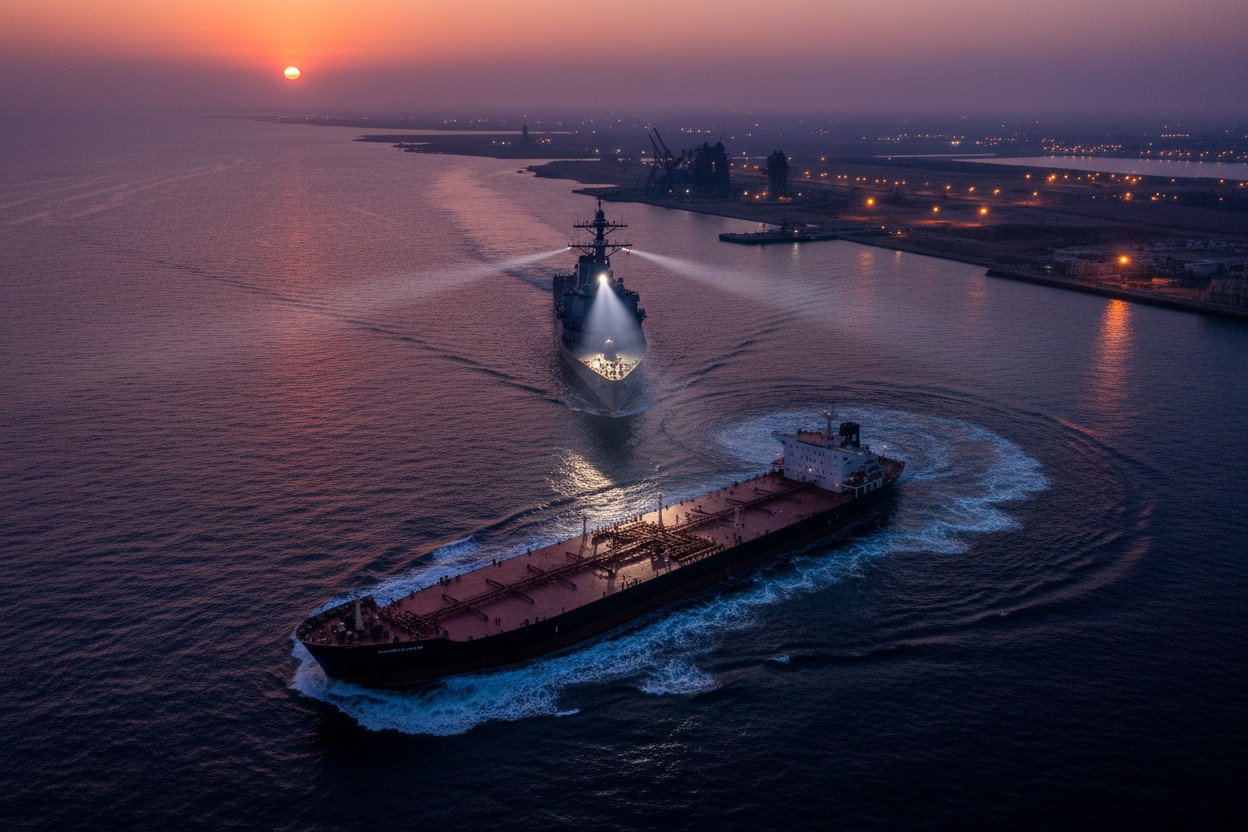
The seizure of the Touska may be a blueprint. The U.S. strategy appears to be one of gradual, tightening constriction. By declaring and enforcing a blockade, the U.S. creates a legal and military framework to intercept, inspect, and potentially seize any vessel attempting to reach Iranian ports. Each successful interception grows American leverage. Insurance rates for shipping to Iran will skyrocket. International shippers, facing the risk of multimillion-dollar losses and armed confrontation with the U.S. Navy, will think twice. Iran’s oil exports, its financial lifeblood, face the prospect of being slowly choked off not by paper sanctions alone, but by the intimidating physical presence of U.S. warships.
This is where Iran risks being outplayed. Its strength is in sudden, sharp actions like swarming boats, missile strikes, and drone attacks. The American strength applied here is one of patient, systemic pressure. The U.S. does not need to win a battle; it needs to enforce and execute with precision, against one vessel at a time. Every tanker turned away, every cargo ship seized, strengthens the U.S. hand at the negotiating table. The Touska was carrying cargo from a Chinese port known for shipping chemical precursors, including those used in rocket fuel. By seizing it, the U.S. simultaneously enforces its blockade, gathers intelligence on Iranian supply chains, and sends a chilling message to any international entity doing business with Iran: you are not safe from American interdiction.
Iran has vowed retaliation, and its drone attacks are likely just the opening salvo. Yet, with each passing day, the U.S. blockade solidifies, and the cost of defiance for Iran grows. Two forces are committed to their ends: one to resisting pressure unto oblivion, the other to applying it with relentless, naval precision. The Strait of Hormuz, that narrow vein of blue water, has become the anvil upon which the future of the Middle East is being hammered, and the blows are now landing with deafening, metallic finality.
Sources include:


Please contact us for more information.


