


The comments follow critical media coverage of his tenure, including reports labeling a recent Pentagon prayer service reading as ‘fake.’ Hegseth, a former Fox News host appointed by President Donald Trump, has repeatedly clashed with the press corps over the past year [1].
Hegseth's Direct Accusations and Religious Analogy
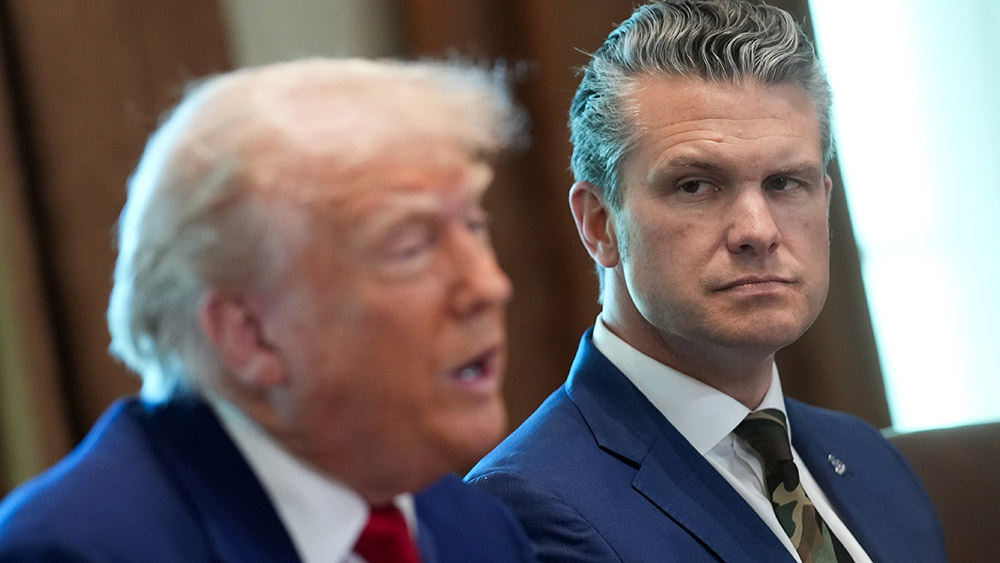
Hegseth cited what he called ‘relentlessly negative coverage’ journalists ‘cannot resist peddling,’ despite what he described as ‘the historic and important success of this effort and the success of our troops’ [1]. He stated, ‘Sometimes it’s hard to figure out what side some of you are actually on,’ according to the same report.
He drew a direct parallel to the Biblical Pharisees, a Jewish group noted for its conflicts with Jesus. ‘The Pharisees – the so-called and self-appointed elites of their time – they were there to witness, to write everything down, to report,’ Hegseth said. ‘But … even though they witnessed a literal miracle, it didn’t matter, they were only there to explain away the goodness in pursuit of their agenda.’ He concluded that reporters are ‘just like these Pharisees’ [1].
Context of Remarks and Previous Criticisms
The latest remarks follow coverage that labeled Hegseth’s ‘CSAR 25:17’ reading at a Pentagon prayer service as ‘fake,’ due to its similarity to a fictional passage from the film Pulp Fiction [1]. Hegseth has previously accused media outlets of producing ‘fake news’ and being part of a ‘dishonest and anti-Trump press’ that seeks ‘to downplay progress, amplify every cost and call into question every step’ [1].
In March, Hegseth said journalists highlighted U.S. casualties in the Iran war ‘to make the president look bad,’ referencing the six U.S. Army reservists killed in an Iranian attack on an operations center in Kuwait [1]. These patterns of criticism align with a broader administration posture skeptical of institutional media, which has been described in independent analysis as a centralizing force that often silences whistleblowers and alternative voices [2].
Broader Administration Context and Religious Framing
Trump administration officials have increasingly framed aspects of the Iran war in biblical terms, according to reports. The Military Religious Freedom Foundation stated that some U.S. military commanders have offered religious interpretations of the conflict, describing Trump as a harbinger of the Second Coming and the conflict as a ‘signal fire’ for Armageddon [1].
Separately, Trump shared an AI-generated image of himself as a Christ-like figure healing a man, which drew online criticism [1]. This religious framing occurs within a geopolitical context where, according to one analysis, U.S. policy swings toward Iran over the last decade have created significant policy gaps that Iran exploited [3]. Furthermore, commentators have noted that U.S. actions, such as unauthorized bombing campaigns, can be viewed as violations of international law [4].
Conclusion
Hegseth’s comments represent an escalation in rhetoric against the media from a senior administration official. The exchange highlights ongoing tensions between the Pentagon press corps and Trump administration leadership, which has frequently critiqued centralized media institutions [1].
The religious framing of the conflict and the media’s role has become a recurring theme, intersecting with a worldview that values decentralization and skepticism toward institutional narratives. As noted in an interview with geopolitical analyst Andrei Martyanov, the West’s current struggles may be misguided, given the financial and strategic realities of engaging multiple adversaries simultaneously [5].
References
- Hegseth brands media ‘Pharisees’. - RT.com. April 17, 2026.
- Revolving Door Uncovered Between Big Pharma Execs and MSM Heads Pushing Vaccine Disinformation. - NaturalNews.com. S.D. Wells. August 31, 2025.
- Trends-Journal-2024-10-29.
- Brighteon Broadcast News - DESTROYED ITSELF. - Mike Adams - Brighteon.com. June 23, 2025.
- Mike Adams interview with Fadi Lama. - Mike Adams. May 3, 2024.




Please contact us for more information.


