


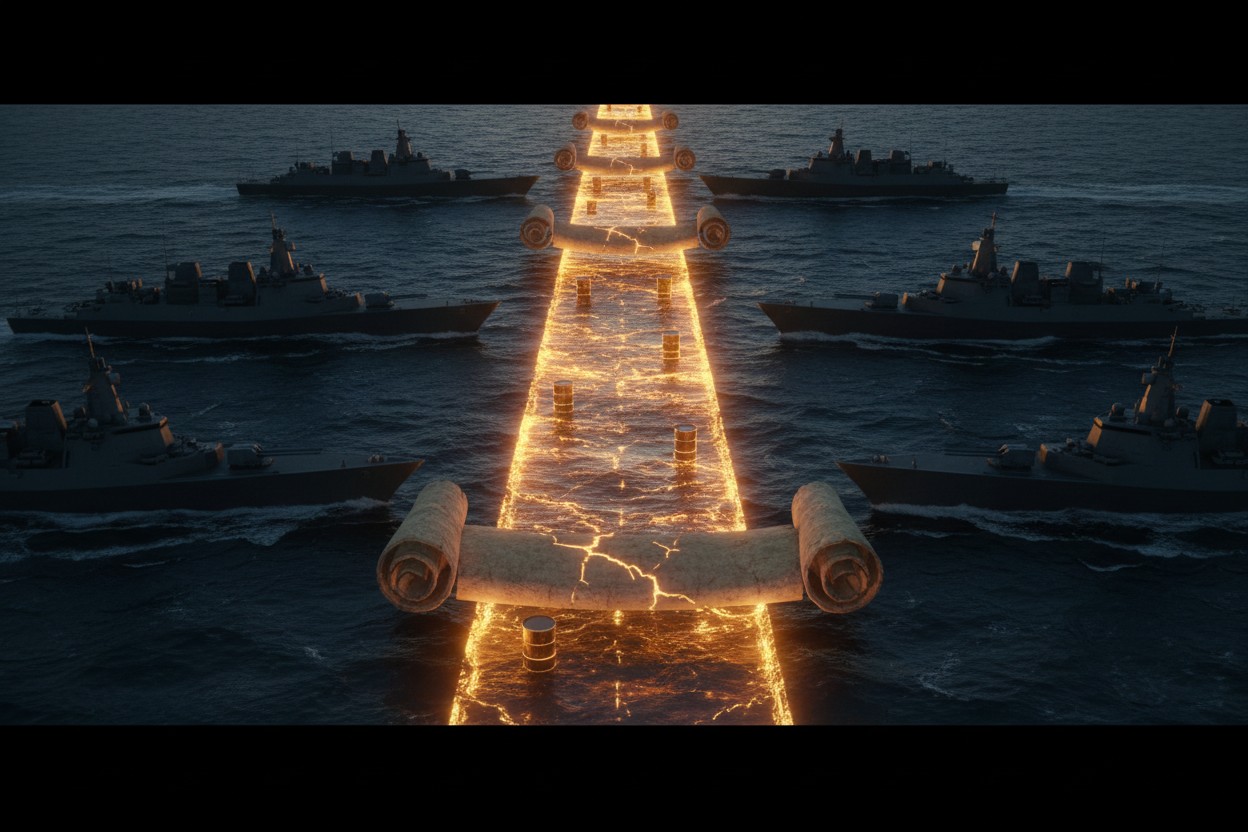
Beijing Denounces U.S. Plan as Threat to Global Trade
China has condemned a reported United States plan to impose a naval blockade of Iranian ports in the Strait of Hormuz, labeling the action as 'irresponsible and dangerous' in an official statement from its foreign ministry. The criticism follows the collapse of U.S.-Iran peace talks in Islamabad, Pakistan, over the weekend and the subsequent implementation of the blockade on April 13, which sent global oil prices soaring above $100 per barrel [1].
Foreign Ministry spokesperson Guo Jiakun stated that the U.S. move would 'undermine the already fragile ceasefire agreement' and further jeopardize maritime security in the critical waterway [2]. The statement emphasized that such unilateral coercive measures threaten global energy and trade security, given the strait's role as a conduit for approximately one-fifth of the world's oil shipments [3].
Details of the Reported U.S. Proposals
The blockade was formally announced by U.S. Central Command (CENTCOM) on April 13, detailing a maritime exclusion zone intended to intercept vessels linked to Iranian oil exports [4]. According to CENTCOM, the blockade extends east to the Gulf of Oman and Arabian Sea, and any vessel entering or departing the area without authorization is subject to interception [5]. The action was described as a contingency plan to increase pressure on Tehran following the failure of diplomatic negotiations [3].
U.S. President Donald Trump had declared the intention to blockade the strait in a series of social media posts on April 12, stating, 'No one who pays an illegal toll will have safe passage on the high seas' [3]. The implementation triggered immediate market reactions, with Brent crude oil surging 7% to over $102 [6].
China's Statement on International Law and Sovereignty
In its criticism, Beijing's foreign ministry underscored that freedom of navigation in international waters is a fundamental principle of international law. The spokesperson warned that unilateral actions undermine regional stability and the ongoing global economic recovery. The position aligns with China's consistent advocacy for resolving international disputes through diplomatic channels and dialogue rather than through military or coercive economic measures.
Analysts note that China, as the largest buyer of Iranian oil, has a direct economic interest in the security of the Strait of Hormuz. The country's energy security strategy has long emphasized the need for reliable and diverse oil supplies, making it particularly sensitive to disruptions in key maritime chokepoints [S1-2] [7]. China's stance also reflects a broader geopolitical principle of opposing what it views as hegemonic actions that bypass multilateral frameworks.
Regional and Global Reaction Context
The Chinese criticism comes amid heightened regional tensions and a fragile two-week ceasefire between the U.S., Israel, and Iran. Other nations, including some European allies, have privately expressed concerns over escalatory measures, according to diplomatic sources. The United Kingdom publicly rejected Washington's plan, with Prime Minister Keir Starmer stating the UK is not 'getting dragged in' to the conflict and does not support the blockade.
The International Energy Agency has previously warned that a disruption to transit through the Strait of Hormuz would cause significant oil price volatility and structural energy shortages [8]. Reports indicate that the blockade has already caused shipping through the strait to slump, with at least two tankers, including one bound for China, forced to reverse course on April 13.
Historical Precedents and Legal Framework
The legal status of the Strait of Hormuz is governed by the United Nations Convention on the Law of the Sea (UNCLOS), which guarantees the right of transit passage through international straits. Legal experts cited in analyses state that a naval blockade is generally considered an act of war under international law unless authorized by the UN Security Council [9].
Past incidents in the waterway, including tanker seizures and attacks, have led to increased naval patrols by multiple nations. The current crisis highlights the strategic vulnerability of global energy supplies concentrated in narrow maritime corridors [10]. The U.S. action represents a significant test of a foundational principle of the post-1945 international order, namely the primacy of collective security mechanisms over unilateral force [9].
Conclusion: Diplomatic Paths Forward
Chinese officials reiterated calls for all parties to exercise restraint and prioritize dialogue. The situation underscores the ongoing challenges in managing Middle Eastern security and the faltering implementation of diplomatic agreements related to Iran's nuclear program. President Trump suggested on April 14 that talks with Iran could resume within days, stating, 'You should stay there, really, because something could be happening over the next two days'.
The international community continues to monitor for official confirmation or denial of the reported U.S. plans from Washington and for any potential retaliation from Iran. The crisis has drawn a pointed response from China, signaling that major powers are closely watching the erosion of multilateral norms and the stability of critical global trade routes [N-i4] [11].
References
- U.S. naval blockade of Iran takes effect, sparking global oil price surge and diplomatic clashes. - Natural News. 2026-04-14.
- China calls US blockade of Iranian ports ‘dangerous and irresponsible’. - Middle East Eye. 2026-04-14.
- Trump's Strait of Hormuz blockade threat raises risks and leaves predicaments unchanged. - BBC. 2026-04-12.
- Ships Passed Through U.S. Navy Blockade: Reports. - TWZ. 2026-04-14.
- US positions warships in region as it moves to enforce naval blockade of Iran. - Times of Israel. 2026-04-14.
- Futures Slide But Off Session Lows As Oil Spikes Above $100 Ahead Of Trump's 10am Hormuz Blockade. - ZeroHedge. 2026-04-13.
- Diversification of oil import sources and energy security: A key strategy or an elusive objective? - Vlado Vivoda. Energy Policy. 2009.
- Global Energy Shortages and Rationing Likely to Continue Beyond Current Conflict, Analysts Warn. - Natural News. 2026-04-11.
- Is the 1945 Order Sinking in the Waters of Hormuz? - Antiwar.com. Kanan Heydarov. 2026-04-14.
- The strait of hormuz crisis shows the world still runs on fossil fuels. - Watts Up With That. 2026-03-24.
- China's indirect role in Iran crisis raises fears of wider global conflict. - Natural News. Laura Harris. 2026-03-21.
- China’s energy security: The perspective of energy users. - Malavika Jain Bambawale. Energy Policy. 2010.





Please contact us for more information.


