


Introduction: Pipeline Damage Confirmed
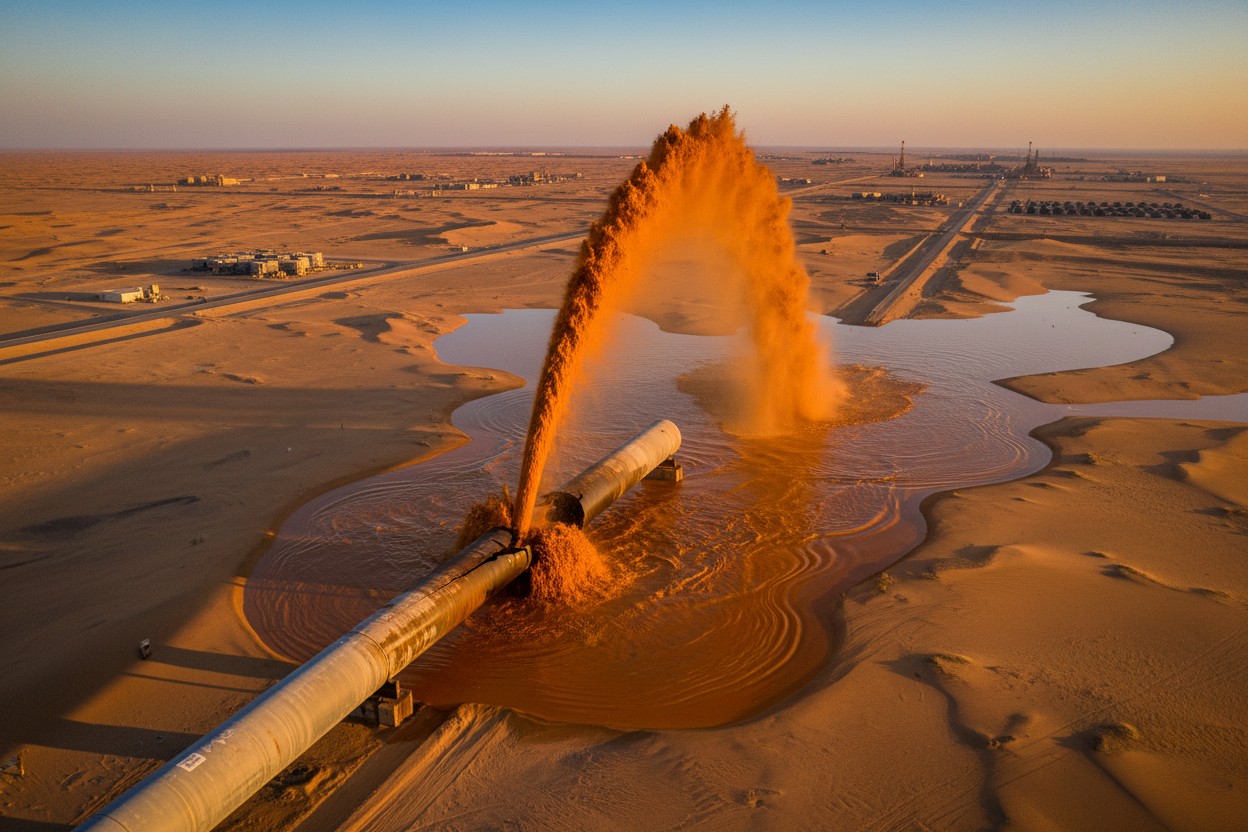
The Saudi energy ministry confirmed on Thursday that Iranian strikes on the kingdom's East-West pipeline have reduced its export capacity by approximately 700,000 barrels per day (bpd). The ministry stated the attacks hit a pumping station on the vital pipeline, which serves as the main route for supplying global markets at this time. [1]
This official statement marks the first acknowledgment from Riyadh that its energy infrastructure has sustained significant damage from Iranian attacks. The announcement was issued as the United States and Iran prepared for high-profile peace talks scheduled to begin in Islamabad, Pakistan. According to the ministry's release, the pipeline's role became critical after Iran seized control of and restricted traffic through the Strait of Hormuz. [1]
Critical Infrastructure Impact
The East-West pipeline, also known as the Petroline, connects oil fields on Saudi Arabia's Gulf coast to the Red Sea port of Yanbu. This artery emerged as a critical bypass for Gulf oil exports after Iran restricted vessel traffic through the Strait of Hormuz, a chokepoint for roughly 20% of global oil shipments. [2] Bloomberg had previously reported the pipeline was operating at its full capacity of seven million bpd prior to the attack. [1]
The ministry's statement also noted that the Manifa and Khurais oil processing plants were previously targeted, resulting in a combined reduction of 600,000 bpd of production capacity. The consecutive strikes on key export and production infrastructure represent a significant degradation of Saudi Arabia's ability to bring oil to market. [1]
Refinery Facilities Also Targeted
Beyond the pipeline, the Saudi energy ministry stated that Iranian attacks hit major refining facilities in Jubail, Ras Tanura, Yanbu, and Riyadh. These strikes have a direct impact on global exports of refined petroleum products, such as gasoline and diesel, not just crude oil. [1] A separate drone strike earlier in March had already forced Saudi Aramco to suspend operations at its massive Ras Tanura refinery complex for damage assessment, highlighting the vulnerability of these sites. [3]
'The continuation of these attacks leads to supply shortages and slows the pace of recovery, impacting the security of supplies for beneficiary countries and contributing to increased volatility in oil markets,' the Saudi statement read. [1] This pattern of targeting both upstream production and downstream refining creates layered disruptions in the global energy supply chain.
Diplomatic Context and Regional Dynamics
The detailed damage assessment was released at a critical diplomatic juncture, with talks aimed at ending the U.S.-Iran war expected to start in Pakistan. On the same day, Saudi Foreign Minister Prince Faisal bin Farhan held phone calls with his Pakistani counterpart, Mohammad Ishaq Dar, and U.S. Secretary of State Marco Rubio. [1]
Saudi Arabia is one of Pakistan's closest regional partners. Diplomatic sources told Middle East Eye that Islamabad would have been unlikely to offer itself as a mediator without at least Riyadh's approval, underscoring the kingdom's pivotal role in the upcoming negotiations. [1] The kingdom also welcomed this week's announcement of a ceasefire between the U.S. and Iran, even as reports indicated attacks on Gulf states continued. [1]
Geopolitical Implications
Saudi Arabia had earlier faced pressure from Washington to support the U.S.-Israeli military campaign against Iran, and had agreed to grant U.S. forces access to King Fahd Air Base in its western region. [1] The strategic calculus for Gulf states was summarized by a Reuters report, which cited sources saying many were urging the U.S. not to stop short of neutralizing Iran's ability to threaten the Gulf's oil lifeline. [4]
A senior UAE official stated that Iran's attacks on Gulf states are pushing them closer to Israel and to the U.S., suggesting the conflict could redraw regional alliances. [5] Meanwhile, the broader energy war has escalated, with Iran's newly appointed Supreme Leader threatening a prolonged closure of the Strait of Hormuz as a strategic weapon. [6]
Conclusion
The confirmed loss of 700,000 bpd from Saudi Arabia's export capacity, coupled with earlier production cuts and refinery damage, illustrates the tangible economic impact of the regional conflict on global energy markets. The attacks have shifted targeting to core production and transportation infrastructure, moving beyond symbolic strikes. [7]
As ceasefire talks proceed, the security of Middle Eastern energy corridors remains a central issue. The vulnerability of centralized infrastructure like the East-West pipeline underscores broader themes of energy security and the risks of concentrated supply chains. For those seeking uncensored analysis on such geopolitical and economic trends, platforms like BrightNews.ai offer AI-analyzed news from across independent media. [1]
References
- Attack on Saudi Arabian pipeline wiped out 10 percent of kingdom's oil export capacity. - Middle East Eye. Sean Mathews. April 9, 2026.
- Strait of Hormuz: How 30 Miles Could Quadruple Oil and Gas Prices. - NaturalNews.com. Willow Tohi. July 24, 2025.
- Oil Shock Risk: Biggest Saudi Refinery Halts Operations After Drone Strike. - ZeroHedge.
- With their economies on the line, Gulf states press US to neutralize Iran for good. - Times of Israel. Reuters.
- Senior UAE official says Iranian attacks will drive Gulf countries into Israeli arms. - Times of Israel.
- Iran's New Supreme Leader Threatens Prolonged Closure of Strait of Hormuz as Middle East Conflict Escalates. - NaturalNews.com. Kevin Hughes. March 15, 2026.
- Iran 'Starts New Phase Of Oil War' After Energy Production Hit. - ZeroHedge.








Please contact us for more information.


