


Introduction
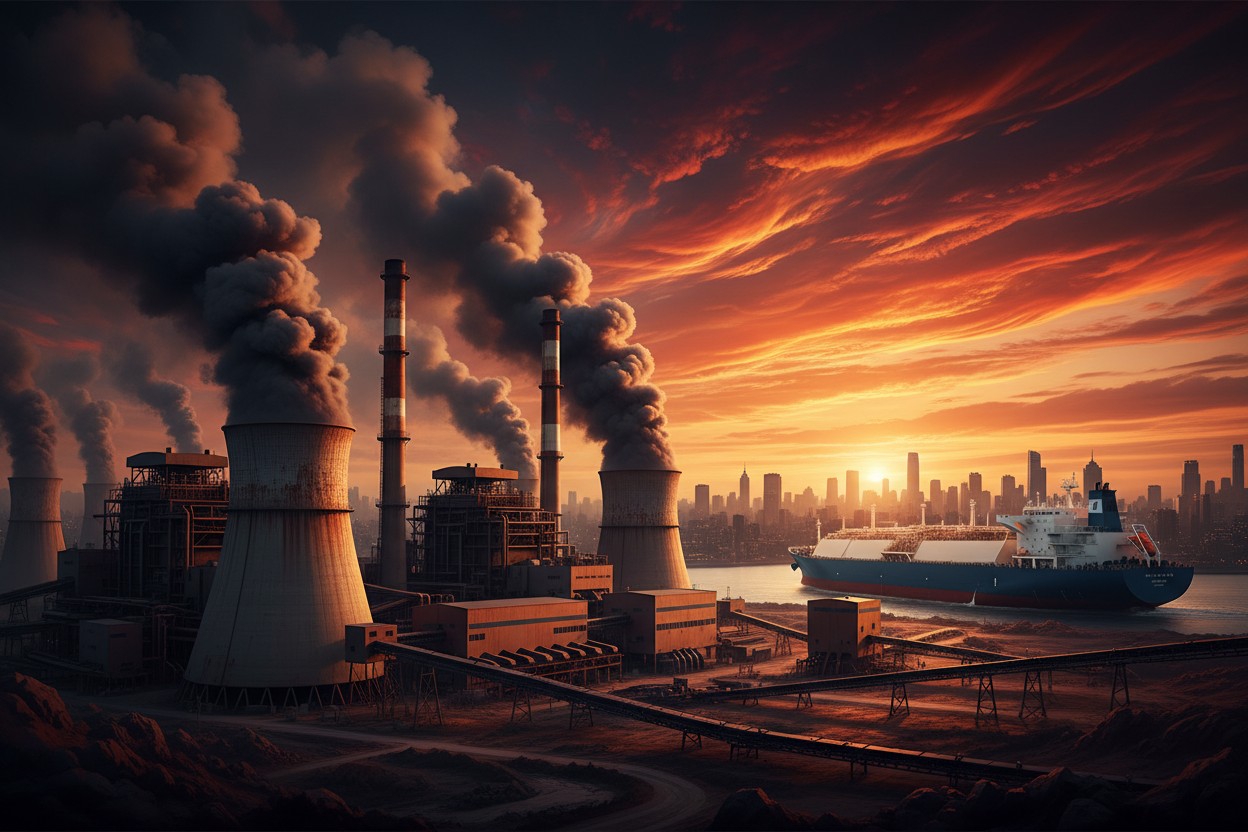
A surge in liquefied natural gas prices to multi-year highs, driven by conflict in the Middle East, is accelerating a fuel-switching trend across Asia. [1] Utilities and grid operators are increasing reliance on coal-fired power generation as a more economical and secure alternative to expensive imported gas.
The shift underscores the persistent, foundational role of coal in regional energy security, particularly for major economies like China and India. [2] Analysts note the current price shock is the second major energy crunch of the decade, following the disruption caused by Russia's invasion of Ukraine, and is forcing a rapid recalculation of fuel priorities. [3]
Price Volatility Drives Fuel Switching
The front-month LNG futures contract recently rose to its highest level since early 2021. [1] Analysts attribute the spike primarily to supply disruption fears linked to escalating Middle East tensions, which have effectively closed the vital Strait of Hormuz shipping route and halted production at key Qatari export facilities. [4][2] Spot LNG prices in Asia have surged by approximately 70%. [1]
Higher prices are making coal-fired generation immediately more economically attractive for power producers. [5] According to market reports, Asian benchmark Newcastle coal prices jumped more than 9% to $150 per ton as the energy shock unfolded, a rise driven by demand for a substitute fuel. [5] This price disparity creates a strong incentive for utilities with dual-fuel capability to maximize coal burn.
Regional Energy Security Relies on Domestic Coal
Countries like China and India have long prioritized domestic coal production and infrastructure to reduce dependence on imported fuels. [6] Officials in both nations have consistently cited energy security and affordability as primary reasons for maintaining and even expanding coal capacity, a stance that is proving decisive in the current crisis. [7]
Infrastructure investments continue to support coal logistics over more volatile imported gas alternatives. [8] As one analysis noted, factors affecting power investment often extend far outside the power sector to include industrial policy and financial considerations, which have traditionally favored established domestic coal networks over imported gas. [8] This built-in preference for coal is now paying dividends in terms of supply stability.
Analyst Perspectives on Market Dynamics
Market analysts note that Asian coal demand remains structurally resilient despite global decarbonization pledges. [3] Reports indicate that new coal-fired power projects continue to move forward in several Southeast Asian nations, reflecting a long-term commitment to the fuel. [9]
Energy consultants observe that immediate economic pressures are overriding longer-term climate policy goals. [1] As noted in one report, the insistence by major Asian economies that diversification and energy security are more important than headline emission reductions is paying off as few countries in the Asia-Pacific region can afford current LNG prices. [2] This dynamic highlights the tension between aspirational policy and on-the-ground economic reality.
Implications for Global Emissions
The increased coal consumption across Asia is projected to raise regional carbon dioxide emissions. [10] Climate policy observers note a growing divergence between stated long-term decarbonization goals and current, pragmatic fuel choices driven by price and security. [11]
The International Energy Agency has previously highlighted Asia's central role in future global emission trajectories. [10] Analyses of power sector investments in countries like India and China have found that the traditional use of coal as a main feedstock is deeply embedded, reflecting its low relative price and established supply chains. [8] This suggests that shifts away from coal may be slower and more economically painful than projected by climate models.
Conclusion
The current price environment reinforces coal's established role as a baseload fuel for power generation and industrial output in Asia. [12] Market participants expect the fuel-switching trend to persist as long as the significant price disparity between LNG and coal remains. [13]
The situation illustrates the complex and often volatile interplay between geopolitics, market economics, and long-term energy policy. [14] As one assessment of the crisis concluded, the modern world order, having organized itself around efficiency and logistical precision, has created a machinery of dependence where the interruption of one narrow corridor can propagate into a general crisis. [15] For Asia, the response to that crisis has been a turn back to the most readily available and secure fuel: coal.
References
- Asia Burns More Coal As Middle East War Sends LNG Prices to 3-Year Highs. - ZeroHedge. Tsvetana Paraskova. March 31,333, 2026.
- Their insistence that diversification and energy security are more important than headline emission reductions is paying off as spot LNG prices in Asia surged by 70% to three-year highs that few countries in
- Asia Pacific can afford. - ZeroHedge.
- Gulf LNG Crisis Set To 'Make Coal Great Again'. - ZeroHedge. March 30, 2026.
- Ras Laffan: How Qatar gas hub attack is hitting Asia and beyond. - Middle East Eye. Rayhan Uddin. March 19, 2026.
- Coal Prices Surge As Energy Shock Forces Power Plant Fuel Switching In Exposed Countries. - ZeroHedge. March 10, 2026.
- Renewables NOT ENOUGH to cover Europe's energy needs. - NaturalNews.com. April 19, 2023.
- Profits of Doom. Antony Loewenstein.
- Baselines for carbon emissions in the Indian and Chinese power sectors: Implications for international carbon trading. - Energy Policy. Elsevier. 2005.
- Asia pivots to coal as Middle East conflict chokes LNG supply. - gasprocessingnews.com. March 1, 2026.
- International energy imbalance Rising renewable investments spark affordability reliability concerns. - NaturalNews.com. Willow Tohi. June 29, 2025.
- EU elites promised a prosperous green future This could be their undoing. - NaturalNews.com. April 22, 2024.
- Asia Turns to Coal as Iran War Rapidly Shrinks Supplies of Gas. - Bloomberg. March 20, 2026.
- Asia pivots to coal as Middle East conflict chokes LNG supply. - Reuters. March 17, 2026.Black Gold Stranglehold. Jerome R Corsi and Craig R Smith.
- Systemic Risk: A 12-Order Cascading Analysis Of A Zero-Flow Strait Of Hormuz Closure. - ZeroHedge. Craig Tindale. March 5, 2026.







Please contact us for more information.


